

Introduction
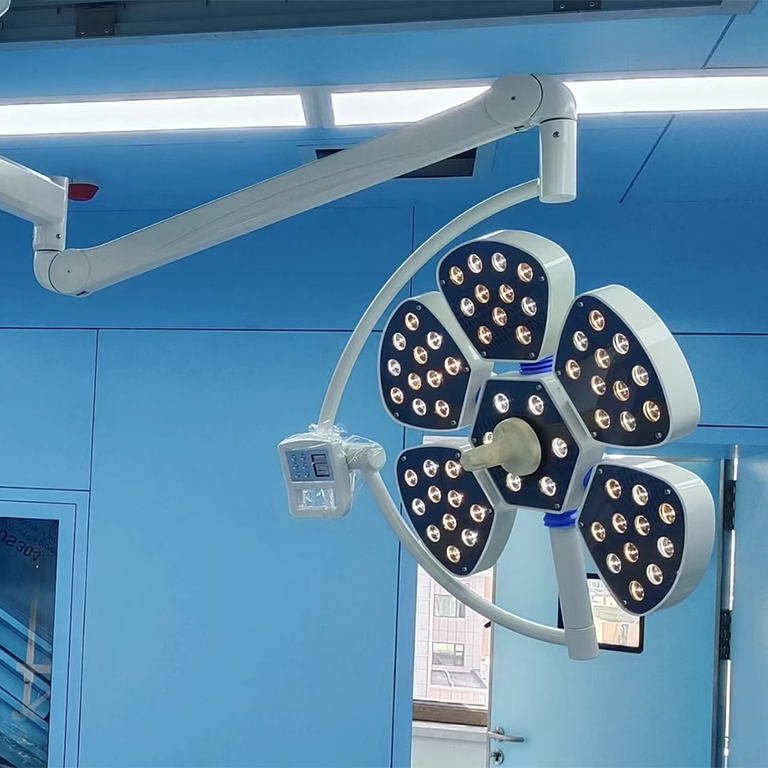
In modern operating rooms, lighting quality directly affects surgical accuracy, workflow efficiency, and patient safety. Surgeons require clear visualization of anatomical structures, accurate color recognition, and stable illumination throughout every procedure. This is why selecting the right shadowless surgical lamp has become a critical decision for hospitals, surgical centers, and healthcare projects.
Unlike traditional surgical lighting systems, a shadowless surgical lamp is designed to minimize shadows caused by surgeons, instruments, and other obstacles during operations. Through advanced optical technology and multiple LED light sources, these lamps provide uniform illumination across the surgical field, allowing medical professionals to perform procedures with greater confidence and precision.
As healthcare facilities continue to upgrade their operating rooms, buyers are paying more attention to lighting performance, energy efficiency, reliability, and long-term operating costs. A high-quality shadowless surgical lamp not only improves visibility but also reduces eye fatigue, enhances surgical efficiency, and supports a safer working environment.
However, choosing the right surgical lighting system requires more than simply comparing brightness levels. Buyers need to evaluate various technical factors, including illumination intensity, color rendering index (CRI), color temperature, shadow compensation capability, heat management, installation requirements, and manufacturer reliability.
This comprehensive performance guide explains the essential factors buyers should understand before purchasing a shadowless surgical lamp and provides practical information to help healthcare facilities select the ideal lighting solution.
What Is a Shadowless Surgical Lamp?
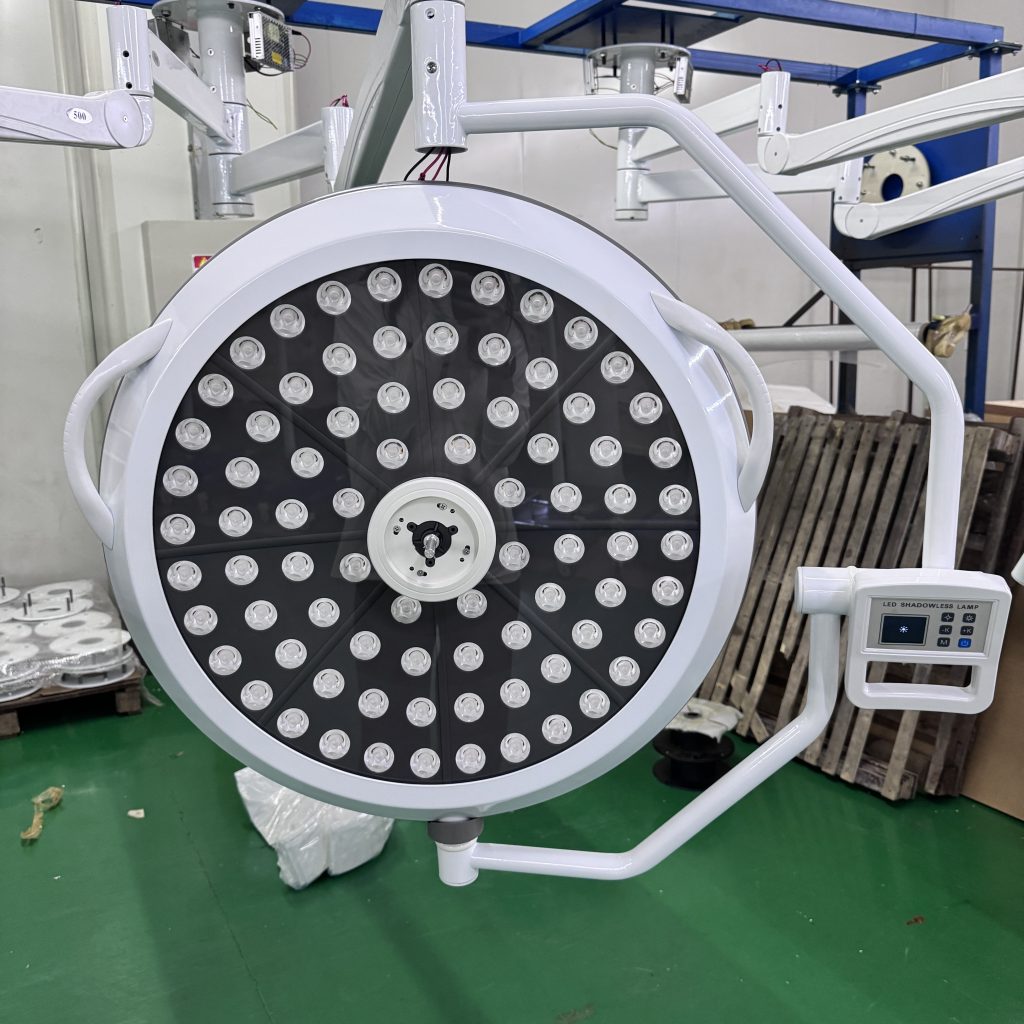
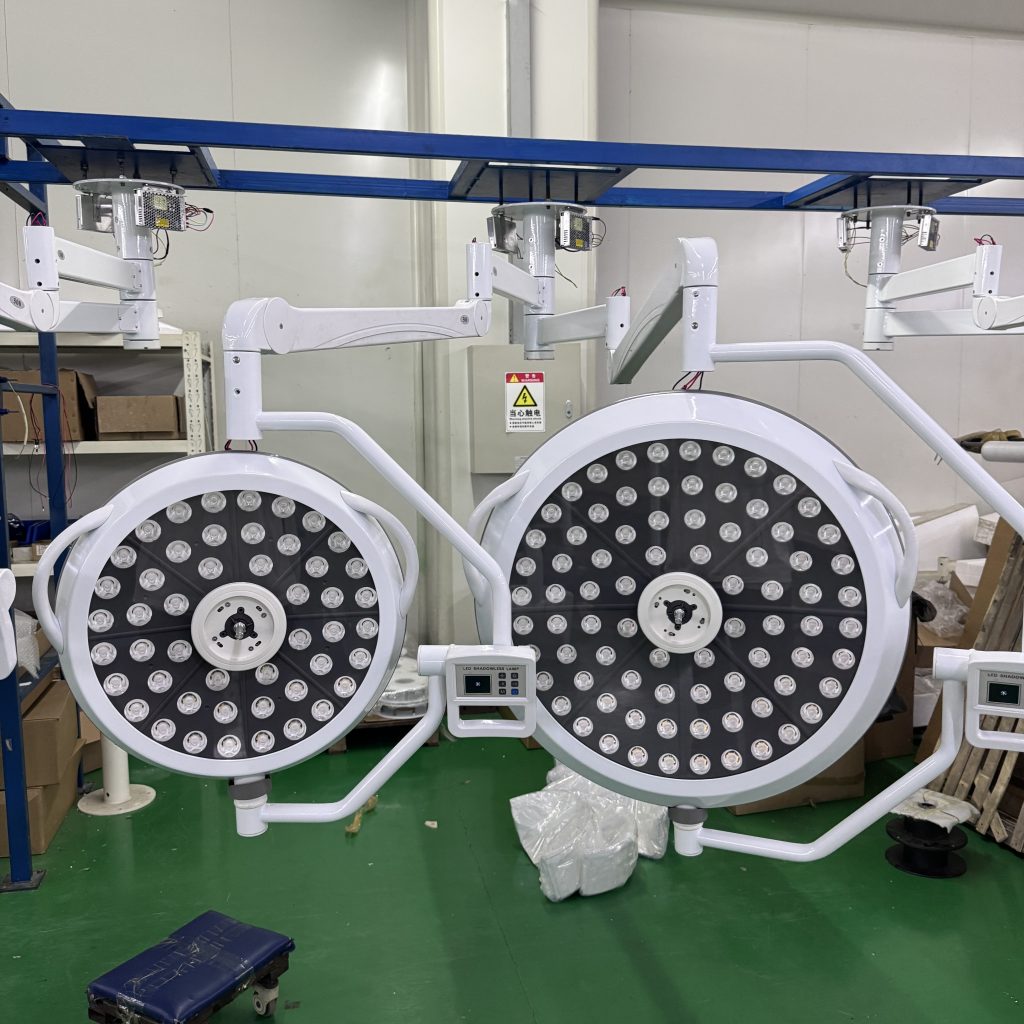
A shadowless surgical lamp is a specialized medical lighting device designed to provide bright, uniform, and consistent illumination during surgical procedures while minimizing unwanted shadows.
The term “shadowless” does not mean that shadows are completely eliminated. Instead, it refers to the advanced optical design that significantly reduces shadow formation by using multiple overlapping light beams from different directions.
Modern shadowless surgical lamp systems typically use LED technology because LEDs provide excellent brightness, low heat generation, long lifespan, and stable performance.
Main Components
| Component | Function |
|---|---|
| LED Light Modules | Generate high-intensity illumination |
| Optical Lens System | Controls light distribution |
| Reflector Technology | Reduces shadow formation |
| Suspension Arm | Allows flexible positioning |
| Sterile Handle | Enables adjustment during surgery |
| Control Panel | Adjusts brightness and color temperature |
| Heat Dissipation System | Maintains stable operation |
| Power Supply System | Ensures reliable performance |
Each component contributes to the overall effectiveness of the lighting system.
Why Shadowless Surgical Lamp Is Important for Modern Surgery
Visibility is one of the most important factors in surgical success. Even experienced surgeons require excellent lighting conditions to perform complex procedures safely.
A reliable shadowless surgical lamp provides several advantages:
- Clear visualization of surgical areas
- Reduced shadow interference
- Improved tissue recognition
- Lower surgeon eye fatigue
- Better surgical accuracy
- Increased operating room efficiency
- Enhanced patient safety
For hospitals investing in modern operating rooms, advanced surgical lighting is not just equipment—it is a critical part of clinical performance.
Key Performance Factors Buyers Should Evaluate
Before purchasing a shadowless surgical lamp, healthcare buyers should carefully analyze several important specifications.
Illumination Intensity
Illumination intensity determines how much light reaches the surgical field.
Most professional surgical lamps provide adjustable illumination between 80,000 and 160,000 lux depending on the procedure requirements.
Recommended Illumination Levels
| Application | Recommended Illumination |
|---|---|
| Examination Procedures | 30,000–60,000 lux |
| Minor Surgery | 60,000–100,000 lux |
| General Surgery | 100,000–140,000 lux |
| Complex Surgery | 140,000–160,000 lux |
A high-performance shadowless surgical lamp should provide sufficient brightness while maintaining visual comfort.
Shadow Reduction Performance
Shadow control is the defining feature of modern surgical lighting.
During surgery, shadows may occur when:
- Surgeons block the light source
- Surgical instruments interrupt illumination
- Equipment enters the operating field
Advanced LED systems solve this problem through:
- Multiple LED arrangements
- Multi-angle beam projection
- Optimized optical lenses
- Intelligent light distribution
A well-designed shadowless surgical lamp maintains consistent illumination even when obstacles appear.
Color Rendering Index (CRI)
Color accuracy is essential during surgery because surgeons need to distinguish between different tissues and structures.
CRI measures how accurately colors appear under artificial lighting.
CRI Performance Guide
| CRI Value | Performance Level |
|---|---|
| Below 85 | Basic lighting |
| 85–89 | Acceptable clinical lighting |
| 90–94 | Excellent surgical lighting |
| Above 95 | Premium performance |
A quality shadowless surgical lamp usually provides CRI ≥90, ensuring realistic tissue appearance.
Adjustable Color Temperature
Different surgical procedures may require different lighting characteristics.
Color temperature affects visual comfort and tissue contrast.
| Color Temperature | Advantage |
|---|---|
| 3500K | Comfortable warm illumination |
| 4000K | Natural appearance |
| 4500K | Standard operating room lighting |
| 5000K | Improved contrast |
| 5500K | Bright white illumination |
An adjustable shadowless surgical lamp allows medical teams to select the most suitable lighting environment.
Light Field Diameter and Uniformity
The surgical field requires consistent illumination from the center to the edges.
Important factors include:
- Uniform brightness distribution
- Stable light field diameter
- Deep illumination capability
- Minimal brightness variation
A high-quality optical design ensures surgeons can work comfortably without constantly repositioning the lamp.
Heat Management
Traditional halogen lamps produce significant heat, which can create discomfort during long operations.
Modern LED-based shadowless surgical lamp systems provide:
- Lower infrared radiation
- Reduced operating room temperature
- Improved surgeon comfort
- Lower energy consumption
Effective heat management also helps extend LED lifespan.
Applications of Shadowless Surgical Lamp
A shadowless surgical lamp is used across many medical specialties.
General Surgery
Provides reliable illumination for abdominal, gastrointestinal, and minimally invasive procedures.
Orthopedic Surgery
Supports operations requiring deep illumination and stable visualization.
Neurosurgery
Requires excellent precision and accurate tissue recognition.
Cardiovascular Surgery
Benefits from stable brightness during long procedures.
Gynecology and Obstetrics
Provides clear illumination for pelvic procedures and cesarean sections.
Plastic Surgery
Supports detailed procedures requiring high color accuracy.
Application Comparison
| Specialty | Main Lighting Requirement |
|---|---|
| General Surgery | Uniform illumination |
| Neurosurgery | Maximum precision |
| Orthopedics | Deep cavity lighting |
| Cardiovascular Surgery | Stable long-duration lighting |
| Gynecology | Flexible positioning |
| Plastic Surgery | High color accuracy |
Types of Shadowless Surgical Lamp Systems
Healthcare facilities can choose different configurations based on their needs.
Single Dome Surgical Lamp
Suitable for:
- Small operating rooms
- Minor procedures
- Clinics
Advantages:
- Lower investment cost
- Simple operation
- Easy maintenance
Double Dome Surgical Lamp
Suitable for:
- Major operating rooms
- Complex procedures
Advantages:
- Larger illumination coverage
- Improved redundancy
- Better surgical field visibility
Mobile Shadowless Surgical Lamp
Suitable for:
- Emergency departments
- Multiple procedure rooms
- Temporary operating areas
Advantages:
- Flexible movement
- Easy deployment
- No ceiling installation required
Shadowless Surgical Lamp vs Traditional Halogen Lamp
| Feature | Shadowless Surgical Lamp (LED) | Halogen Surgical Lamp |
|---|---|---|
| Energy Efficiency | Excellent | Low |
| Heat Output | Very Low | High |
| Lifespan | 50,000–100,000 Hours | 1,000–2,000 Hours |
| Color Accuracy | Excellent | Moderate |
| Maintenance | Low | High |
| Shadow Control | Advanced | Limited |
The advantages of LED technology explain why hospitals worldwide are upgrading their surgical lighting systems.
Installation Considerations for Buyers
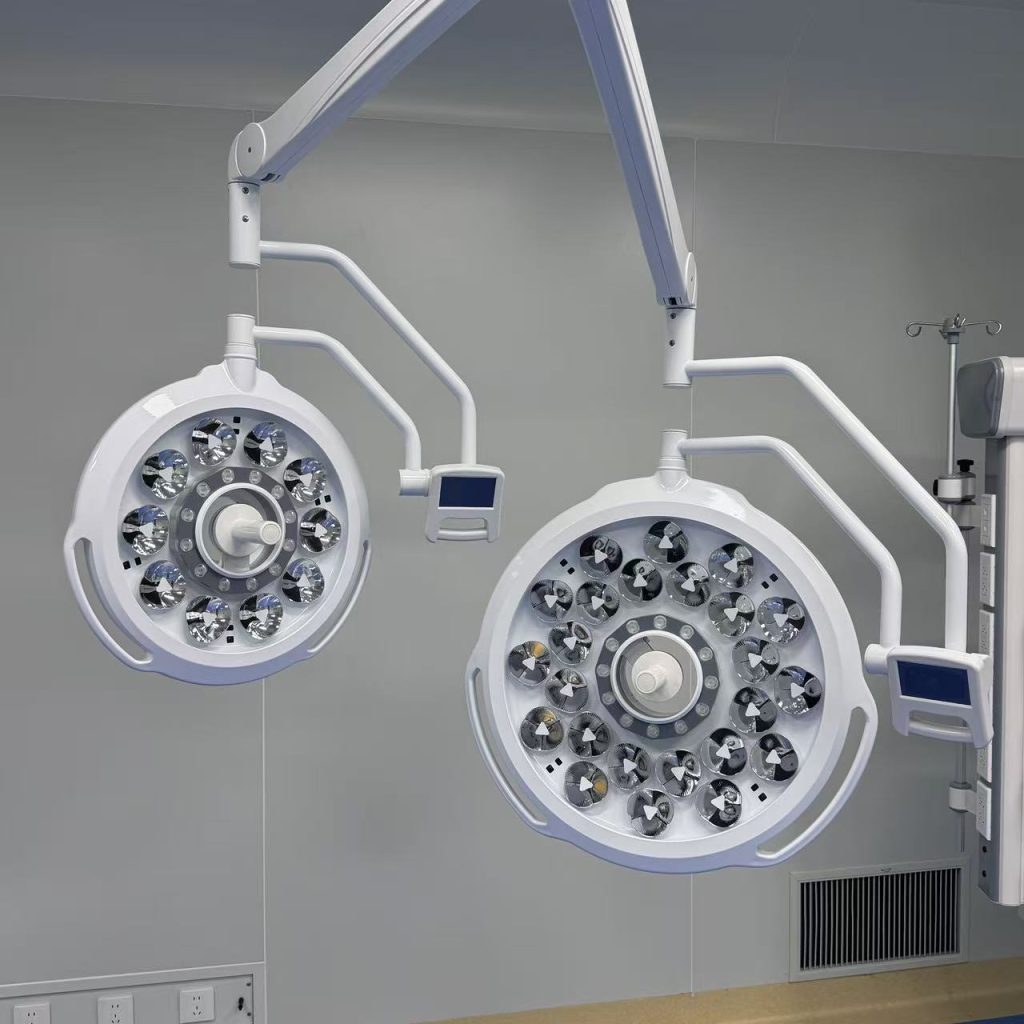
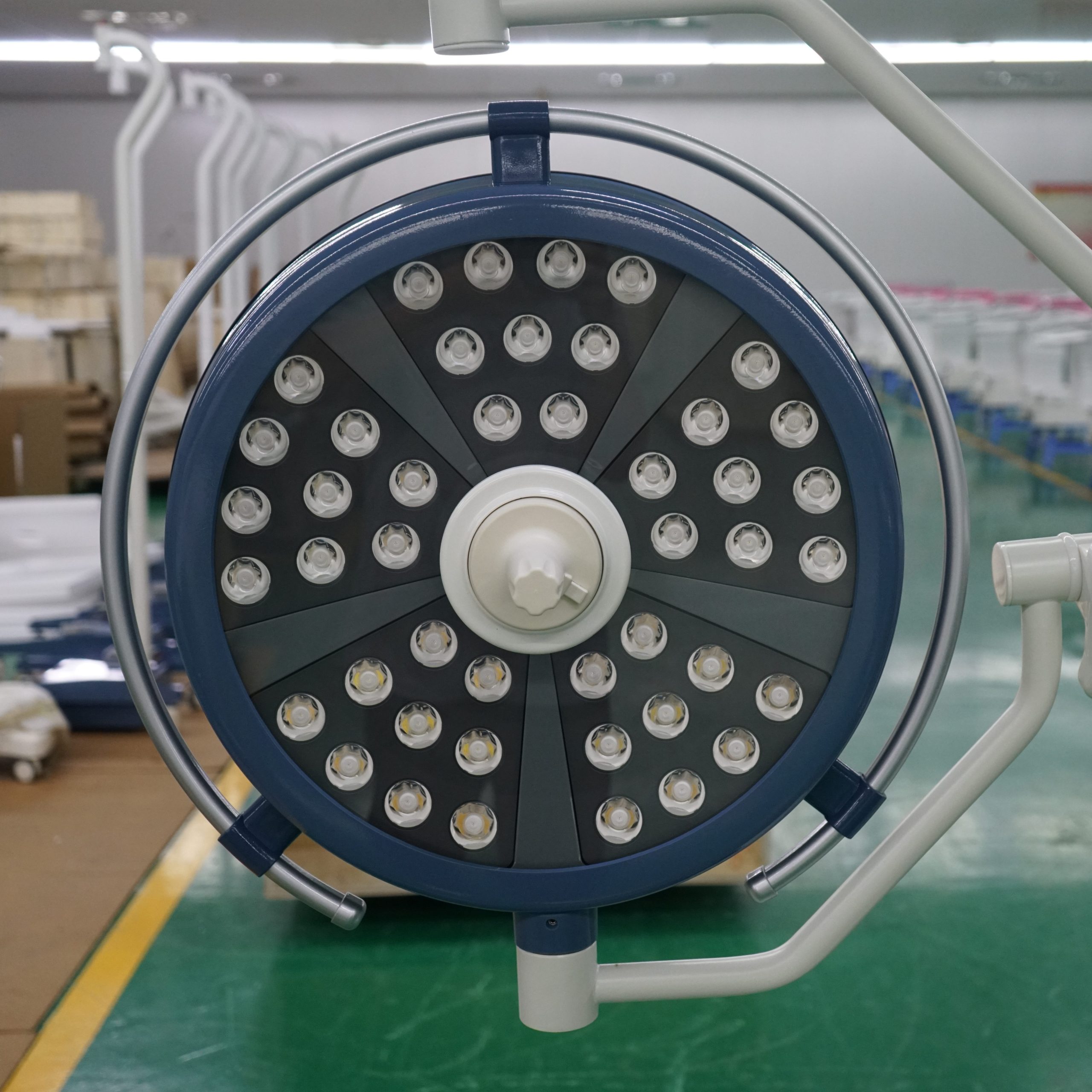
Proper installation is essential for achieving maximum performance.
Before installation, buyers should consider:
- Operating room ceiling structure
- Installation height
- Surgical table position
- Equipment layout
- Electrical requirements
- Maintenance accessibility
Installation Checklist
| Item | Requirement |
|---|---|
| Ceiling Support | Strong enough for lamp weight |
| Power Supply | Stable medical-grade connection |
| Room Space | Allows full arm movement |
| Positioning | Covers surgical field completely |
| Safety Testing | Completed before use |
Professional installation ensures reliable operation.
Maintenance Guide for Long-Term Performance
Regular maintenance extends the service life of a shadowless surgical lamp.
Maintenance Schedule
| Maintenance Task | Frequency |
|---|---|
| Clean lamp surface | Daily |
| Disinfect handles | After every procedure |
| Check arm movement | Monthly |
| Verify brightness | Quarterly |
| Electrical inspection | Annually |
Proper maintenance prevents performance decline and reduces unexpected downtime.
How to Choose a Reliable Manufacturer
Selecting the right supplier is essential for medical equipment investment.
Buyers should evaluate manufacturers based on:
- ISO 13485 certification
- CE certification
- Product quality control
- Manufacturing experience
- Research capability
- OEM customization
- Warranty service
- Spare parts supply
- Technical support
A reliable manufacturer provides not only a high-quality shadowless surgical lamp but also long-term technical assistance.
Future Trends in Shadowless Surgical Lamp Technology
Surgical lighting continues to develop with smart healthcare technologies.
Future innovations include:
- AI-based brightness adjustment
- Automatic shadow compensation
- Touchless gesture control
- Voice operation
- Integrated surgical cameras
- Wireless monitoring
- Smart operating room connectivity
- Remote maintenance systems
These technologies will make future surgical lighting systems more intelligent and efficient.
If you need medical equipment or other services, please contact us!
Email: demanmedical@gmail.com
Phone: +86-13188819888
Facebook:https://www.facebook.com/demanmedical/
Instagram: https://www.instagram.com/deman.medical/
YouTube: https://www.youtube.com/@DEMANmedical
Conclusion
Choosing the right shadowless surgical lamp is an important decision for hospitals and healthcare facilities seeking to improve surgical safety, efficiency, and long-term operational value. Advanced LED technology provides excellent illumination, accurate color rendering, reduced shadows, lower heat generation, and extended service life.
When evaluating surgical lighting solutions, buyers should focus on key performance factors including illumination intensity, shadow reduction, CRI, color temperature, heat management, installation requirements, and manufacturer support.
A high-quality shadowless surgical lamp does more than illuminate the surgical field—it creates a safer, more efficient, and more reliable environment for surgeons and patients. As medical technology continues to advance, modern surgical lighting will remain a fundamental component of future operating rooms.
FAQ
What is a shadowless surgical lamp?
A shadowless surgical lamp is a medical lighting system designed to provide bright and uniform illumination while minimizing shadows during surgical procedures.
Why is shadow reduction important in surgery?
Shadow reduction improves visibility, allows surgeons to identify tissues more accurately, and helps maintain consistent illumination throughout procedures.
What illumination level does a surgical lamp require?
Most professional systems provide adjustable illumination between 80,000 and 160,000 lux depending on the surgical application.
Why are LED shadowless surgical lamps preferred?
LED systems offer longer lifespan, lower heat generation, better energy efficiency, excellent color rendering, and reduced maintenance costs.
What should buyers consider before purchasing?
Important factors include illumination intensity, CRI, color temperature, shadow control, installation requirements, certifications, warranty, and after-sales support.