

Introduction
In modern surgical environments, lighting quality is one of the most critical factors influencing precision, safety, and clinical outcomes. No matter how advanced surgical techniques or medical devices become, poor visibility can still compromise even the most routine procedures. This is why surgical lights no shadow systems have become a standard requirement in operating rooms worldwide.
Unlike traditional lighting systems that produce uneven brightness and obstructive shadows, modern surgical lighting is designed to deliver uniform, high-intensity illumination across the entire surgical field. This ensures that surgeons can clearly visualize tissues, blood vessels, and anatomical structures without distortion.
As minimally invasive surgery, robotic-assisted procedures, and microsurgery continue to evolve, the demand for shadow-free lighting has grown significantly. Hospitals now prioritize advanced LED-based systems that reduce heat, improve energy efficiency, and provide consistent color rendering during long procedures.
This article explores the best surgical lights no shadow for operating rooms, including their features, applications, technical specifications, comparison tables, and key factors hospitals should consider before purchasing.
What Are Surgical Lights No Shadow Systems?
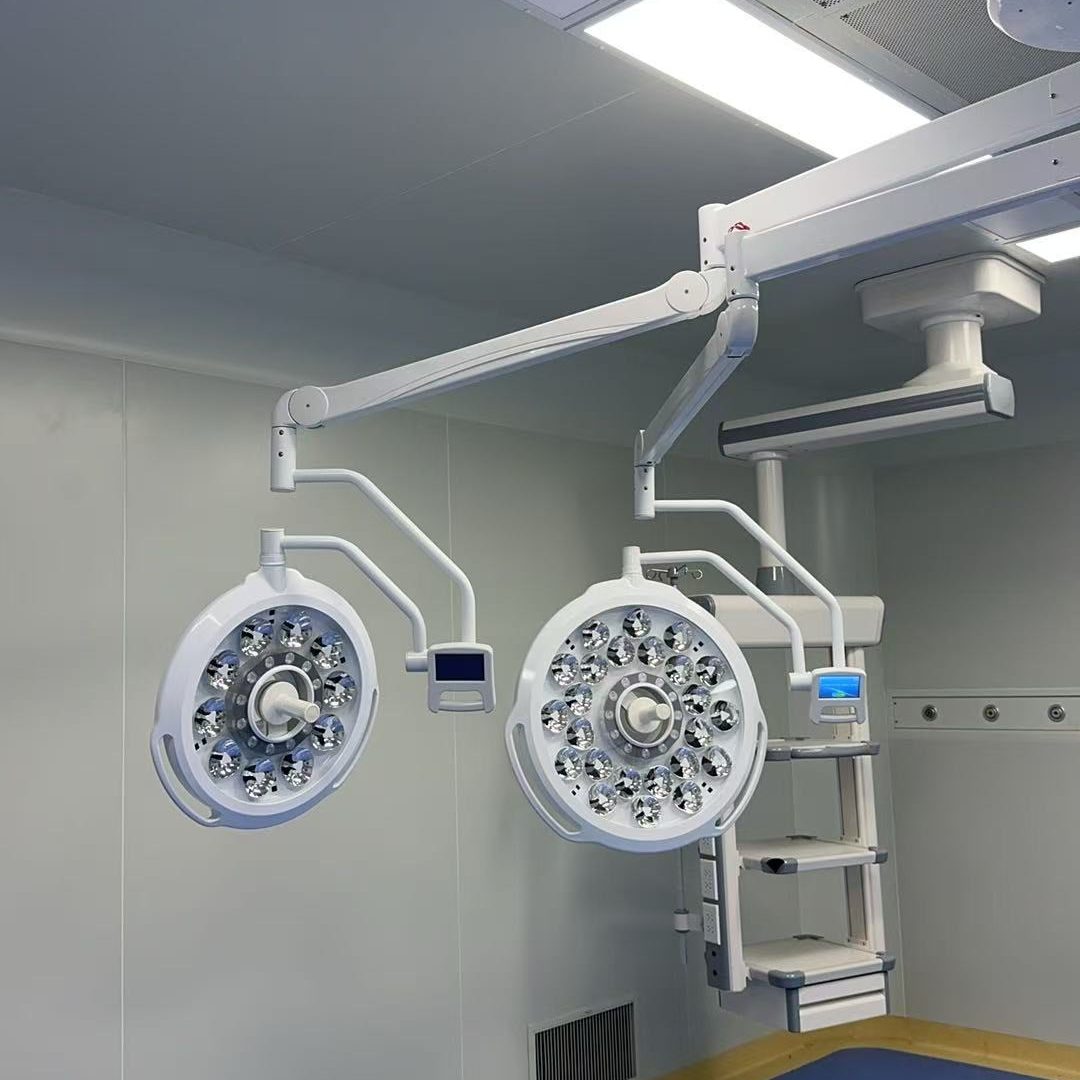
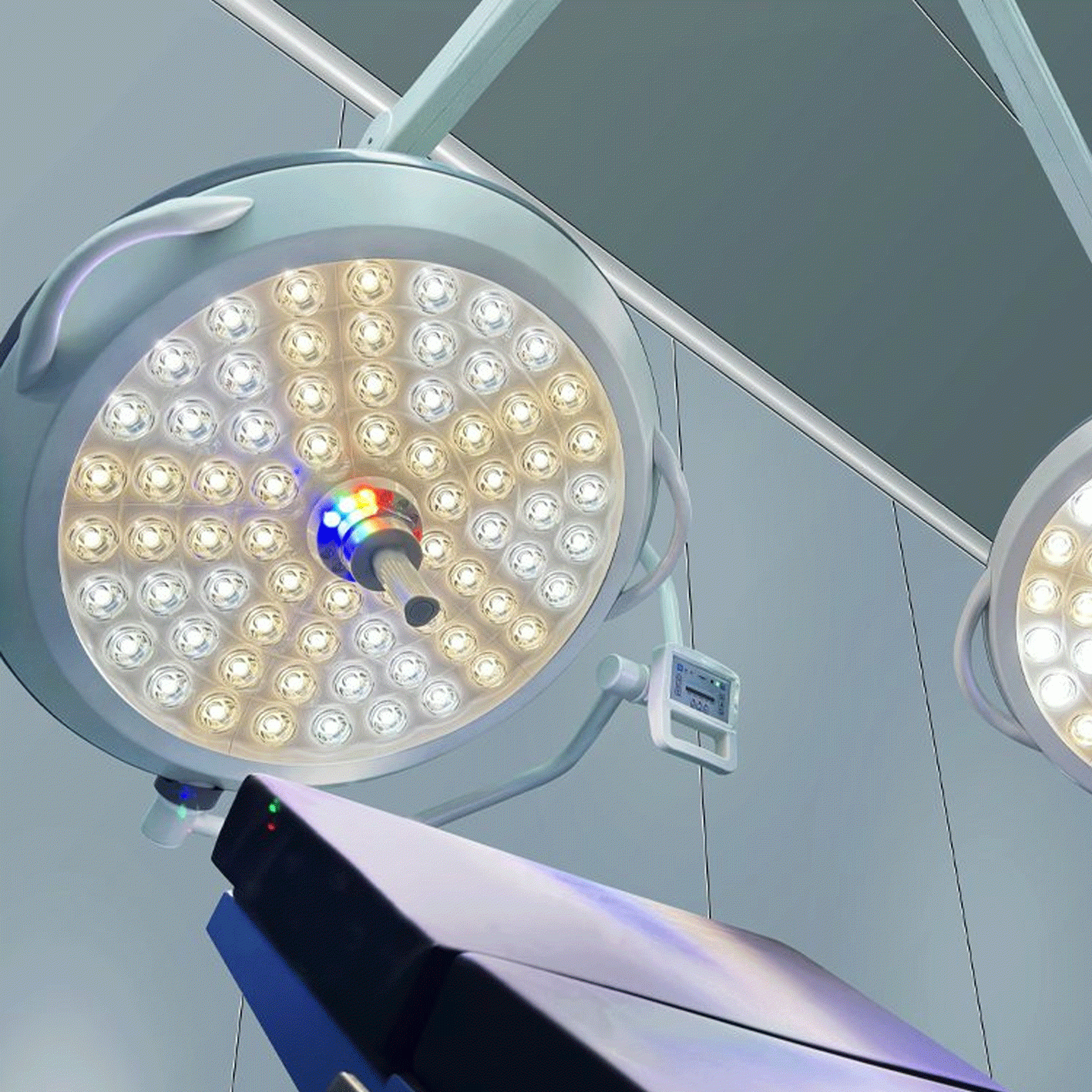
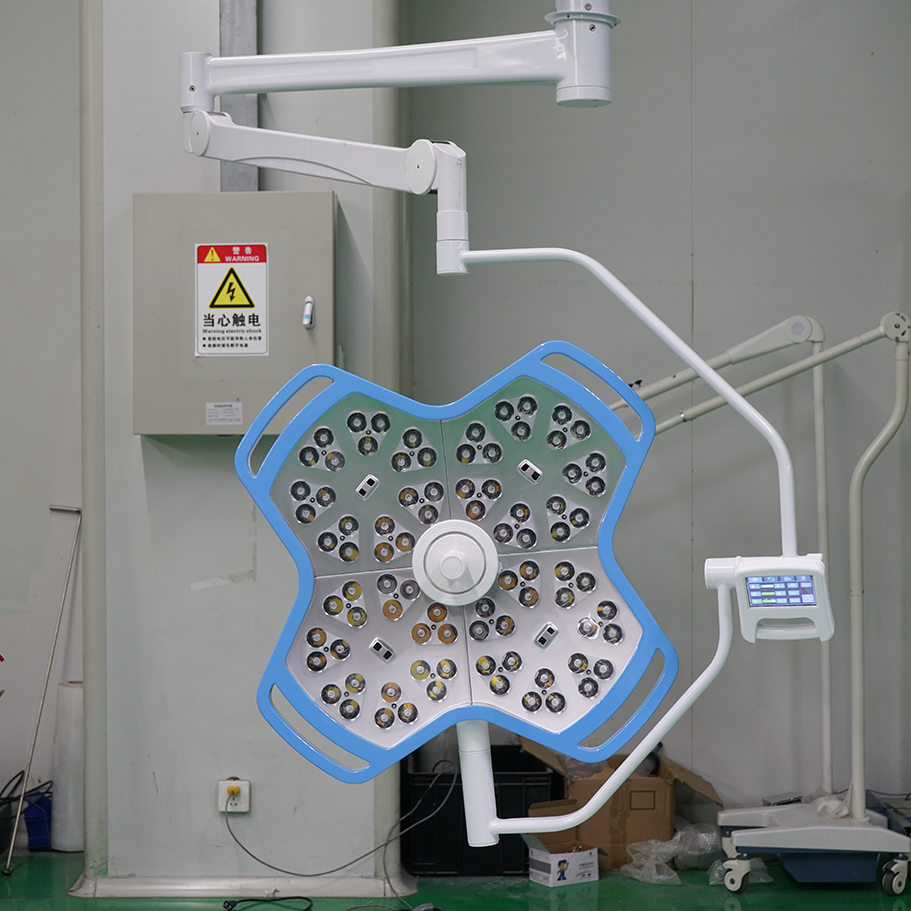
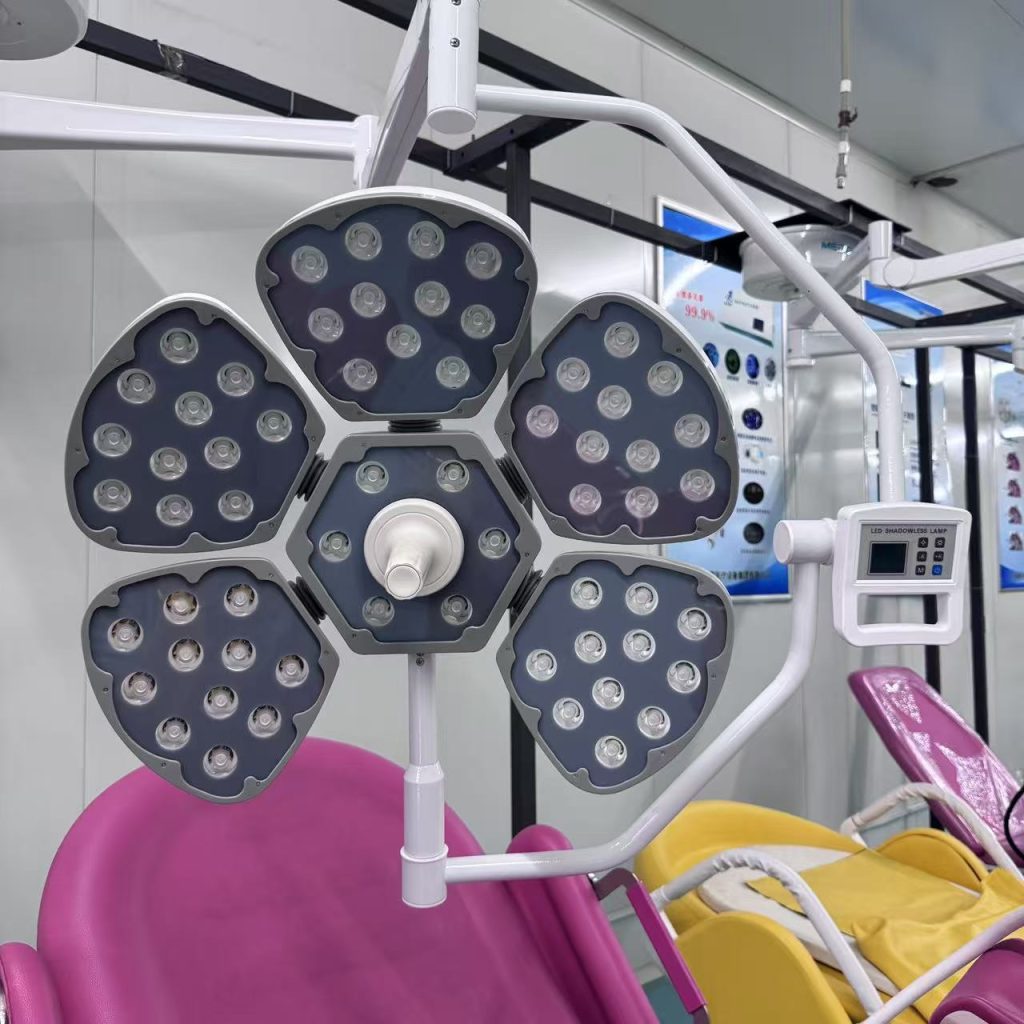
Surgical lights no shadow systems refer to advanced operating room lighting solutions designed to eliminate shadows caused by hands, instruments, or equipment during surgery. These systems typically use multiple LED light sources arranged in a circular or multi-point configuration to ensure overlapping illumination.
The result is a consistent and stable light field that remains unaffected even when part of the light path is blocked.
Core Features
| Feature | Description |
|---|---|
| Multi-point LED design | Produces overlapping light beams |
| High illumination output | Ensures clear surgical visibility |
| Shadow reduction technology | Eliminates obstruction-based shadows |
| Adjustable brightness | Supports different surgical needs |
| Color temperature control | Enhances tissue differentiation |
| Low heat emission | Improves surgeon comfort |
These features make surgical lights no shadow essential equipment in modern operating rooms.
Why Shadow-Free Surgical Lighting Matters
Proper lighting directly affects surgical precision. Even minor shadows can distort depth perception and lead to surgical errors.
Key Benefits
- Improved surgical accuracy
- Enhanced visualization of fine anatomical structures
- Reduced surgeon eye fatigue
- Better patient safety outcomes
- Increased efficiency in complex procedures
Clinical Impact Table
| Lighting Quality | Surgical Outcome | Risk Level |
|---|---|---|
| Shadow-free lighting | High precision | Low |
| Partial shadow lighting | Moderate accuracy | Medium |
| Poor lighting conditions | Low precision | High |
This demonstrates why hospitals increasingly invest in surgical lights no shadow systems.
How Surgical Lights No Shadow Technology Works
The technology behind shadow-free surgical lighting is based on optical engineering and LED multi-source systems.
Instead of relying on a single bulb, these systems use multiple LED emitters that project light from different angles. When one beam is blocked, others compensate instantly.
System Components
| Component | Function |
|---|---|
| LED array module | Provides multiple light sources |
| Optical lens system | Focuses and distributes light |
| Reflector structure | Enhances uniformity |
| Spring arm system | Allows flexible positioning |
| Control panel | Adjusts brightness and color temperature |
| Sterile handle | Enables intraoperative adjustment |
This structure ensures consistent illumination throughout surgical procedures.
Best Types of Surgical Lights No Shadow for Operating Rooms
Hospitals use different types of surgical lighting depending on surgical complexity and room design.
Ceiling-Mounted Surgical Lights
These are the most common systems in operating rooms.
- Stable installation
- Wide coverage area
- Ideal for major surgeries
Mobile Surgical Lights
Portable units used in emergency and temporary setups.
- Flexible positioning
- Easy relocation
- Suitable for trauma rooms
Dual-Dome Surgical Lights
Advanced systems with two lighting heads.
- Enhanced depth illumination
- Reduced shadow formation
- Used in complex surgeries
LED Surgical Lights
Modern standard in hospitals.
- Energy efficient
- Long lifespan
- Superior brightness control
Comparison Table
| Type | Best Use Case | Flexibility | Cost Level |
|---|---|---|---|
| Ceiling-mounted | Major operating rooms | Medium | High |
| Mobile | Emergency procedures | High | Medium |
| Dual-dome | Complex surgeries | Medium | High |
| LED systems | General hospital use | High | Medium-High |
Key Factors to Consider When Choosing Surgical Lights No Shadow
Selecting the right system requires evaluating multiple technical and clinical factors.
Illumination Intensity
Modern surgical lights typically range between 40,000 and 160,000 lux depending on procedure requirements.
Color Rendering Index (CRI)
A CRI ≥ 90 is recommended to ensure accurate tissue color reproduction.
Color Temperature
Adjustable color temperature improves adaptability for different surgical needs.
| Temperature (K) | Effect |
|---|---|
| 3,500K | Warm light, reduced eye strain |
| 4,000K | Natural tissue appearance |
| 4,500K | Standard surgical setting |
| 5,000K | High contrast visibility |
| 5,500K | Bright clinical clarity |
Depth of Illumination
Deep cavity surgeries require strong penetration of light without intensity loss.
Heat Management
Low heat emission improves both patient safety and surgeon comfort.
Shadow Control Performance
High-end systems ensure complete elimination of overlapping shadows.
Applications of Surgical Lights No Shadow in Hospitals
These systems are used across almost every surgical department.
Major Applications:
- General surgery
- Orthopedic surgery
- Neurosurgery
- Cardiovascular surgery
- Gynecological procedures
- Emergency trauma care
- Plastic and reconstructive surgery
Application Impact Table
| Department | Lighting Requirement | Importance Level |
|---|---|---|
| Neurosurgery | Extremely high precision | Critical |
| Orthopedics | Deep illumination | High |
| General surgery | Balanced lighting | High |
| Emergency care | Rapid deployment | Critical |
| Gynecology | Soft precise lighting | High |
Technical Comparison of Surgical Lights No Shadow Systems
| Feature | Entry-Level Systems | Mid-Range Systems | Premium Systems |
|---|---|---|---|
| Illumination | 40,000–80,000 lux | 80,000–120,000 lux | 120,000–160,000 lux |
| CRI | ≥85 | ≥90 | ≥95 |
| Shadow reduction | Basic | Advanced | Ultra-precise |
| Heat emission | Medium | Low | Very low |
| Lifespan | 30,000 hours | 50,000 hours | 100,000 hours |
This comparison helps hospitals choose based on budget and clinical needs.
Maintenance and Sterilization Requirements
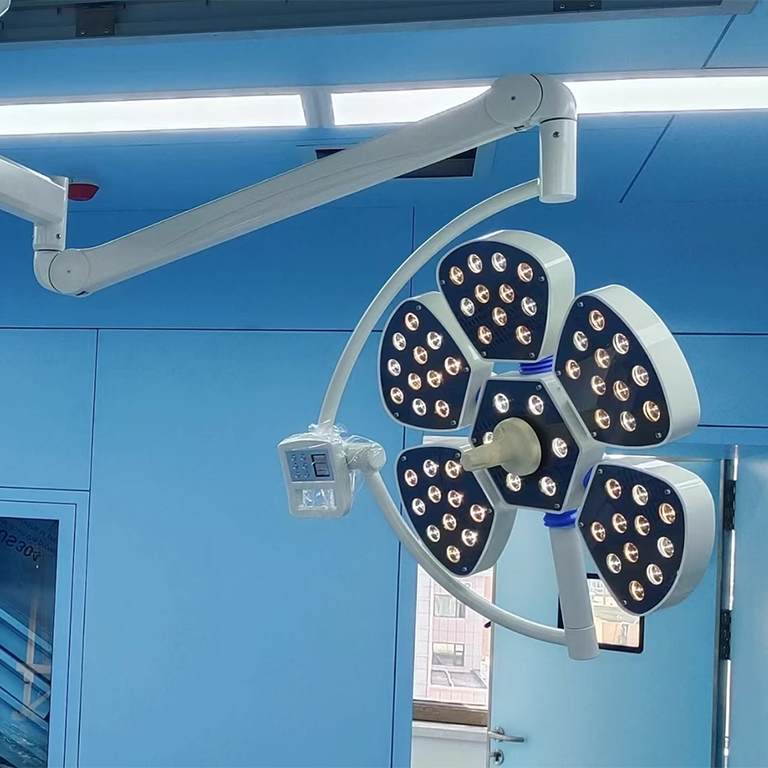
Proper maintenance ensures long-term reliability of surgical lighting systems.
Maintenance Checklist
| Task | Frequency |
|---|---|
| Surface cleaning | Daily |
| Sterile handle sterilization | After each surgery |
| Mechanical arm inspection | Weekly |
| Brightness calibration | Monthly |
| Electrical system check | Quarterly |
Regular maintenance reduces downtime and ensures consistent performance.
Advantages of Modern LED Surgical Lights No Shadow
Modern LED systems offer several advantages over traditional halogen lighting.
Key Benefits
- Energy efficiency
- Long operational lifespan
- Minimal heat generation
- Superior brightness stability
- Enhanced color accuracy
- Reduced maintenance costs
These benefits make LED systems the preferred choice in modern operating rooms.
Future Trends in Surgical Lighting Technology
The evolution of surgical lighting continues with smart technologies and digital integration.
Emerging Innovations
- AI-based automatic brightness adjustment
- Voice-controlled lighting systems
- Integrated surgical imaging support
- Wireless remote control systems
- Smart operating room integration
- Real-time shadow detection technology
These innovations will further enhance the performance of surgical lights no shadow systems in future hospitals.
If you need medical equipment or other services, please contact us!
Email: demanmedical@gmail.com
Phone: +86-13188819888
Facebook:https://www.facebook.com/demanmedical/
Instagram: https://www.instagram.com/deman.medical/
YouTube: https://www.youtube.com/@DEMANmedical
Conclusion
Surgical lighting plays a critical role in modern healthcare, directly influencing surgical precision, safety, and efficiency. Advanced surgical lights no shadow systems have transformed operating rooms by providing uniform, high-quality illumination that eliminates visual obstructions and enhances clinical accuracy.
When selecting the best surgical lighting system, hospitals must consider factors such as illumination intensity, color rendering, shadow reduction performance, and energy efficiency. Investing in high-quality LED systems ensures long-term reliability, reduced maintenance costs, and improved surgical outcomes.
As medical technology continues to evolve, shadow-free surgical lighting will remain a cornerstone of safe and effective surgical practice, supporting healthcare professionals in delivering the highest standard of patient care.
FAQ
What are surgical lights no shadow used for?
They are used in operating rooms to provide uniform, shadow-free illumination during surgical procedures.
Why are surgical lights no shadow important?
They improve visibility, reduce surgical errors, and enhance precision by eliminating shadows in the surgical field.
What is the best type of surgical lighting?
LED-based surgical lights no shadow systems are currently the most advanced and widely used in modern hospitals.
What CRI is recommended for surgical lighting?
A Color Rendering Index (CRI) of 90 or above is recommended for accurate tissue visualization.
How long do LED surgical lights last?
High-quality systems can last between 50,000 and 100,000 hours depending on usage conditions.