

Introduction
For hospital procurement teams, selecting the right surgical lighting is a high-impact decision tied directly to patient safety, surgical precision, and long-term operational budgets. As the visual backbone of every operating room, poor-quality lighting can extend procedure times, increase clinical risk, and drive up maintenance costs, while well-chosen systems support clinical efficiency and reduce total lifecycle expenses.
Over the past decade, the global market has fully shifted from legacy halogen systems to LED-based surgical lighting, which now makes up over 85% of new hospital installations. Today’s options range from compact mobile exam units to fully integrated smart lighting suites with camera and connectivity features, creating a wide spectrum of performance and price points.
This guide breaks down the most critical factors for hospital procurement teams, biomedical engineers, and clinical directors to evaluate when sourcing surgical lighting. We cover core product categories, non-negotiable technical benchmarks, regulatory compliance requirements, total cost of ownership modeling, and answers to common procurement questions. By the end, you will have a clear framework to compare vendor bids and select a solution aligned with your facility’s clinical needs and financial goals.
Core Product Categories for Hospital Deployment
Hospital-grade surgical lighting is segmented into four primary tiers, each built for specific procedural complexity and care settings. Matching the category to your OR’s case mix is the first step to avoiding overspending or under-specifying.
Portable & Wall-Mounted Exam Lighting
Entry-level surgical lighting includes mobile floor stands and wall-mounted fixtures for minor procedures, suture rooms, emergency departments, and outpatient clinics. These units offer flexible positioning and lower illuminance, and are not designed for major open surgery.
Single-Dome Ceiling-Mounted Systems
Single-dome surgical lighting is the standard for routine operating rooms in small to mid-sized hospitals. Permanently installed with an articulating arm, it delivers uniform, shadow-reduced illumination for general surgery, orthopedics, and gynecology procedures.
Dual-Dome Ceiling-Mounted Systems
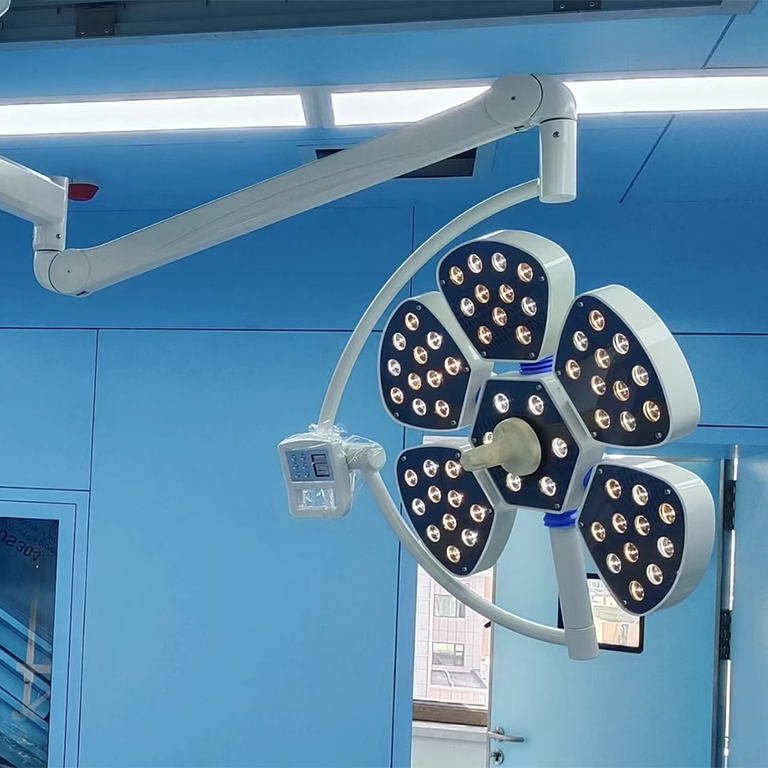
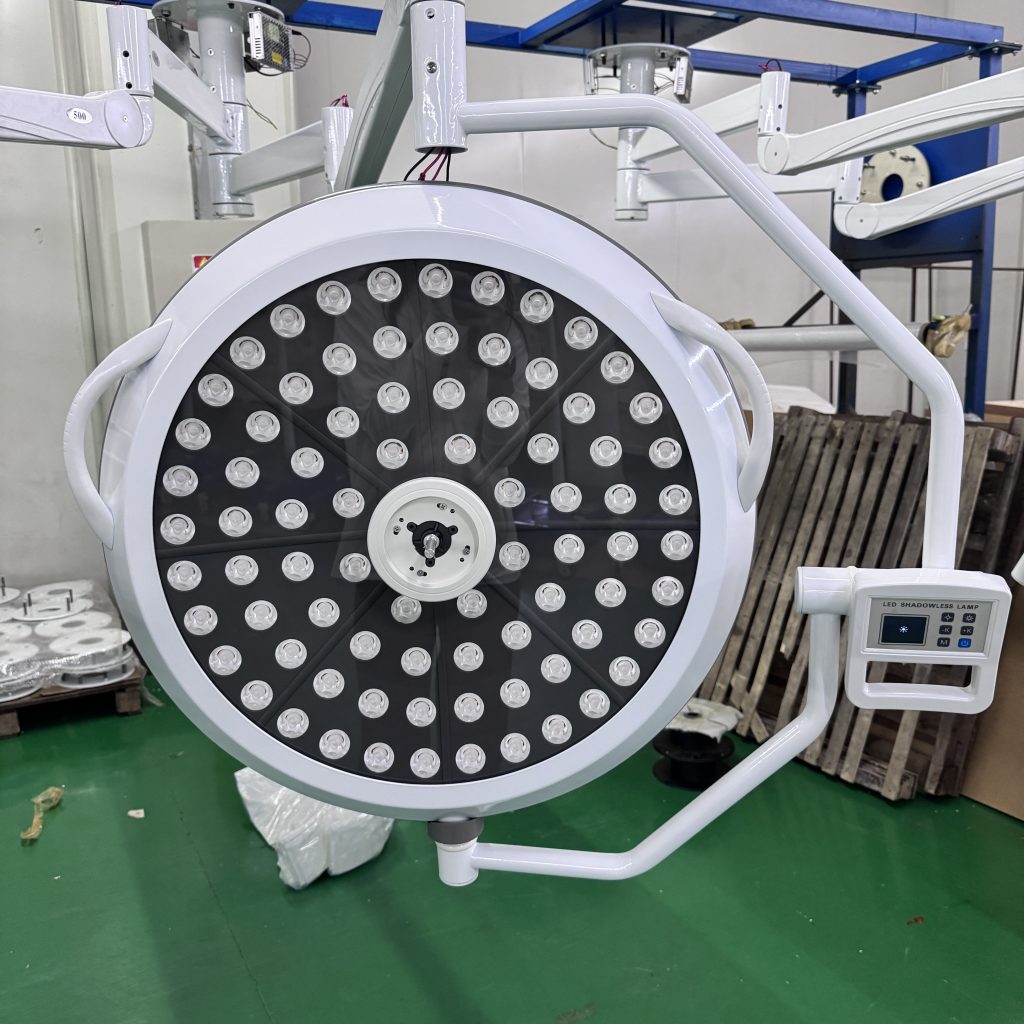
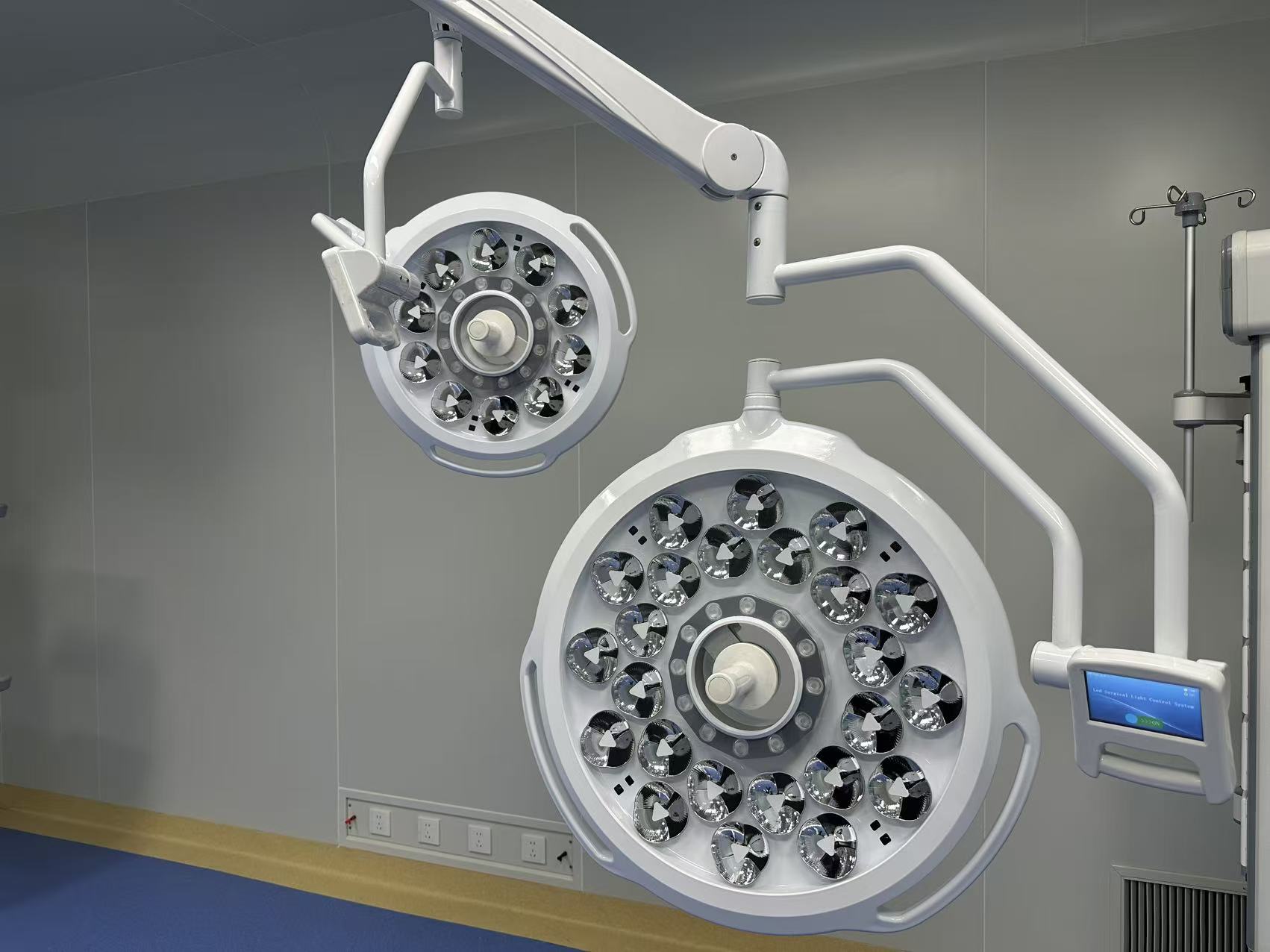
Dual-dome surgical lighting features two independently adjustable light heads on a single ceiling mount. The dual-head design minimizes shadows from surgical teams and instruments, making it the preferred choice for complex procedures such as cardiovascular surgery and neurosurgery in large tertiary hospitals.
Integrated Smart Surgical Lighting Suites
At the premium tier, integrated surgical lighting combines high-performance illumination with built-in HD cameras, video capture, and hospital IT network connectivity. These systems support surgical teaching, telemedicine, and procedural documentation, and are standard in academic medical centers and hybrid operating rooms.
Key Technical Specifications for Clinical Performance
Beyond marketing claims, procurement teams must evaluate measurable technical specifications that directly impact surgical outcomes. Below are the most critical metrics to compare across vendor offerings.
Illuminance, measured in lux at the focal point, defines the brightness of the surgical lighting. Standard procedures require a minimum of 80,000 lux at the center of the light field, while deep-cavity surgeries may need 160,000 lux or higher. Uniformity across the entire light field is equally important, as uneven brightness forces frequent repositioning during procedures.
The Color Rendering Index (CRI) measures how accurately the light reproduces natural tissue color. Medical-grade surgical lighting should have a CRI (Ra) of 90 or higher, with premium systems reaching Ra 97–98. Accurate color rendering allows surgeons to distinguish healthy from diseased tissue and identify subtle blood flow changes, directly supporting clinical decision-making.
Depth of illumination and shadow management are also defining features. High-quality surgical lighting maintains consistent brightness across 80–120 cm of vertical depth, supporting deep-cavity procedures. Multi-angle LED arrays ensure shadows from surgical tools and staff are minimized, even at oblique angles.
Technical Benchmarks by Surgical Lighting Category
| Category | Central Illuminance | CRI (Ra) | LED Lifespan | Typical Use Case |
|---|---|---|---|---|
| Portable Exam Light | 40,000 – 80,000 lux | 80 – 85 | 30,000 – 40,000 hrs | Minor procedures, ED |
| Single-Dome Mid-Range | 100,000 – 140,000 lux | 90 – 93 | 50,000 – 60,000 hrs | General surgery, orthopedics |
| Dual-Dome Premium | 140,000 – 180,000 lux | 95 – 98 | 60,000 – 80,000 hrs | Cardiovascular, neurosurgery |
| Integrated Smart System | 160,000 – 200,000 lux | 95 – 98 | 60,000 – 80,000 hrs | Teaching hospitals, hybrid ORs |
Compliance & Infection Control: Non-Negotiable for Hospitals
Surgical lighting is classified as a medical device, so regulatory compliance is mandatory for hospital procurement, not optional. Facilities must verify all applicable safety and quality certifications before approving any purchase.
Required Regulatory Certifications
Reputable surgical lighting manufacturers hold formal certifications for global medical device standards. Procurement teams should require documentation of:
- FDA 510(k) Clearance: Mandatory for use in U.S. healthcare facilities
- CE Marking (MDR Compliant): Required for EU/EEA hospitals
- ISO 13485: Validates medical device quality management systems
- IEC 60601-1: International standard for medical electrical safety
Infection Control Design
Surgical lighting sits directly above the surgical field, so it must withstand frequent hospital-grade disinfection. High-quality systems feature seamless, crevice-free housings, autoclavable handle grips, and sealed control panels. Budget models with textured surfaces and exposed fasteners are harder to clean thoroughly and pose long-term infection control risks.
Core Compliance Certifications for Surgical Lighting
| Certification | Issuing Body | Procurement Importance |
|---|---|---|
| FDA 510(k) | U.S. FDA | Mandatory for U.S. hospital deployment |
| CE MDR | EU Notified Bodies | Mandatory for EU/EEA facilities |
| ISO 13485 | Independent auditors | Indicates consistent manufacturing quality |
| IEC 60601-1 | IEC | Ensures electrical and mechanical safety |
Total Cost of Ownership (TCO) Analysis
A common procurement pitfall is selecting surgical lighting based solely on upfront price. The initial purchase represents only a fraction of total costs over the equipment’s 10–15 year service life. A full TCO analysis reveals the true long-term value of each option.
Installation & Integration
Ceiling-mounted surgical lighting requires professional installation, including structural reinforcement, electrical wiring, and photometric calibration. For standard single-dome systems, installation adds 15–30% to the purchase price. Dual-dome and integrated systems have higher installation costs due to increased weight and more complex room integration.
Maintenance & Energy Savings
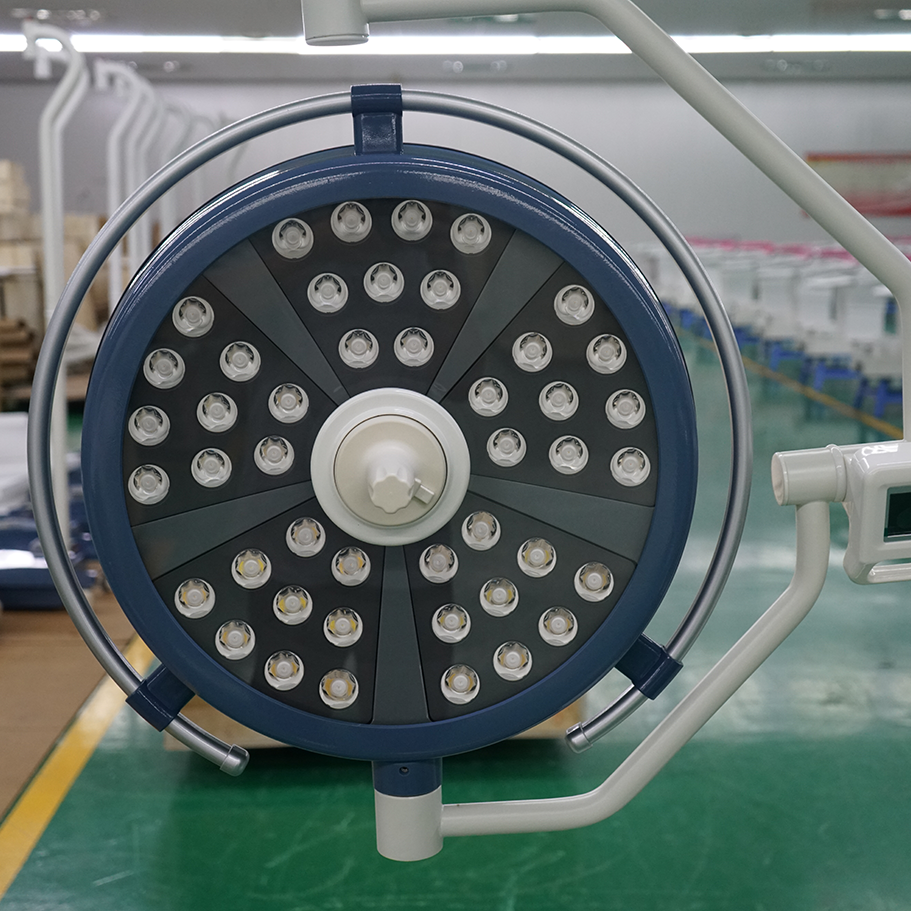
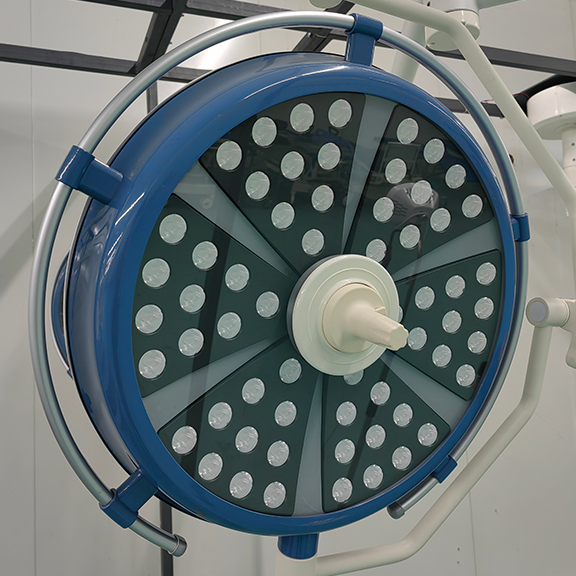
LED surgical lighting has far lower maintenance needs than older halogen systems. LED arrays last 50,000+ hours, so most hospitals never need to replace the light source during the fixture’s lifespan. Annual preventive maintenance — including calibration and mechanical inspection — typically costs $200–$500 per unit.
LED systems also deliver significant energy savings. A dual-dome LED fixture uses roughly 80% less electricity than an equivalent halogen model, saving hundreds of dollars per year in energy and OR cooling costs.
10-Year TCO Comparison (Single-Dome Fixture)
| Cost Component | Budget LED | Mid-Range LED | Premium LED |
|---|---|---|---|
| Initial Purchase | $900 | $2,200 | $6,500 |
| Installation | $220 | $380 | $700 |
| 10-Year Maintenance | $1,600 | $2,100 | $3,200 |
| 10-Year Electricity | $380 | $450 | $550 |
| Replacement Parts | $450 | $320 | $220 |
| 10-Year Total | $3,550 | $5,450 | $11,170 |
| Annualized Cost | $355/year | $545/year | $1,117/year |
While premium surgical lighting has a much higher upfront cost, the annualized gap narrows significantly when reliability and lower repair costs are factored in. Premium systems also typically last 15+ years, further improving long-term value.
If you need medical equipment or other services, please contact us!
Email: demanmedical@gmail.com
Phone: +86-13188819888
Facebook:https://www.facebook.com/demanmedical/
Instagram: https://www.instagram.com/deman.medical/
YouTube: https://www.youtube.com/@DEMANmedical
Conclusion
Selecting surgical lighting is a long-term strategic investment that impacts patient care and hospital finances for over a decade. While upfront cost is always a procurement consideration, the cheapest option rarely delivers the best value when clinical performance, compliance, reliability, and lifecycle costs are fully evaluated.
Effective procurement follows a clear framework: first align product category with your OR’s procedural mix, then enforce mandatory compliance and infection control standards, compare measurable technical specifications, model full 10-year TCO, and assess the vendor’s local support and warranty terms.
As LED technology continues to advance and connected surgical lighting becomes more widespread, hospitals have more options than ever to build high-performance, cost-effective surgical suites. By focusing on the key factors outlined in this guide, procurement teams can make informed decisions that support excellent clinical outcomes and maximize return on investment for their organization.
FAQ
What is the most critical specification for general surgery ORs?
For general surgical procedures, prioritize central illuminance of at least 100,000 lux, a CRI of Ra 90 or higher, and reliable shadow reduction. Always confirm full regulatory compliance and local service support before finalizing a purchase.
How often do LED surgical lighting systems need bulb replacement?
Unlike halogen systems that require bulb changes every 1–2 years, modern LED surgical lighting arrays last 50,000+ operating hours. For a typical OR running 40 hours per week, this equals roughly 24 years of service. In practice, mechanical components usually wear out before the LED array fails.
Can old halogen surgical lighting be retrofitted to LED?
Some manufacturers offer LED retrofit kits for existing halogen fixtures, but performance rarely matches purpose-built LED surgical lighting. Procurement teams should compare retrofit costs against new fixtures, accounting for energy savings and improved clinical performance.
Is dual-dome surgical lighting required for all operating rooms?
No. Dual-dome systems are ideal for complex, long-duration procedures such as neurosurgery and cardiovascular surgery. For ORs used primarily for routine procedures, endoscopy, and orthopedics, a high-quality single-dome system delivers sufficient performance at a lower total cost.