

Introduction
For hospital biomedical engineering teams and OR procurement managers, sourcing replacement parts for surgical lighting is a high-stakes ongoing responsibility. Every shadowless surgical lamp relies on a complex system of optical, electronic, and mechanical components that wear out over time, and choosing the wrong replacement part can lead to performance drops, safety hazards, compliance gaps, and costly equipment damage.
The market splits sharply into two supply channels: original equipment manufacturer (OEM) parts and aftermarket third-party parts. OEM parts offer guaranteed fit and certified quality but come with premium pricing and long lead times. Aftermarket parts promise substantial cost savings and faster delivery, but vary widely in build quality, compatibility, and regulatory standing. Many facilities struggle to balance budget efficiency with clinical reliability.
This guide delivers a side-by-side comparison of OEM and aftermarket parts for surgical lighting systems. We cover common replacement components, evaluate the pros and cons of each channel, present data-backed cost comparisons, and outline a clear decision framework. Whether you manage a single clinic or a multi-facility hospital fleet, this article will help you cut maintenance costs without compromising patient safety or regulatory compliance.
Common Replacement Parts for Shadowless Surgical Lamp Systems
Before comparing supply channels, it is critical to understand which components of a shadowless surgical lamp require replacement most often, as part criticality directly determines whether OEM or aftermarket is an appropriate choice.
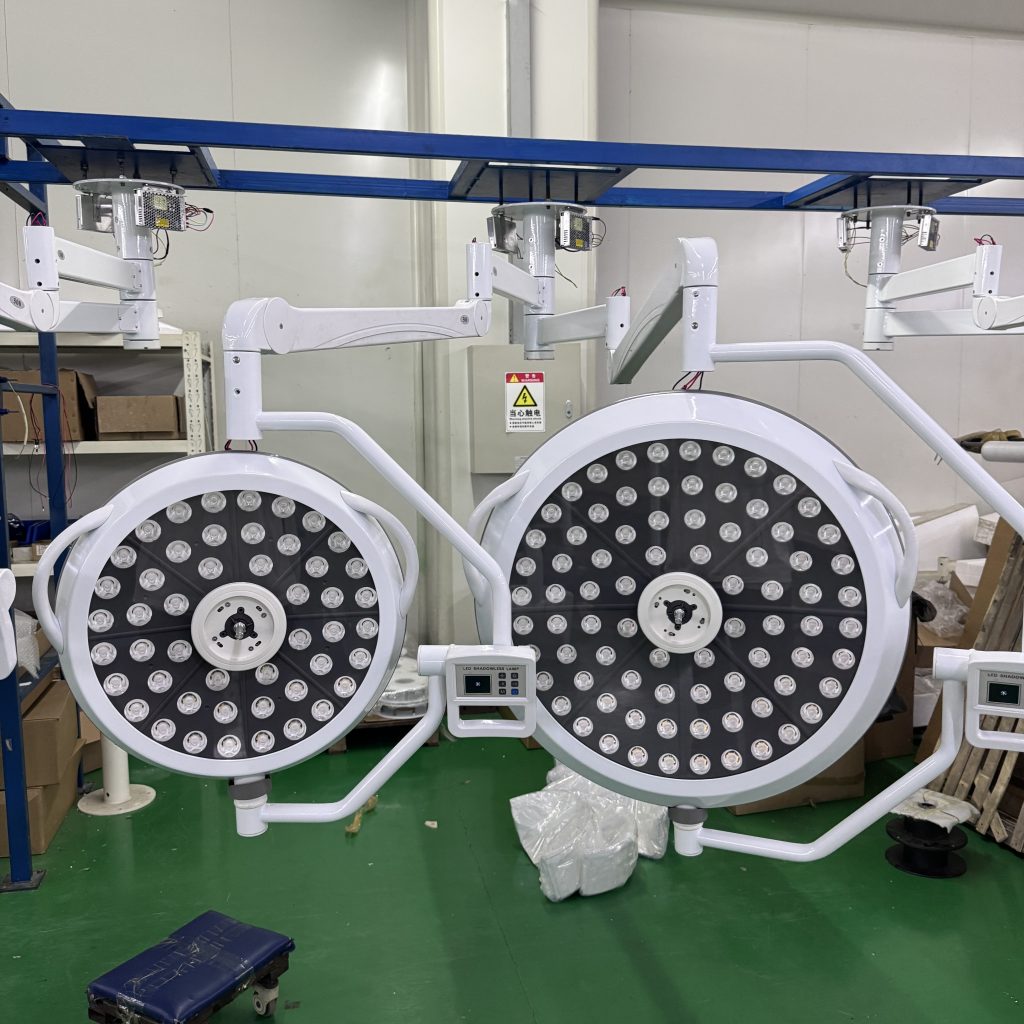
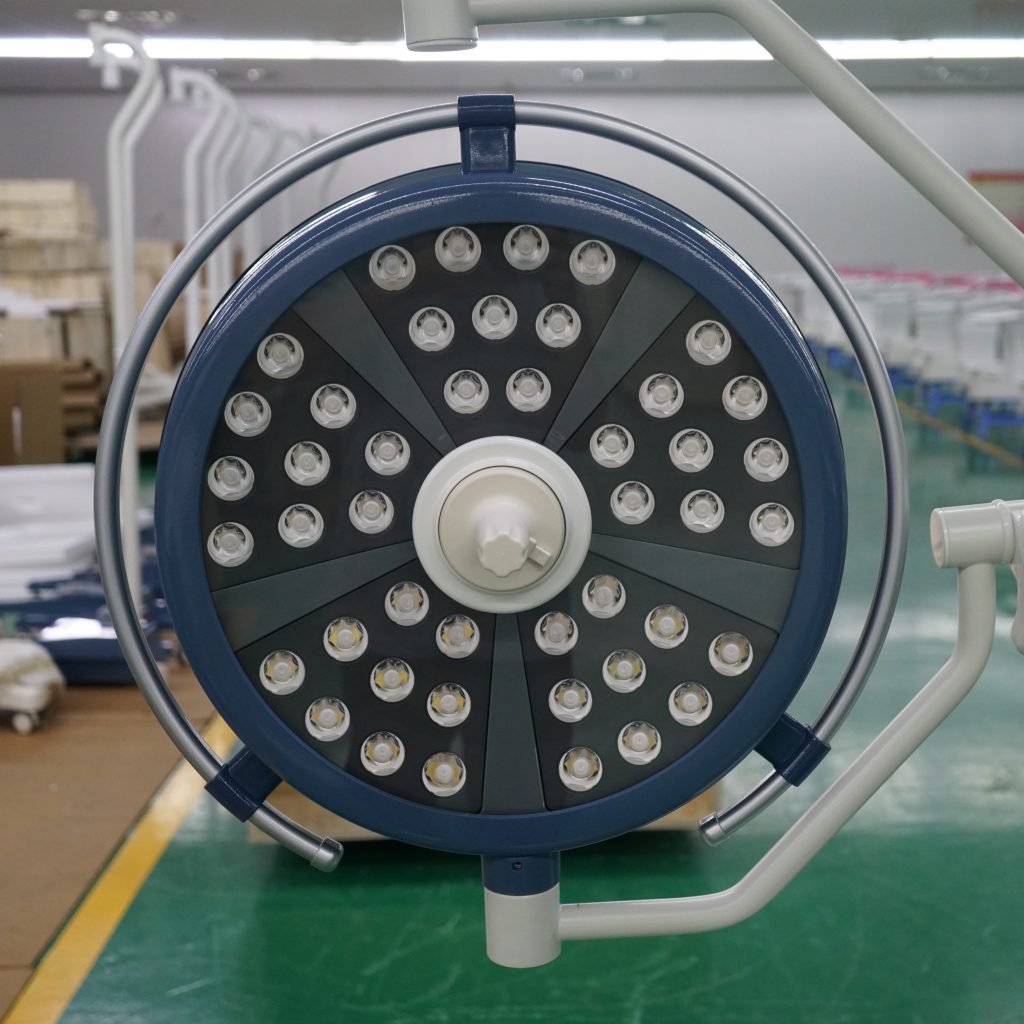
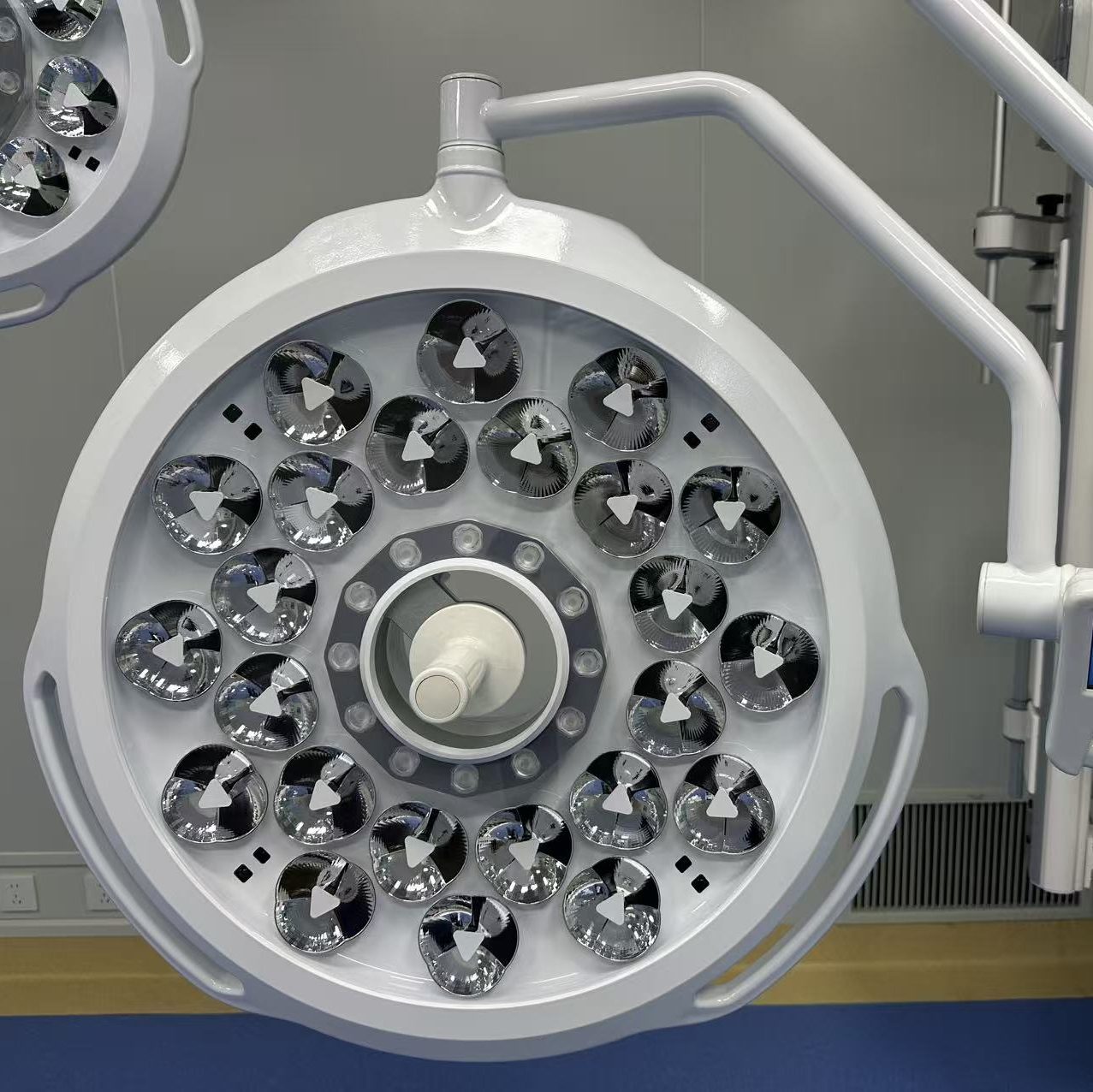
- LED Array Modules: The core optical component of a modern shadowless surgical lamp. Though rated for 50,000+ hours, arrays gradually degrade in brightness or fail prematurely from power surges and overheating. This is a high-criticality part that directly shapes surgical visibility and patient safety.
- Power Supply Units: The most frequently failing electronic component. Heat cycling and capacitor aging cause flickering, dimming, or total system failure.
- Sterilizable Handles & Connection Ports: High-touch consumables replaced every 1–3 years. Locking tabs wear out and surfaces develop micro-scratches from repeated sterilization cycles.
- Mechanical Arm Components: Spring balances, joint bearings and friction clutches wear over years of constant repositioning, leading to position drift.
- Lens Covers & Optical Diffusers: Protective outer lenses scratch, yellow or crack from disinfectant exposure and impact. Degraded lenses reduce light transmission and uniformity across the surgical field.
OEM Parts: Pros, Cons & Ideal Use Cases
OEM parts are manufactured or directly specified by the original maker of your shadowless surgical lamp, built to exact factory specifications and tested to the same compliance standards as original components.
Key Advantages
First is guaranteed fit and performance. OEM parts install without modification, align perfectly with optical and mechanical systems, and restore the unit to original factory specifications. There is no risk of poor fit causing uneven stress, light leakage, or mechanical drift.
Second is warranty protection. Using OEM parts preserves the manufacturer warranty on your surgical lighting system. If a repair causes secondary damage, the manufacturer covers follow-up service. Aftermarket parts, by contrast, typically void remaining warranty coverage entirely.
Third is regulatory compliance. OEM parts carry the same medical device certifications as the original shadowless surgical lamp, including FDA 510(k) clearance and CE marking. This simplifies accreditation audits and ensures the repaired unit remains a legally compliant medical device.
Key Drawbacks
The biggest downside is cost. OEM parts typically cost 2–5 times more than equivalent aftermarket alternatives. For high-value components such as full LED arrays, the price gap can reach thousands of dollars per unit.
Second is long lead times. OEM parts often ship from overseas factories or regional warehouses, with lead times of 2–8 weeks for common parts and months for low-volume components. This creates significant OR downtime risk for emergency repairs.
Third is limited legacy support. Once a shadowless surgical lamp model is discontinued, OEM parts become harder to source and eventually unavailable entirely, forcing premature replacement of otherwise functional equipment.
Aftermarket Parts: Pros, Cons & Ideal Use Cases
Aftermarket parts are made by independent third-party companies, designed to be compatible with specific shadowless surgical lamp models and sold at lower price points through independent distributors.
Key Advantages
First is significant cost savings. Most aftermarket parts cost 30–60% less than OEM equivalents. For consumable items such as handles and lens covers that are replaced regularly, these savings compound dramatically across a large equipment fleet.
Second is fast availability. Aftermarket distributors typically maintain large local inventories, with same-day or next-day shipping for most common parts. This drastically reduces OR downtime for emergency repairs compared to waiting for OEM shipments.
Third is extended legacy support. Aftermarket manufacturers often continue producing parts for older shadowless surgical lamp models long after the OEM has ended support. This can extend the usable life of legacy systems by many years, deferring large capital replacement costs.
Key Drawbacks
First is variable quality and compatibility. Quality ranges widely across suppliers. Premium third-party parts can match OEM performance, but budget alternatives often use inferior materials and looser tolerances. Poorly fitting parts can cause light drift, uneven illumination, or permanent damage to the shadowless surgical lamp connection ports and arm assemblies.
Second is warranty and liability risk. Installing aftermarket parts almost always voids the manufacturer warranty of your shadowless surgical lamp. If the part causes secondary damage, the facility bears the full repair cost. There is also greater liability risk if a part failure contributes to an adverse patient event.
Third is regulatory uncertainty. Many low-cost aftermarket parts lack independent medical device certification. While the base shadowless surgical lamp remains certified, uncertified replacement components can create compliance gaps during accreditation surveys.
Head-to-Head Comparison & Cost Analysis
The table below summarizes key differences between OEM and aftermarket parts across the most important decision criteria for surgical lighting maintenance.
OEM vs Aftermarket Surgical Lighting Parts Comparison
| Criterion | OEM Parts | Aftermarket Parts |
|---|---|---|
| Price Premium | 100%–400% above aftermarket | 30–60% cheaper than OEM (base reference) |
| Fit & Compatibility | Guaranteed exact match | Varies by supplier; fit issues common with budget vendors |
| Quality Consistency | High, factory-controlled standards | Highly variable — from equivalent to poor |
| Warranty Impact | Preserves equipment warranty | Usually voids manufacturer warranty |
| Regulatory Status | Full FDA / CE / ISO compliance | Varies; many budget parts lack medical certification |
| Typical Lead Time | 2–8 weeks | 1–3 business days for most parts |
| Legacy Support | Ends 5–10 years after discontinuation | Available for 15–20+ year old models |
| Best Use Case | Critical components, in-warranty units, high-risk ORs | Consumables, out-of-warranty equipment, legacy systems |
The table below compares typical pricing for the most commonly replaced parts on a standard mid-tier shadowless surgical lamp.
Part-by-Part Cost Comparison (USD)
| Replacement Part | OEM Price | Aftermarket Price | Cost Savings |
|---|---|---|---|
| Sterilizable Handle | $95 | $38 | 60% |
| Outer Lens Cover | $220 | $95 | 57% |
| Power Supply Unit | $680 | $310 | 54% |
| Control Button Panel | $450 | $210 | 53% |
| Complete LED Array | $2,800 | $1,350 | 52% |
| Arm Spring Rebuild Kit | $520 | $240 | 54% |
Aftermarket parts deliver consistent savings of roughly 50–60% across most component categories. For facilities with large fleets of out-of-warranty equipment, this can translate to tens of thousands of dollars in annual maintenance savings.
Decision Framework: When to Choose OEM vs Aftermarket
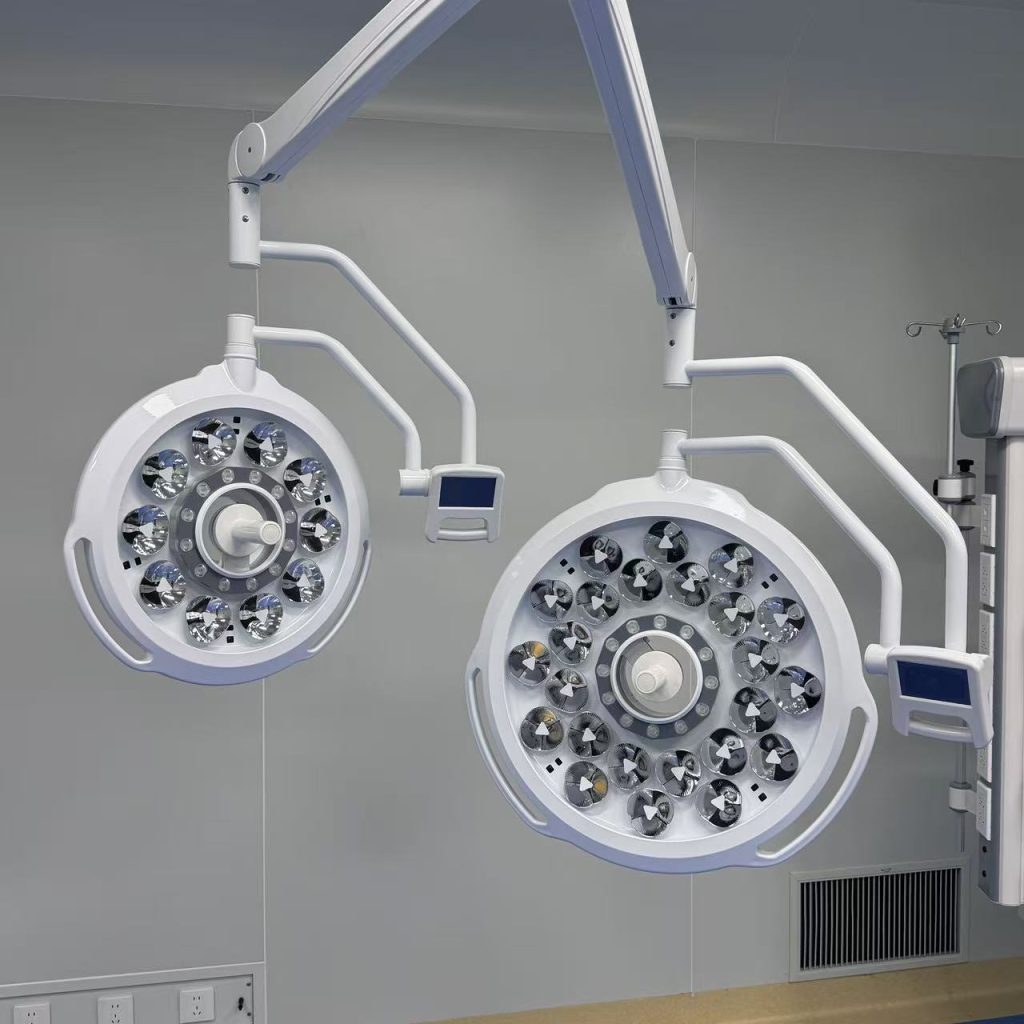
The optimal strategy is rarely all-OEM or all-aftermarket. The best approach is a tiered strategy based on part criticality, equipment status, and clinical risk.
Choose OEM parts when:
- The shadowless surgical lamp is still under manufacturer warranty
- The part is a high-criticality optical or safety component (LED array, power supply, electrical safety parts)
- The equipment supports high-complexity, high-risk procedures such as cardiovascular or neurosurgery
- Regulatory compliance and audit readiness are top priorities
- The repair involves sealed systems where a faulty part could cause cascading damage
Choose aftermarket parts when:
- The equipment is out of warranty and past its expected service life
- The part is a low-criticality consumable or cosmetic item (handles, lens covers, exterior trim)
- You have verified the supplier has proper certification and a proven quality track record
- OEM parts are no longer available for a legacy shadowless surgical lamp
- You need fast turnaround to minimize OR downtime for a non-critical repair
Best Practice: Vet Your Supplier
When evaluating an aftermarket supplier, request ISO 13485 certification, FDA 510(k) clearance for the specific part, customer references from healthcare facilities, and a performance warranty. Reputable third-party suppliers deliver OEM-equivalent performance at lower cost with faster delivery. Uncertified low-price vendors are rarely worth the risk beyond trivial cosmetic parts.
If you need medical equipment or other services, please contact us!
Email: demanmedical@gmail.com
Phone: +86-13188819888
Facebook:https://www.facebook.com/demanmedical/
Instagram: https://www.instagram.com/deman.medical/
YouTube: https://www.youtube.com/@DEMANmedical
Conclusion
Choosing between OEM and aftermarket parts for your shadowless surgical lamp fleet is not an all-or-nothing decision. Both channels serve distinct purposes, and the most cost-effective, low-risk strategy is a tiered approach that matches sourcing to part criticality.
OEM parts deliver unbeatable quality assurance, regulatory compliance, and warranty protection, making them the right choice for high-criticality components and in-warranty equipment. Aftermarket parts offer dramatic cost savings, faster availability, and extended legacy support, making them ideal for consumable items and older, out-of-warranty units.
The key to success is thorough supplier vetting. Cutting corners on uncertified, low-quality components is a false economy that can lead to equipment damage, compliance issues, and patient safety risks. Reputable third-party suppliers with proper certifications can deliver OEM-equivalent performance at a fraction of the cost.
By applying the decision framework outlined in this guide, biomedical engineering and procurement teams can reduce surgical lighting maintenance costs by 30–50% while upholding the performance, safety, and compliance standards every shadowless surgical lamp in your facility requires. The result is a balanced, data-driven parts strategy that supports both clinical excellence and financial responsibility.
Frequently Asked Questions (FAQ)
Will aftermarket parts void my shadowless surgical lamp warranty?
In most cases, yes. Manufacturer warranties typically require genuine OEM parts for all repairs and service. Installing third-party parts is grounds for voiding remaining warranty coverage. Always confirm your warranty terms before using aftermarket parts on an in-warranty shadowless surgical lamp. Once the warranty expires, you are free to choose any parts source.
Are aftermarket LED modules as bright and durable as OEM?
It depends entirely on the supplier. Premium aftermarket LED modules use medical-grade chips and optical designs matching OEM specifications, delivering equivalent brightness, color rendering, and lifespan. Budget modules often use lower-grade chips with poorer color accuracy and faster light decay. Always request photometric data before purchasing a third-party LED array for your shadowless surgical lamp.
Which parts should never be replaced with aftermarket alternatives?
Avoid aftermarket parts for safety-critical electrical components such as power supplies and internal wiring, as well as core optical components that directly affect surgical visibility. These carry the highest risk of equipment damage, electrical hazards, or degraded clinical performance. For handles, lens covers, and external trim, aftermarket parts are generally a safe, cost-effective choice.
What if OEM parts are no longer available for my older surgical light?
Once a manufacturer ends support for a legacy shadowless surgical lamp model, reputable aftermarket parts suppliers become your best option. Many third-party manufacturers specialize in legacy medical equipment parts and can keep older systems running for years past OEM end-of-support. Always work with suppliers that provide documented performance specifications and safety testing.
How can I verify a part is genuine OEM?
Genuine OEM parts come in branded manufacturer packaging, carry a part number matching your equipment manual, and are sold through authorized distributors. Parts advertised as “OEM equivalent” or “OEM quality” at steep discounts are almost always aftermarket. Purchase OEM parts directly from the manufacturer or an authorized distributor to avoid counterfeit components.