

Introduction
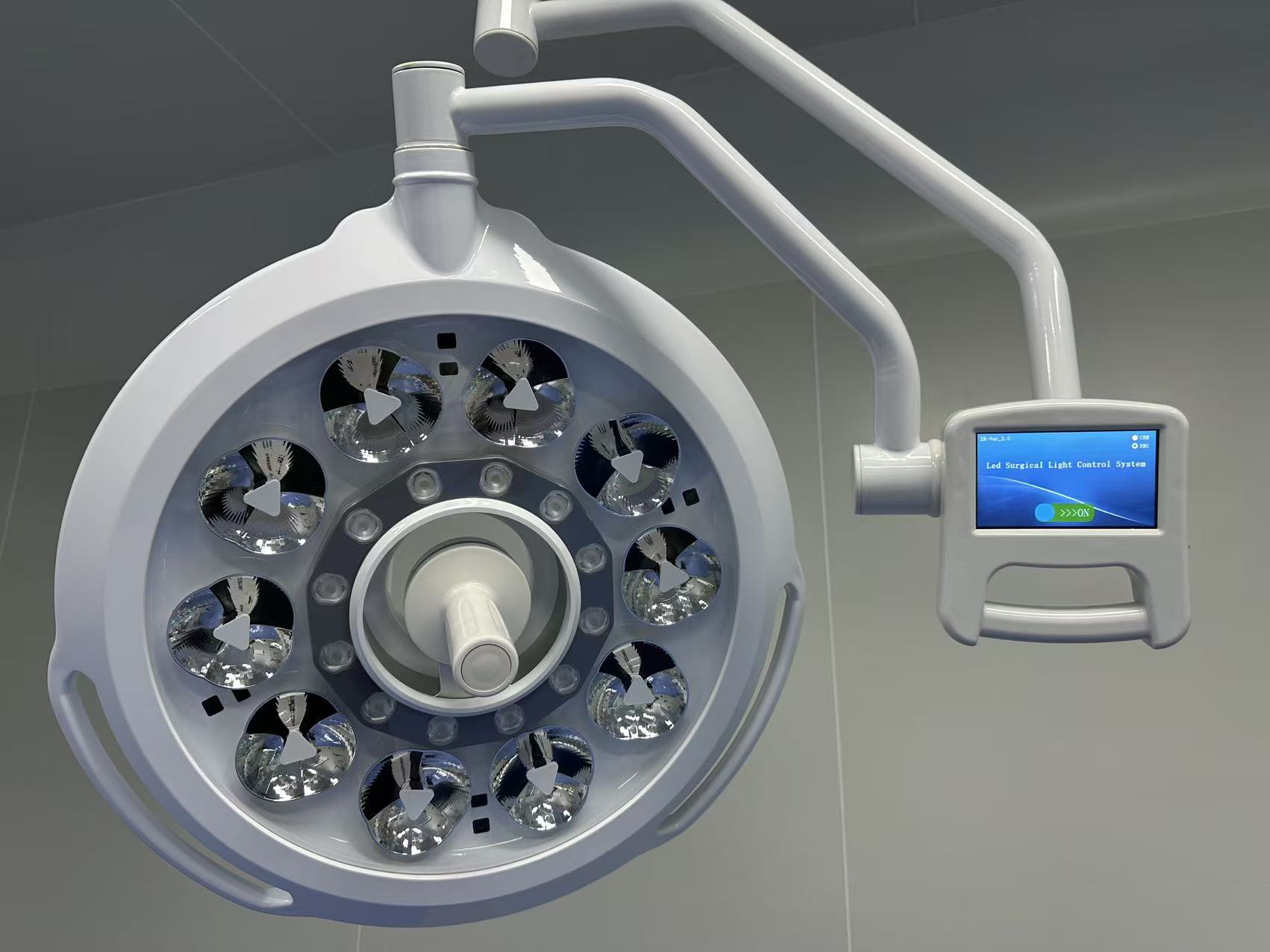
Lighting is one of the most critical elements in every operating room. No matter how advanced the surgical equipment or how experienced the medical team is, inadequate illumination can compromise precision, increase fatigue, and negatively impact patient safety. This is why the LED surgery light has become the preferred lighting solution for modern hospitals, surgical centers, and specialty clinics around the world.
Unlike traditional halogen surgical lights, an LED surgery light delivers brighter, more uniform illumination while generating less heat and consuming significantly less energy. Advanced optical technology also enables surgeons to maintain a clear view of the surgical field without distracting shadows, helping improve accuracy during even the most delicate procedures.
However, choosing the right LED surgery light involves much more than comparing brightness levels. Hospitals must evaluate illumination intensity, color rendering, shadow management, adjustability, sterilization, energy efficiency, durability, and compliance with international medical standards.
Whether you are planning a new operating room, upgrading existing equipment, or sourcing medical devices for a healthcare project, understanding the essential factors behind an LED surgery light can help you make a more informed purchasing decision.
This guide explores everything hospitals should consider before investing in a modern LED surgery light, from technical specifications and clinical applications to maintenance requirements and future technology trends.
Why Hospitals Are Switching to LED Surgery Light
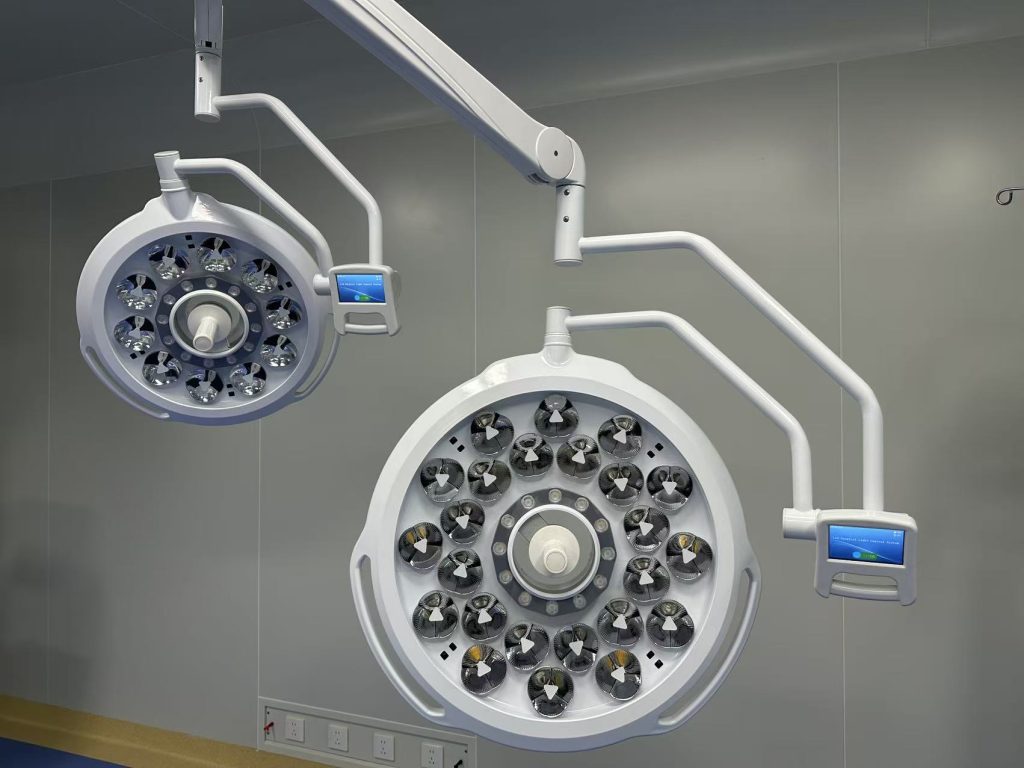
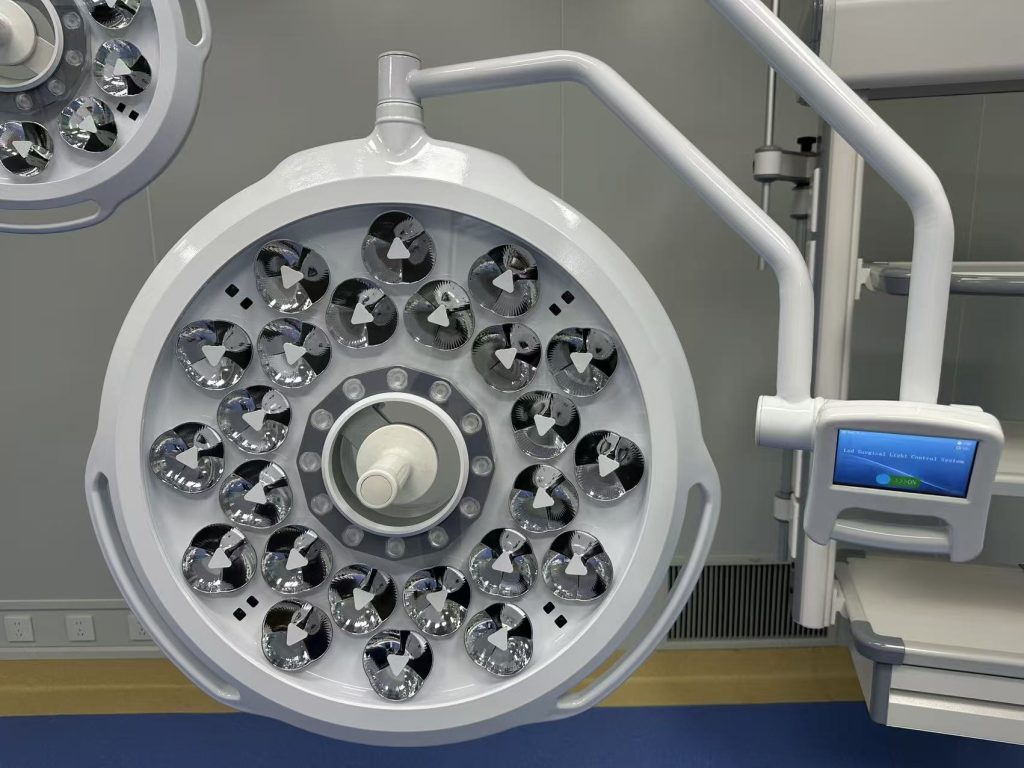
Healthcare facilities worldwide are replacing traditional halogen operating lights with LED technology. The reasons go far beyond energy savings.
An LED surgery light offers consistent illumination throughout its service life, produces very little infrared radiation, and significantly improves surgeon comfort during lengthy procedures.
Major Advantages
- Longer service life
- Lower operating costs
- Superior illumination quality
- Minimal heat generation
- Better tissue color recognition
- Reduced maintenance frequency
- Eco-friendly operation
Compared with older lighting systems, an LED surgery light improves both surgical performance and hospital efficiency.
Comparison of Lighting Technologies
| Feature | LED Surgery Light | Halogen Surgical Light |
|---|---|---|
| Energy Consumption | Low | High |
| Heat Emission | Very Low | High |
| Average Lifespan | 50,000–100,000 Hours | 1,000–2,000 Hours |
| Brightness Stability | Excellent | Moderate |
| Maintenance Cost | Low | High |
| Color Rendering | Excellent | Good |
| Environmental Impact | Low | Higher |
Understanding the Working Principle
The performance of an LED surgery light is based on multiple high-performance LEDs arranged in a carefully engineered optical structure.
Instead of relying on a single light source, dozens or even hundreds of LEDs produce overlapping beams that eliminate shadows and provide consistent illumination across the surgical field.
Modern optical lenses precisely focus light to achieve excellent depth of illumination while maintaining uniform brightness.
Core Components
| Component | Function |
| LED Modules | Produce high-intensity surgical illumination |
| Optical Lens System | Focuses and distributes light evenly |
| Reflector Design | Enhances shadow reduction |
| Spring Arm System | Enables smooth positioning |
| Control Panel | Adjusts brightness and color temperature |
| Sterile Handle | Allows adjustment during surgery |
| Heat Dissipation System | Maintains stable LED performance |
Key Factors to Consider Before Purchasing
Selecting an LED surgery light requires careful evaluation of several technical and clinical factors.
Illumination Intensity
Brightness is measured in lux.
Most operating rooms require illumination between 40,000 and 160,000 lux, depending on the surgical specialty.
General surgery often requires approximately 120,000 lux, while microsurgery may demand even higher intensity.
Hospitals should choose an LED surgery light that offers adjustable brightness rather than fixed output.
Color Rendering Index (CRI)
A high Color Rendering Index allows surgeons to distinguish tissues, blood vessels, muscles, and organs accurately.
For surgical applications, a CRI of 90 or above is generally recommended.
Higher CRI improves tissue recognition and reduces visual fatigue.
Color Temperature
Color temperature affects how tissues appear during surgery.
Typical adjustable ranges include:
| Color Temperature | Clinical Effect |
| 3,500 K | Warm light for reduced eye strain |
| 4,000 K | Natural tissue appearance |
| 4,500 K | Standard surgical lighting |
| 5,000 K | High contrast visualization |
| 5,500 K | Bright white illumination |
A modern LED surgery light should provide multiple color temperature settings.
Shadow Management
One of the primary purposes of an LED surgery light is eliminating shadows caused by surgeons’ hands, instruments, or equipment.
High-quality systems use multiple overlapping light sources to maintain consistent visibility from different angles.
Effective shadow reduction directly improves surgical precision.
Depth of Illumination
Operations often involve deep surgical cavities.
A high-performance LED surgery light maintains uniform illumination even when working several centimeters below the surface.
This feature is especially important for:
- Neurosurgery
- Cardiac surgery
- Orthopedic procedures
- General abdominal surgery
Heat Control
Unlike conventional bulbs, LEDs generate very little infrared radiation.
Benefits include:
- Reduced tissue dehydration
- Improved surgeon comfort
- Lower operating room temperature
- Less fatigue during long procedures
Low heat output has become one of the defining characteristics of every premium LED surgery light.
Applications Across Hospital Departments
An LED surgery light is used in almost every clinical department.
General Surgery
Provides bright illumination for abdominal and gastrointestinal procedures.
Orthopedic Surgery
Supports accurate visualization during fracture fixation and joint replacement.
Neurosurgery
Maintains stable lighting for delicate brain and spinal procedures.
Cardiovascular Surgery
Improves visibility of small blood vessels and cardiac structures.
Gynecology
Facilitates cesarean sections and minimally invasive procedures.
Emergency Department
Enables rapid treatment during trauma surgeries.
Outpatient Clinics
Mobile LED surgery light models are ideal for examination rooms and minor surgical procedures.
Types of LED Surgery Light
Hospitals can choose from several configurations depending on their workflow.
| Type | Advantages | Typical Applications |
| Ceiling Mounted | Maximum flexibility and stability | Major operating rooms |
| Double Dome | Large illumination coverage | Complex surgeries |
| Mobile | Portable and flexible | Emergency departments |
| Wall Mounted | Space-saving | Small clinics |
| Examination Light | Compact design | Minor procedures |
Each LED surgery light configuration serves different clinical requirements.
Essential Features Hospitals Should Look For
When evaluating suppliers, hospitals should compare more than just price.
Important features include:
- Adjustable brightness
- Adjustable color temperature
- High CRI
- Shadow compensation technology
- Deep illumination
- Sterile removable handles
- Touchscreen controls
- LCD display
- Backup power compatibility
- Long LED lifespan
- Silent operation
- Easy cleaning
These features improve usability while reducing long-term operating costs.
Comparing LED Surgery Light Specifications
| Specification | Recommended Value |
| Illumination | 120,000–160,000 Lux |
| Color Temperature | 3,500–5,500 K |
| CRI | ≥90 |
| LED Lifespan | 50,000–100,000 Hours |
| Light Field Diameter | 150–300 mm |
| Depth of Illumination | ≥1,000 mm |
| Power Consumption | Low |
| Heat Radiation | Minimal |
Hospitals should compare specifications carefully before making purchasing decisions.
Installation Considerations
Proper installation affects both safety and performance.
Hospitals should evaluate:
- Ceiling load capacity
- Room dimensions
- Operating table position
- Electrical infrastructure
- Backup power systems
- Maintenance accessibility
Correct installation ensures the LED surgery light operates efficiently throughout its service life.
Maintenance and Cleaning
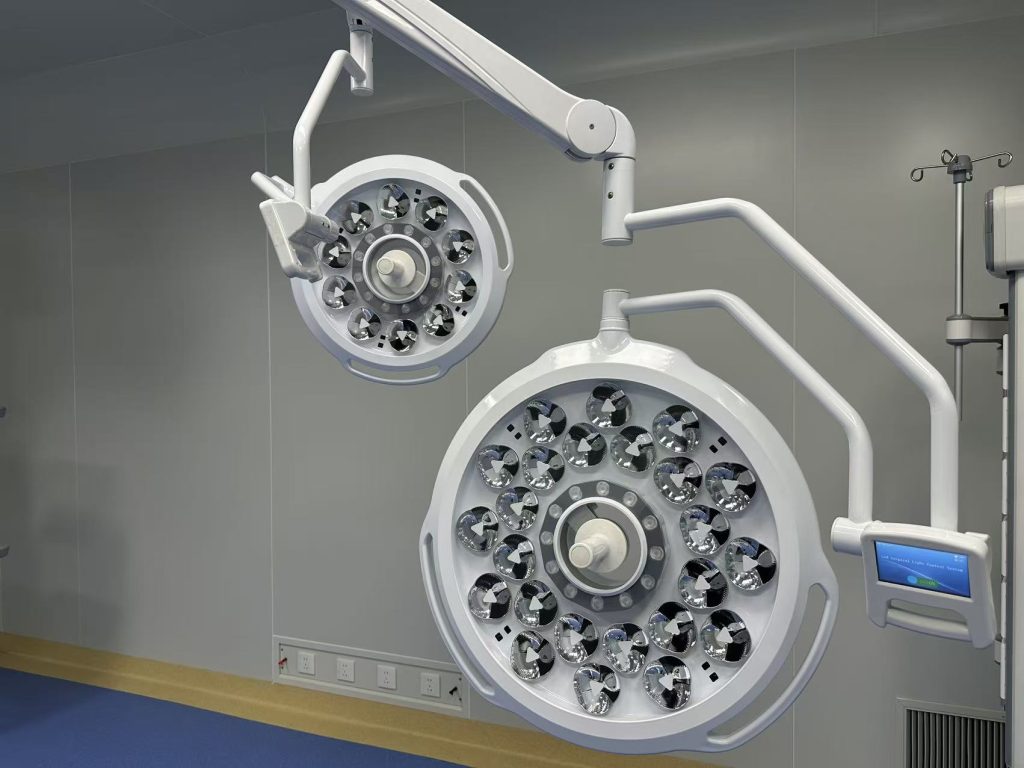
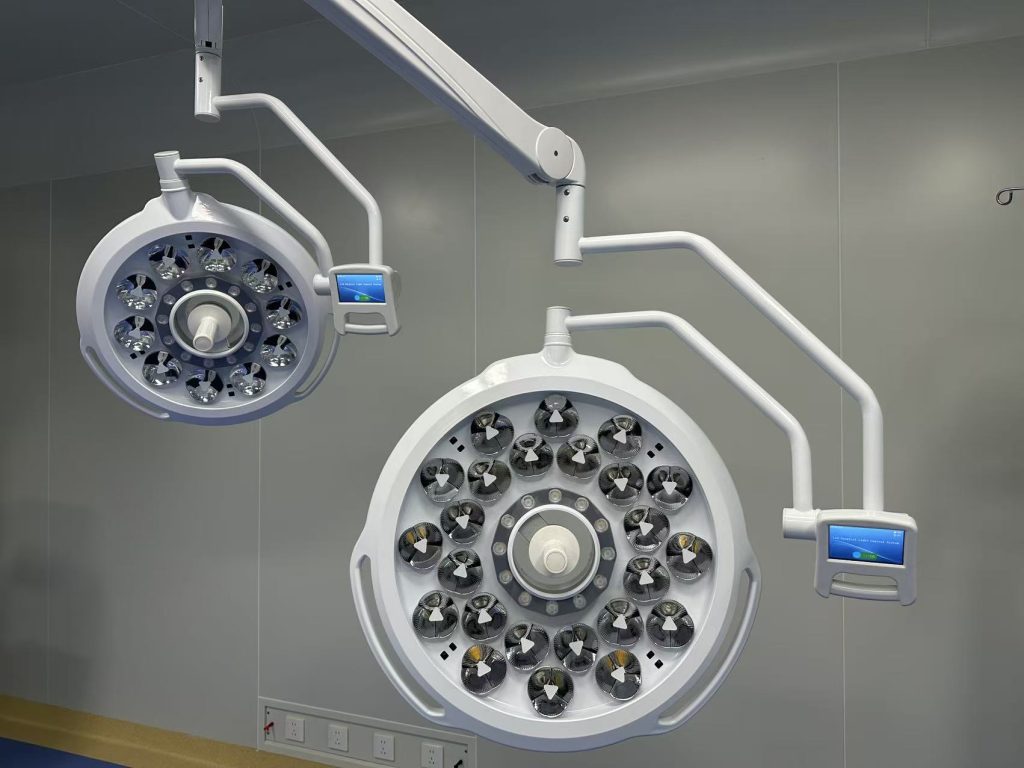
Routine maintenance extends equipment lifespan.
Recommended Maintenance Schedule
| Task | Frequency |
| Clean lamp housing | Daily |
| Sterilize handles | After each procedure |
| Check arm movement | Weekly |
| Test brightness | Monthly |
| Inspect electrical connections | Quarterly |
| Professional servicing | Annually |
Preventive maintenance minimizes downtime and protects hospital investments.
Choosing the Right Manufacturer
Not all manufacturers provide the same level of quality.
Hospitals should evaluate suppliers based on:
- Manufacturing experience
- ISO certification
- CE certification
- FDA compliance (where applicable)
- Production capacity
- After-sales support
- Warranty period
- Spare parts availability
- Technical training
- Global export experience
Working with a reliable manufacturer ensures long-term equipment performance and dependable technical support.
Future Trends in LED Surgery Light Technology
Medical lighting continues to evolve rapidly.
Emerging innovations include:
- AI-assisted brightness adjustment
- Automatic shadow compensation
- Voice-controlled operation
- Wireless control systems
- Integrated surgical camera systems
- Digital operating room connectivity
- Smart diagnostics
- Remote maintenance monitoring
- Energy optimization technologies
These advancements will further improve surgical accuracy and operating room efficiency.
If you need medical equipment or other services, please contact us!
Email: demanmedical@gmail.com
Phone: +86-13188819888
Facebook:https://www.facebook.com/demanmedical/
Instagram: https://www.instagram.com/deman.medical/
YouTube: https://www.youtube.com/@DEMANmedical
Conclusion
An LED surgery light is much more than a source of illumination—it is an essential component of every modern operating room. From improving visibility and reducing shadows to minimizing heat generation and lowering maintenance costs, it plays a direct role in enhancing surgical precision and patient safety.
When selecting an LED surgery light, hospitals should carefully evaluate illumination intensity, color rendering, shadow management, depth of illumination, energy efficiency, adjustability, and compliance with international medical standards. Considering these factors ensures that healthcare facilities invest in equipment capable of meeting today’s surgical demands while remaining reliable for years to come.
As technology continues to advance, intelligent lighting systems with AI features, integrated imaging, and smart controls are expected to become standard in operating rooms worldwide. Choosing a high-quality LED surgery light today is not only an investment in better surgical performance but also in the future of healthcare.
FAQ
Why is an LED surgery light better than a halogen surgical light?
An LED surgery light offers longer lifespan, lower energy consumption, minimal heat generation, superior color rendering, and reduced maintenance compared with halogen lighting systems.
What illumination level should hospitals choose?
Most hospitals select an LED surgery light with adjustable illumination ranging from 120,000 to 160,000 lux, depending on the types of procedures performed.
Why is CRI important in surgical lighting?
A high Color Rendering Index enables surgeons to distinguish tissues, blood vessels, and organs more accurately, improving surgical precision.
How long does an LED surgery light typically last?
Most high-quality LED surgery light systems provide an operating life between 50,000 and 100,000 hours, greatly reducing replacement costs.
Can an LED surgery light be used outside operating rooms?
Yes. Mobile and examination models are widely used in emergency departments, outpatient clinics, intensive care units, treatment rooms, and minor procedure areas.