

Introduction
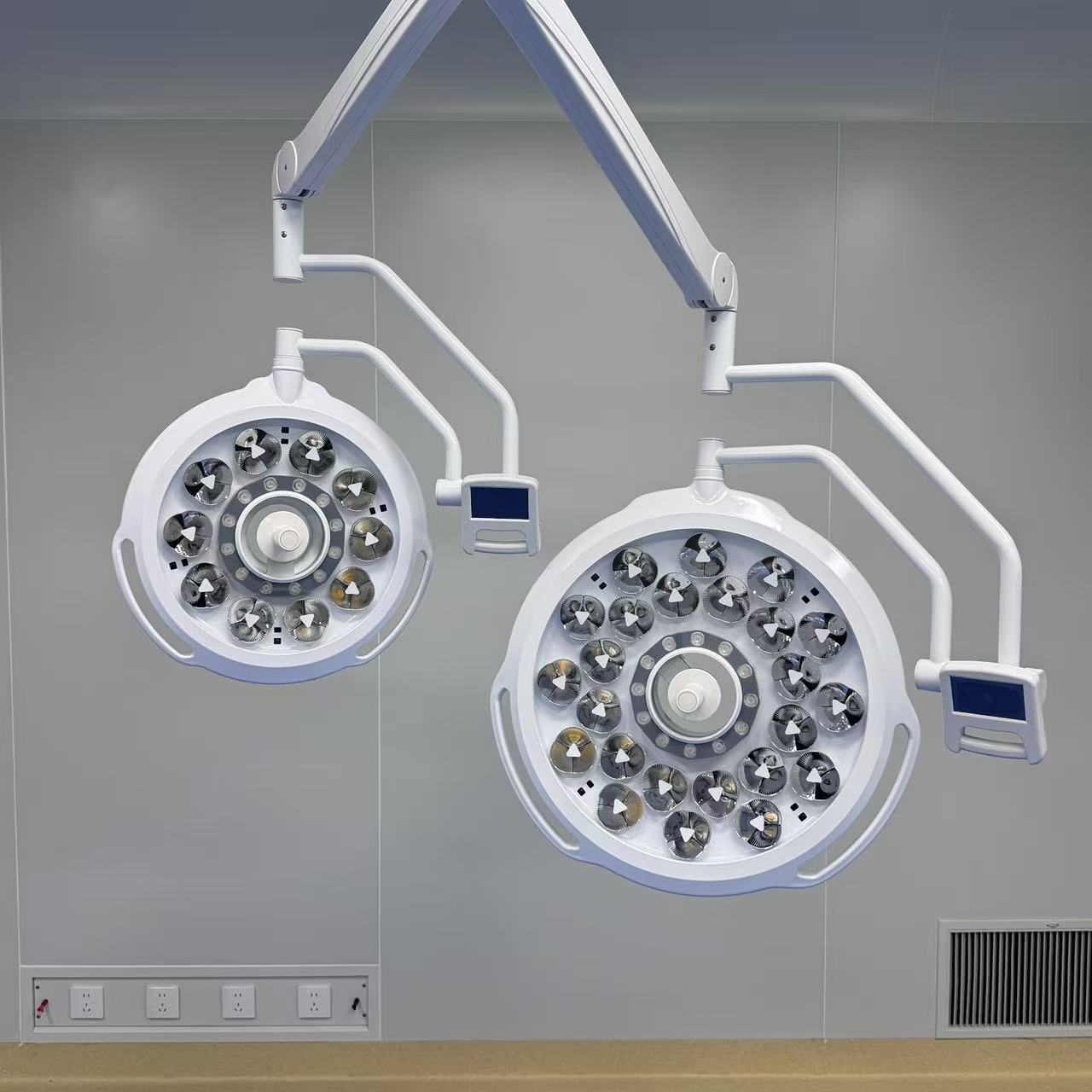
Lighting is one of the most critical yet often overlooked elements in any clinical environment. Whether performing a routine examination, a minor surgical procedure, wound treatment, dermatological evaluation, or dental intervention, healthcare professionals depend on clear, consistent illumination to make accurate diagnoses and perform precise treatments. This is where a high-quality surgical exam light becomes indispensable.
Unlike standard examination lamps, a surgical exam light is specifically engineered to provide bright, shadow-reduced, and color-accurate illumination for both examinations and minor surgical procedures. Modern LED technology has significantly improved lighting performance by offering higher brightness, adjustable color temperature, lower heat emission, and longer service life compared to traditional halogen lamps.
Today’s clinics have a wide range of surgical exam light options, including mobile models, wall-mounted units, ceiling-mounted systems, and portable lights. Choosing the right model requires careful consideration of clinical applications, room size, installation requirements, optical performance, ergonomic design, and long-term operating costs.
Whether you operate a general practice, dermatology clinic, dental office, outpatient surgery center, emergency department, veterinary practice, or specialty medical facility, selecting the appropriate surgical exam light can improve workflow efficiency, enhance patient safety, reduce physician fatigue, and increase overall treatment quality.
This comprehensive buying guide explains everything clinics need to know before investing in a surgical exam light, including technical specifications, purchasing factors, applications, maintenance, and future industry trends.
What Is a Surgical Exam Light?
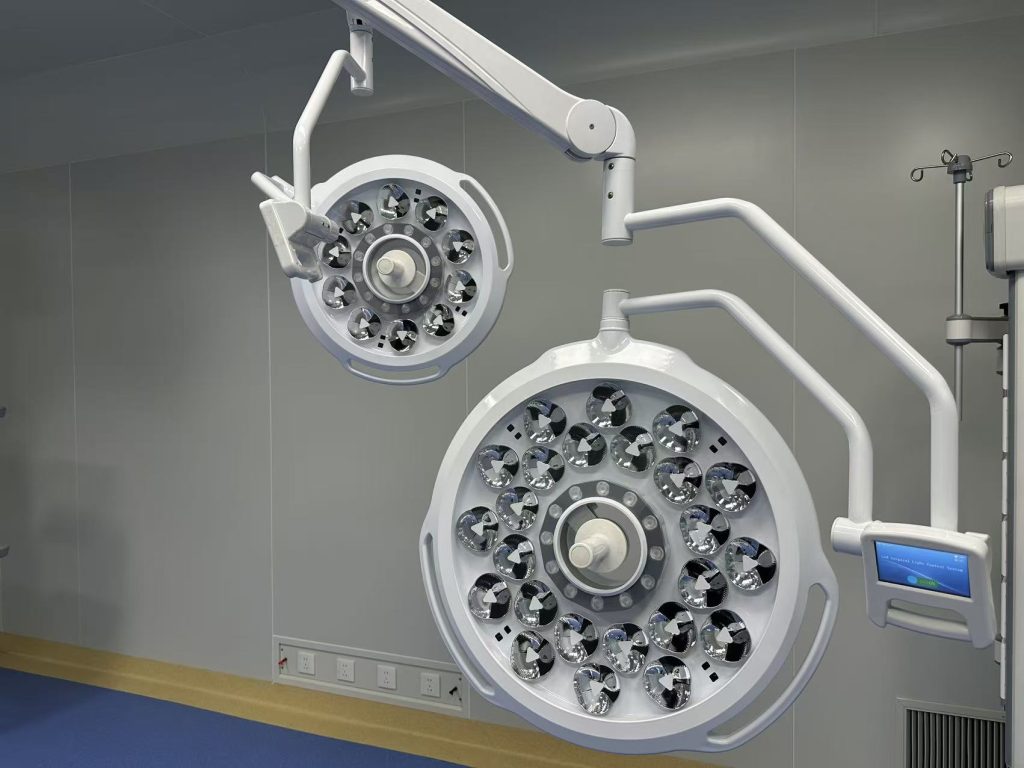
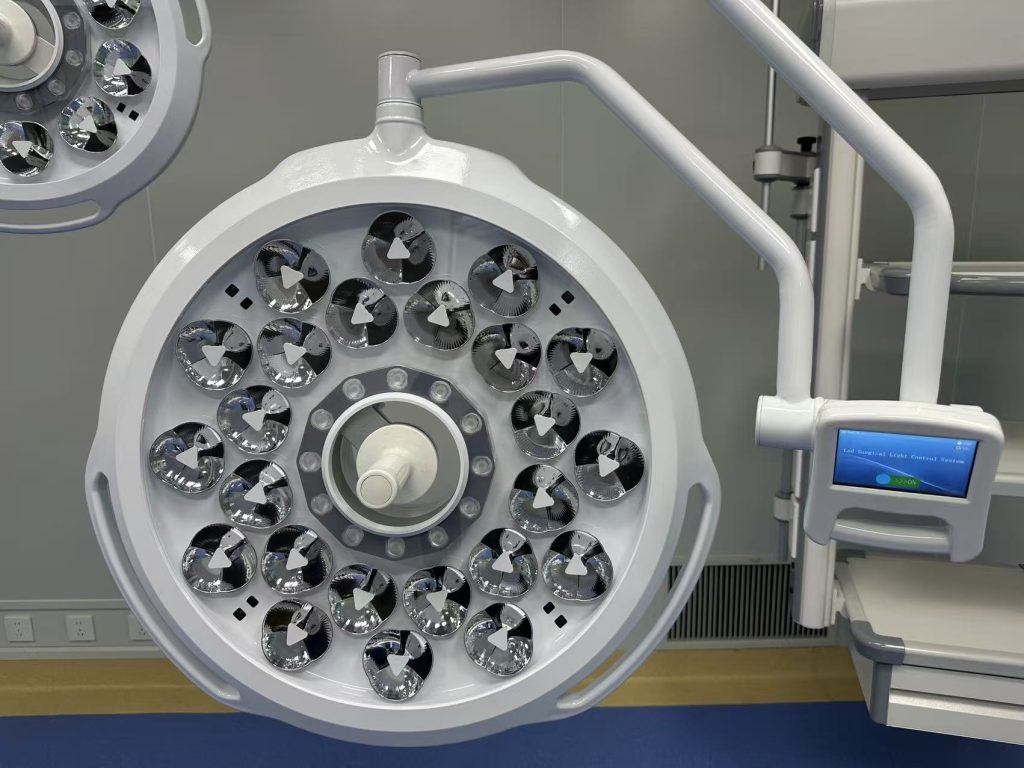
A surgical exam light is a medical lighting device designed to provide focused, high-quality illumination for examinations, diagnostics, and minor surgical procedures. It bridges the gap between standard examination lamps and full operating room surgical lights by offering greater brightness, superior color rendering, and improved shadow control.
Modern systems primarily use LED technology because it provides exceptional illumination while generating very little heat.
Main Components
| Component | Function |
|---|---|
| LED Light Head | Produces bright surgical illumination |
| Optical Lens System | Creates uniform light distribution |
| Flexible Arm | Allows accurate positioning |
| Mobile Base or Mount | Supports installation and movement |
| Sterile Handle | Enables repositioning during procedures |
| Control Panel | Adjusts brightness and color temperature |
| Power Supply | Ensures stable operation |
Together, these components enable a surgical exam light to deliver reliable lighting in demanding clinical environments.
Why Every Modern Clinic Needs a Surgical Exam Light
Lighting directly affects both diagnostic accuracy and treatment quality.
A premium surgical exam light helps healthcare professionals:
- Improve visualization of anatomical structures
- Reduce visual fatigue
- Enhance diagnostic accuracy
- Improve patient safety
- Perform minor surgical procedures more efficiently
- Increase examination consistency
- Improve clinical workflow
As outpatient care continues to expand, investing in an advanced surgical exam light has become increasingly important.
Applications of Surgical Exam Light
A surgical exam light is used in numerous healthcare settings.
General Practice Clinics
Supports routine physical examinations, suturing, wound care, and minor surgical treatments.
Dermatology Clinics
Provides excellent color rendering for skin lesion evaluation, mole examinations, and cosmetic procedures.
Dental Clinics
Improves visibility during restorative treatments, oral surgery, and implant procedures.
ENT Clinics
Offers focused illumination for examinations involving the ears, nose, and throat.
Gynecology Clinics
Supports examinations and outpatient procedures requiring consistent illumination.
Veterinary Clinics
Provides reliable lighting during examinations and animal surgeries.
Emergency Departments
Ideal for emergency wound treatment and bedside procedures.
Clinical Application Comparison
| Medical Specialty | Typical Use | Lighting Requirement |
|---|---|---|
| General Practice | Physical examinations | Medium intensity |
| Dermatology | Skin evaluation | High color accuracy |
| Dentistry | Oral procedures | Focused illumination |
| ENT | Ear and throat examinations | Adjustable positioning |
| Gynecology | Clinical procedures | Uniform lighting |
| Veterinary Medicine | Surgery and diagnosis | High brightness |
Types of Surgical Exam Light
Choosing the correct configuration depends on clinic size and workflow.
Mobile Surgical Exam Light
Mounted on a wheeled base for maximum flexibility.
Advantages:
- Easy movement
- No permanent installation
- Suitable for multiple rooms
Wall-Mounted Surgical Exam Light
Installed directly on the wall.
Advantages:
- Saves floor space
- Stable positioning
- Ideal for small examination rooms
Ceiling-Mounted Surgical Exam Light
Suspended from the ceiling using articulated arms.
Advantages:
- Maximum workspace
- Excellent positioning flexibility
- Suitable for procedure rooms
Portable Surgical Exam Light
Compact and lightweight.
Advantages:
- Easy transportation
- Temporary clinical use
- Field hospitals and emergency care
Configuration Comparison
| Type | Mobility | Installation | Best Application |
|---|---|---|---|
| Mobile | Excellent | Easy | Multi-room clinics |
| Wall-mounted | Low | Moderate | Small clinics |
| Ceiling-mounted | Fixed | Professional | Procedure rooms |
| Portable | Very High | None | Mobile healthcare |
Key Factors to Consider Before Buying a Surgical Exam Light
Purchasing a surgical exam light requires evaluating several technical specifications.
Illumination Intensity
Brightness is measured in lux.
Typical recommendations include:
| Application | Recommended Lux |
|---|---|
| Routine Examination | 30,000–60,000 lux |
| Minor Procedures | 60,000–100,000 lux |
| Surgical Examination | 100,000–120,000 lux |
Adjustable brightness provides greater flexibility.
Color Rendering Index (CRI)
CRI measures how accurately colors appear.
| CRI | Performance |
|---|---|
| Below 85 | Basic visibility |
| 85–89 | Acceptable |
| 90–94 | Excellent |
| Above 95 | Premium performance |
A surgical exam light with CRI above 90 enables better tissue and skin color evaluation.
Adjustable Color Temperature
Different procedures require different lighting conditions.
| Color Temperature | Benefit |
|---|---|
| 3500K | Comfortable warm light |
| 4000K | Natural appearance |
| 4500K | Standard clinical setting |
| 5000K | Enhanced tissue contrast |
| 5500K | Bright white illumination |
Shadow Reduction
A premium surgical exam light should minimize shadows through advanced LED optics and multiple light sources.
This improves visibility during procedures involving instruments or deep anatomical areas.
Arm Flexibility
Look for:
- Multi-joint movement
- 360° rotation
- Smooth balancing
- Stable positioning
- Adjustable height
Flexible positioning allows clinicians to direct light precisely where needed.
Heat Management
LED lighting produces minimal heat.
Benefits include:
- Improved patient comfort
- Reduced tissue drying
- Better working environment
- Increased energy efficiency
LED Lifespan
High-quality LED modules typically last between 50,000 and 100,000 hours, minimizing maintenance and replacement costs.
Comparing LED and Halogen Surgical Exam Light Systems
| Feature | LED Surgical Exam Light | Halogen Light |
|---|---|---|
| Energy Efficiency | Excellent | Low |
| Heat Output | Very Low | High |
| Lifespan | 50,000–100,000 Hours | 1,000–2,000 Hours |
| Maintenance | Low | Frequent |
| Color Rendering | Excellent | Good |
| Brightness Stability | Excellent | Moderate |
LED technology clearly offers superior long-term performance.
Installation Considerations
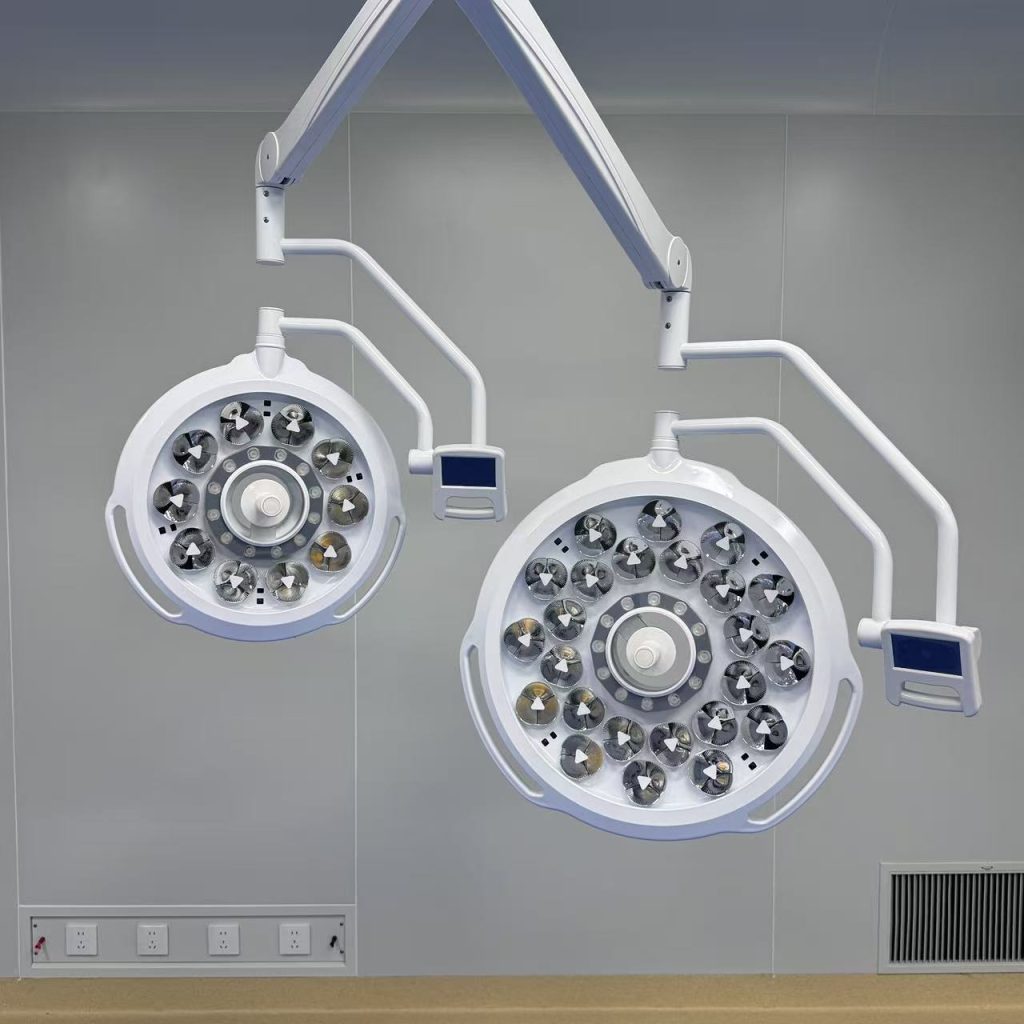
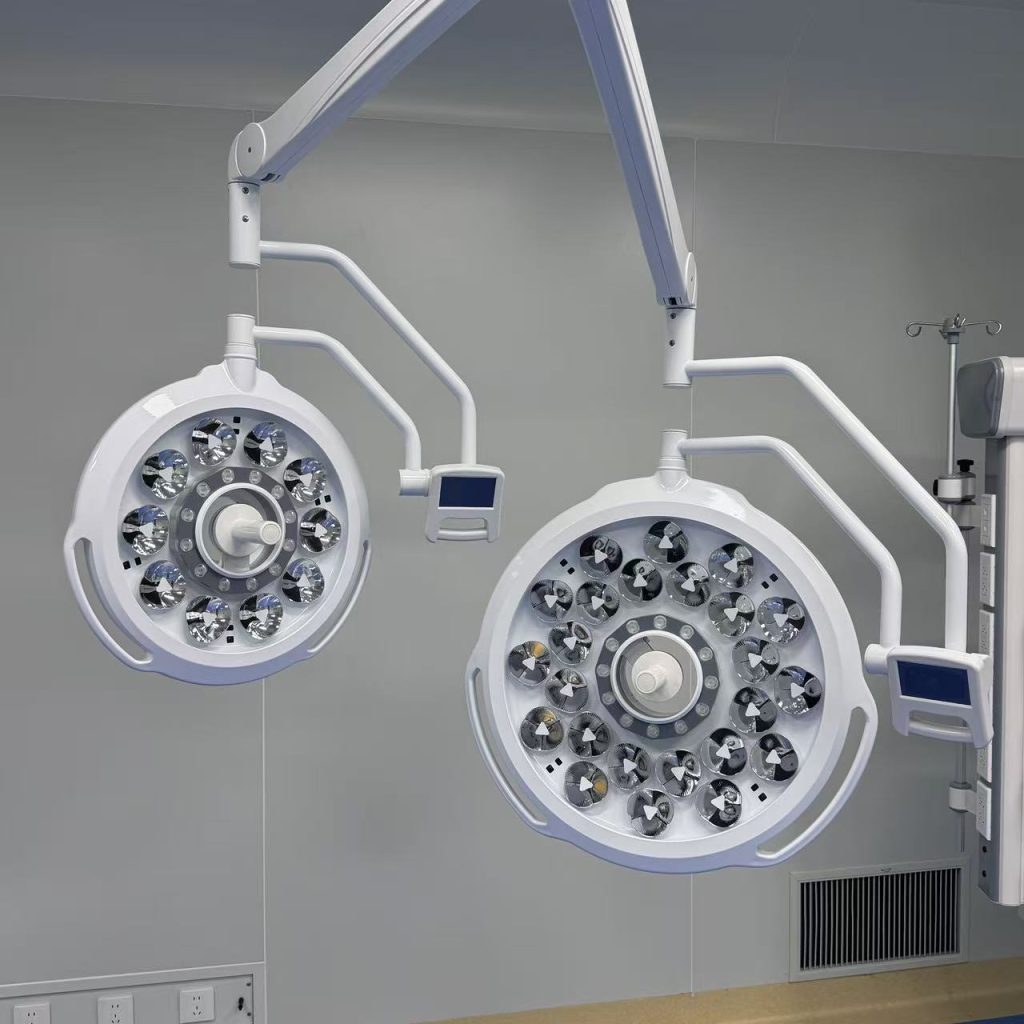
Before purchasing a surgical exam light, clinics should evaluate:
- Available floor space
- Ceiling height
- Electrical capacity
- Room layout
- Patient bed positioning
- Future expansion plans
- Ease of maintenance
Proper planning ensures optimal lighting performance and efficient workflow.
Maintenance Best Practices
Routine maintenance extends equipment life.
| Maintenance Task | Frequency |
|---|---|
| Clean light surface | Daily |
| Disinfect handles | After every patient |
| Inspect arm movement | Monthly |
| Verify illumination output | Quarterly |
| Electrical inspection | Annually |
Preventive maintenance helps maintain consistent lighting quality.
Choosing a Reliable Manufacturer
Selecting a dependable supplier is essential.
Healthcare providers should evaluate manufacturers based on:
- ISO 13485 certification
- CE certification
- FDA registration (where applicable)
- Research and development capability
- Manufacturing experience
- OEM and ODM services
- Product warranty
- Spare parts availability
- Technical support
- Global export experience
A trusted manufacturer ensures reliable products and long-term service.
Future Trends in Surgical Exam Light Technology
Medical lighting technology continues to evolve rapidly.
Emerging innovations include:
- Intelligent brightness adjustment
- Touchless gesture controls
- Wireless battery-powered operation
- Voice-controlled lighting
- Integrated HD cameras
- IoT-enabled diagnostics
- Smart clinic connectivity
- Energy-saving adaptive illumination
These advancements will further improve the efficiency and versatility of the next generation of surgical exam light systems.
If you need medical equipment or other services, please contact us!
Email: demanmedical@gmail.com
Phone: +86-13188819888
Facebook:https://www.facebook.com/demanmedical/
Instagram: https://www.instagram.com/deman.medical/
YouTube: https://www.youtube.com/@DEMANmedical
Conclusion
A surgical exam light is an essential investment for modern clinics seeking to improve diagnostic accuracy, patient safety, and procedural efficiency. Compared with conventional examination lamps, LED-based systems provide brighter illumination, superior color rendering, lower heat emission, and a significantly longer service life.
When selecting a surgical exam light, clinics should carefully evaluate illumination intensity, CRI, color temperature, shadow control, flexibility, installation method, LED lifespan, and manufacturer support. The right lighting solution enhances clinical performance while reducing maintenance costs and improving the overall patient experience.
As outpatient healthcare continues to grow and clinical technologies advance, high-quality surgical exam light systems will remain a cornerstone of efficient, safe, and patient-centered medical practice.
FAQ
What is a surgical exam light?
A surgical exam light is a specialized medical lighting device designed to provide bright, focused, and shadow-reduced illumination for examinations and minor surgical procedures.
What is the difference between an examination light and a surgical exam light?
A standard examination light is intended for routine patient assessments, while a surgical exam light provides higher brightness, improved color rendering, and better shadow control for procedures requiring greater precision.
What brightness should a surgical exam light provide?
Most clinics require adjustable illumination ranging from approximately 30,000 to 120,000 lux, depending on the intended application.
Why is LED technology recommended for a surgical exam light?
LED systems offer longer lifespan, lower energy consumption, minimal heat generation, stable brightness, and excellent color rendering compared with halogen lighting.
Which clinics commonly use a surgical exam light?
General practice clinics, dermatology centers, dental offices, ENT clinics, gynecology practices, outpatient surgery centers, emergency departments, and veterinary hospitals all benefit from using a surgical exam light.