Introduzione
Modern operating rooms rely on advanced medical technologies to ensure patient safety, improve surgical precision, and enhance workflow efficiency. Among the most essential pieces of equipment is the surgical light led system, which provides bright, shadow-free illumination throughout every stage of a procedure. From general surgery and orthopedics to neurosurgery and minimally invasive operations, surgeons depend on reliable lighting to clearly visualize tissues, blood vessels, and anatomical structures.
Compared with traditional halogen lighting, a surgical light led offers superior illumination, lower heat emission, higher energy efficiency, longer service life, and significantly reduced maintenance requirements. However, even the most advanced LED surgical lighting system requires proper installation and regular maintenance to achieve optimal performance and maximize its lifespan.
Incorrect installation can lead to unstable positioning, uneven illumination, limited arm movement, or even safety hazards. Likewise, neglecting routine maintenance may reduce brightness, shorten LED lifespan, increase repair costs, and compromise operating room efficiency.
This comprehensive guide explains everything healthcare facilities need to know about installing and maintaining a surgical light led system. Whether you are building a new operating suite, upgrading an existing hospital, or purchasing equipment for an outpatient surgical center, this article provides practical recommendations to help ensure reliable performance for years to come.
What Is a Surgical Light LED?
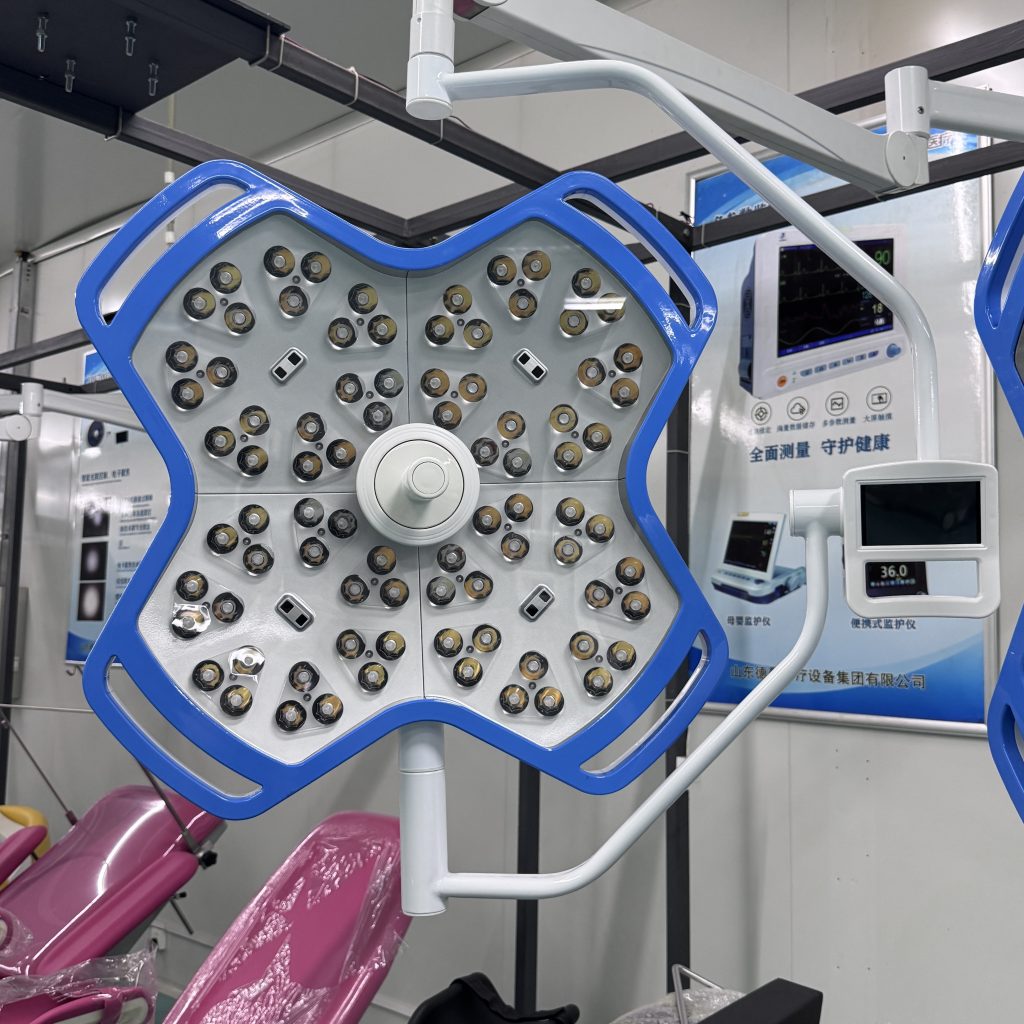
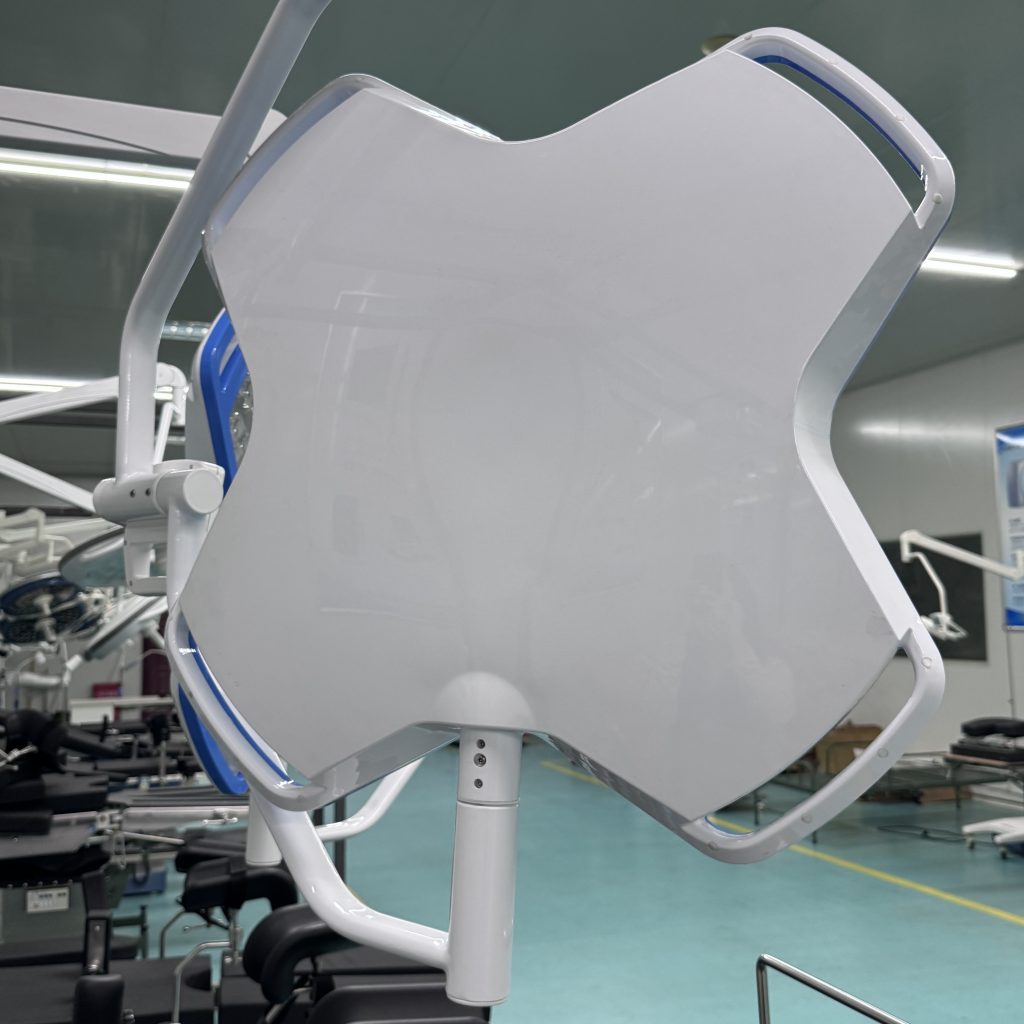
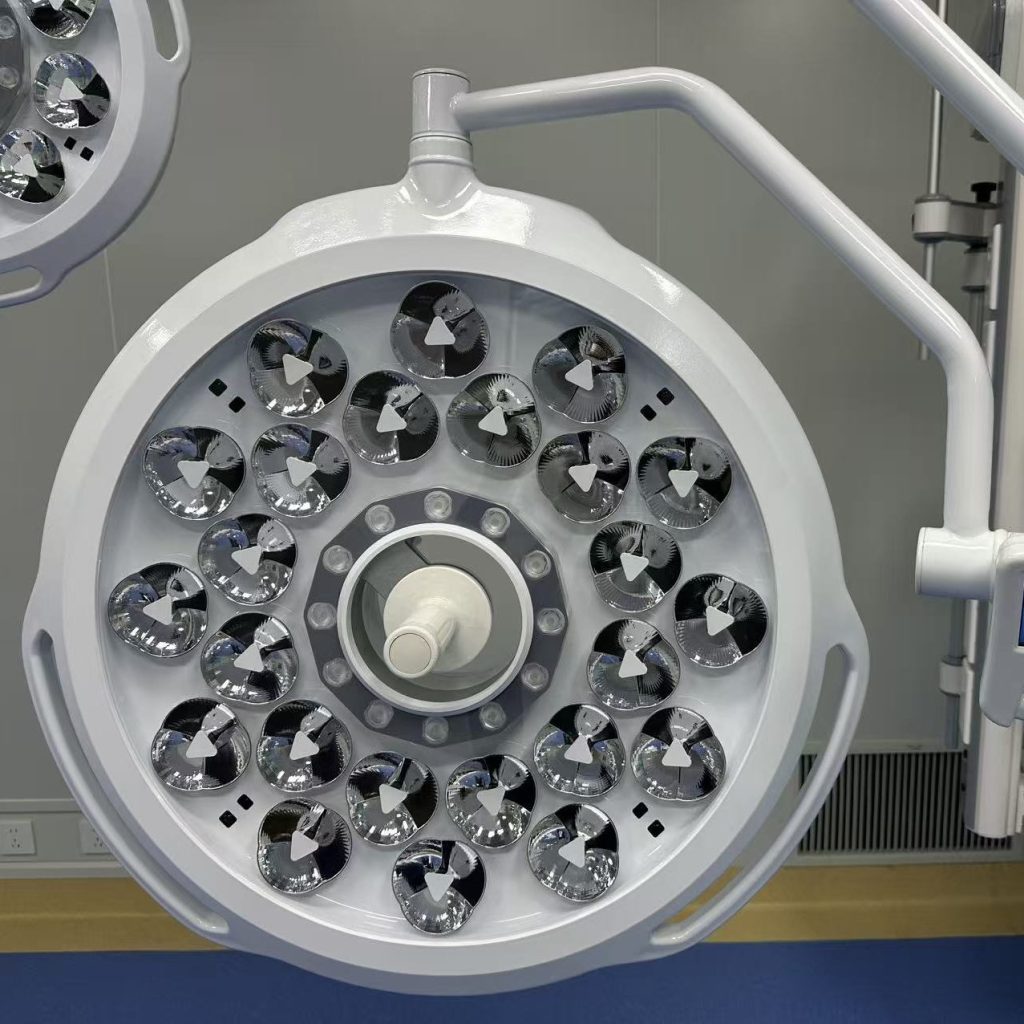
A surgical light led is a specialized medical lighting system that uses high-performance light-emitting diodes (LEDs) to provide intense, uniform, and shadow-reduced illumination during surgical procedures. These systems are designed to maintain consistent brightness while generating minimal heat, making them the preferred choice for modern hospitals and surgical centers.
Unlike conventional halogen lights, LED technology offers greater durability, lower energy consumption, and more accurate color rendering, allowing surgeons to perform delicate procedures with improved confidence.
Main Components of a Surgical Light LED
| Componente | Funzione |
|---|---|
| LED Light Head | Produces high-intensity surgical illumination |
| Sistema di lenti ottiche | Distributes light evenly across the surgical field |
| Ceiling Suspension Arm | Consente un posizionamento flessibile |
| Spring Balance Mechanism | Maintains stable movement |
| Manico sterile | Consente la regolazione durante l'intervento chirurgico |
| Digital Control Panel | Regola la luminosità e la temperatura del colore |
| Heat Dissipation Module | Prevents overheating and protects LEDs |
| Power Supply Unit | Provides stable electrical power |
Each component plays an essential role in delivering reliable lighting performance.
Why Proper Installation Matters
Installing a surgical light led correctly is critical to ensuring safe operation, optimal illumination, and long-term reliability.
Proper installation provides several benefits:
- Stable positioning throughout procedures
- Full arm movement without obstruction
- Uniform light coverage
- Improved operating room workflow
- Reduced maintenance requirements
- Enhanced equipment lifespan
- Increased patient safety
Poor installation, on the other hand, can result in vibration, limited maneuverability, uneven lighting, and premature component wear.
Pre-Installation Planning
Before installing a surgical light led, hospitals should evaluate the operating room environment and infrastructure.
Factors to Assess
- Capacità portante del soffitto
- Ceiling height
- Operating table location
- Compatibilità con il sistema di ventilazione
- Existing medical equipment layout
- Infrastruttura elettrica
- Backup power availability
- Future operating room expansion
Proper planning minimizes installation delays and ensures optimal system performance.
Pre-Installation Checklist
| Articolo | Requisito |
|---|---|
| Ceiling strength | Meets manufacturer specifications |
| Power supply | Stable medical-grade electrical circuit |
| Ceiling height | Suitable for arm movement |
| Backup power | Connected to emergency system |
| Installation space | Free from obstructions |
| Environmental conditions | Clean and dry operating room |
Installation Process of a Surgical Light LED
Professional installation should always be performed by trained technicians following the manufacturer’s instructions.
Step 1: Ceiling Mount Preparation
The mounting plate is securely fixed to the reinforced ceiling structure.
Proper anchoring prevents movement and vibration during use.
Step 2: Suspension Arm Installation
The articulated arm is attached to the ceiling mount.
Technicians verify:
- Smooth movement
- Proper balancing
- Full rotation
- Stable positioning
Step 3: Light Head Assembly
The LED light head is mounted onto the suspension arm.
Connections between the power supply and lighting module are carefully secured.
Step 4: Electrical Connection
The electrical system is connected according to medical safety standards.
Testing includes:
- Voltage stability
- Grounding verification
- Emergency power compatibility
Step 5: System Calibration
After installation, the surgical light led is calibrated.
Calibration includes:
- Brightness adjustment
- Color temperature settings
- Focus alignment
- Shadow compensation verification
- Arm balancing
Key Installation Considerations
Proper positioning is essential for maximizing lighting performance.
Recommended Installation Guidelines
| Installation Factor | Recommendation |
|---|---|
| Distance from operating table | According to manufacturer specifications |
| Rotation angle | 360° movement |
| Vertical adjustment | Full working range |
| Arm clearance | No obstruction |
| Ceiling reinforcement | Required |
| Electrical protection | Medical-grade circuit |
These recommendations ensure the surgical light led performs reliably during every procedure.
Essential Performance Features to Verify
Following installation, healthcare facilities should inspect several performance characteristics.
Intensità luminosa
Most premium surgical light led systems provide adjustable illumination between 120,000 and 160,000 lux.
Temperatura di colore
Adjustable settings allow surgeons to customize lighting.
| Temperatura di colore | Clinical Application |
|---|---|
| 3500 K | Reduced eye fatigue |
| 4000 K | Aspetto naturale dei tessuti |
| 4500 K | Standard surgery |
| 5000 K | Contrasto migliorato |
| 5500 K | Maximum brightness |
Indice di resa cromatica (CRI)
High-quality systems typically provide:
- CRI ≥90
- Premium models CRI ≥95
This ensures accurate tissue color recognition.
Shadow Compensation
Advanced optical systems maintain illumination even when surgeons’ hands or instruments block part of the light.
Routine Maintenance of a Surgical Light LED
Regular maintenance protects both equipment performance and patient safety.
Manutenzione quotidiana
Daily cleaning helps maintain optical performance.
Tasks include:
- Wipe lamp housing
- Clean optical lens
- Disinfettare le impugnature sterili
- Check visible damage
Weekly Maintenance
Inspect:
- Arm movement
- Rotation smoothness
- Locking mechanisms
- Brightness consistency
Manutenzione mensile
Verify:
- Electrical connections
- Control panel operation
- Illumination levels
- Fan or cooling system (if equipped)
Manutenzione annuale
Professional technicians should perform:
- Full electrical inspection
- LED module evaluation
- Suspension arm adjustment
- Mechanical lubrication
- Safety certification testing
Programma di manutenzione
| Attività di manutenzione | Frequenza |
|---|---|
| Clean lamp surface | Giornaliero |
| Sterilize handles | Dopo ogni intervento |
| Inspect arm movement | Weekly |
| Check brightness | Mensile |
| Ispezione elettrica | Trimestrale |
| Manutenzione completa | Ogni anno |
Common Installation and Maintenance Problems
Even high-quality systems may experience issues over time.
| Problem | Possible Cause | Recommended Solution |
|---|---|---|
| Reduced brightness | Dirty lenses or aging LEDs | Clean lenses or replace LED module |
| Arm drift | Improper balancing | Recalibrate suspension arm |
| Flickering light | Electrical instability | Inspect power supply |
| Limited movement | Loose mechanical components | Tighten and lubricate joints |
| Uneven illumination | Optical misalignment | Recalibrate optical system |
Preventive maintenance helps avoid unexpected downtime.
Tips to Extend the Lifespan of a Surgical Light LED
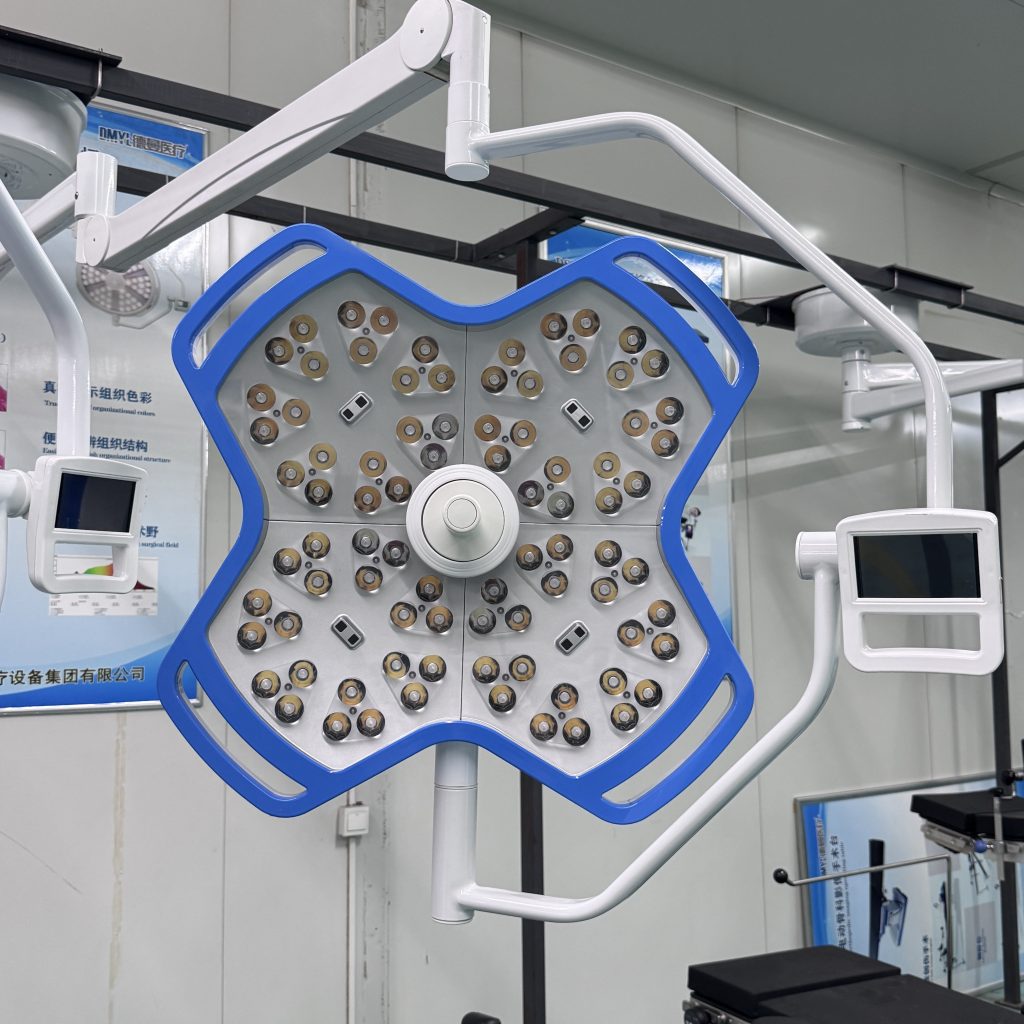
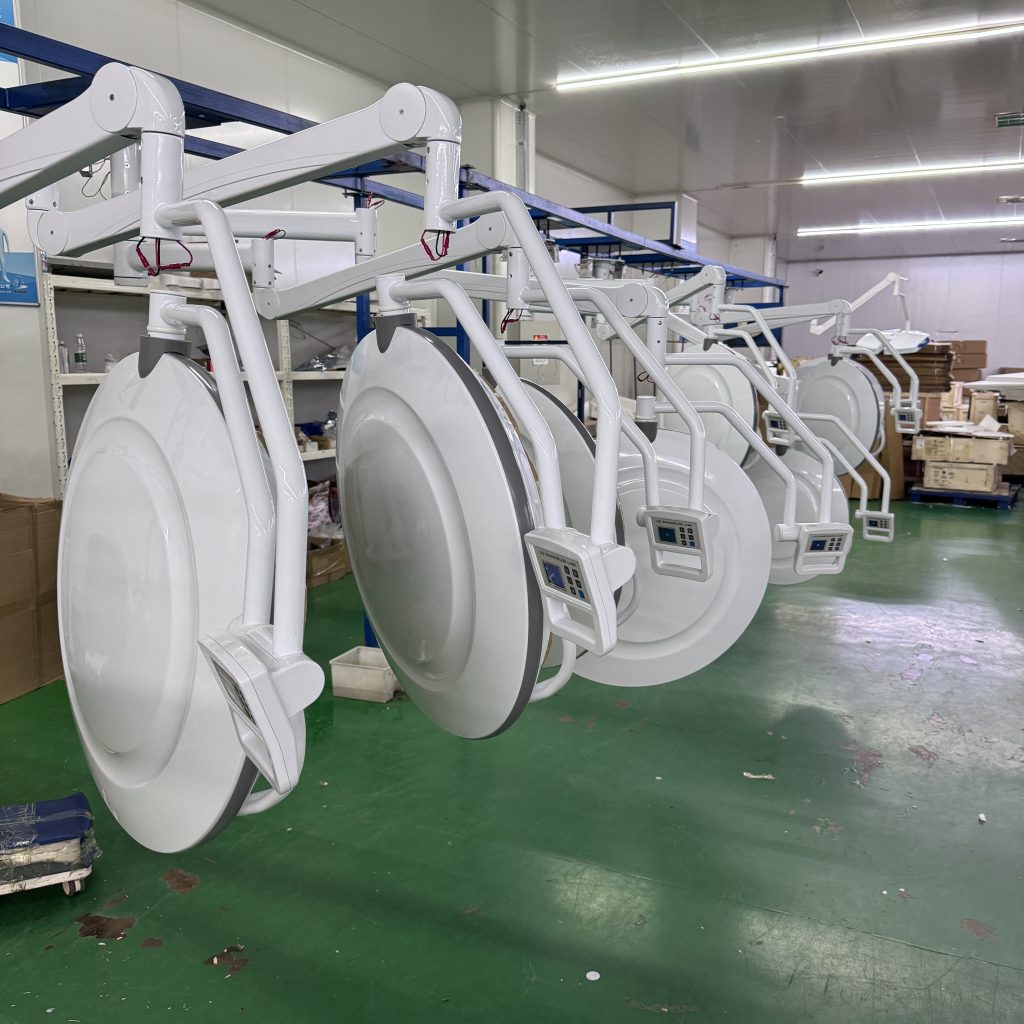
Proper usage significantly increases equipment longevity.
Recommended practices include:
- Follow manufacturer maintenance schedules
- Avoid excessive mechanical force
- Clean optical components regularly
- Use approved disinfectants only
- Verify electrical stability
- Schedule annual preventive maintenance
- Replace worn parts promptly
- Train staff on proper operation
Following these recommendations helps maximize the service life of a surgical light led.
Choosing the Right Surgical Light LED Supplier
Selecting a reliable manufacturer is just as important as selecting the product itself.
Healthcare facilities should evaluate suppliers based on:
- Certificazione ISO 13485
- Certificazione CE
- FDA registration (if applicable)
- Esperienza nel settore manifatturiero
- Capacità di ricerca e sviluppo
- Servizi OEM e ODM
- Copertura della garanzia
- Disponibilità dei ricambi
- Esperienza nell'esportazione a livello globale
- Formazione tecnica
- Assistenza post-vendita
A trusted supplier ensures long-term reliability and responsive service.
Future Trends in Surgical Light LED Technology
LED surgical lighting continues to evolve rapidly.
Tra le innovazioni emergenti figurano:
- Artificial intelligence brightness adjustment
- Compensazione automatica delle ombre
- Touchless gesture control
- Voice-controlled operation
- Telecamere chirurgiche integrate 4K
- Diagnostica dei sistemi wireless
- IoT-enabled predictive maintenance
- Integrazione intelligente delle sale operatorie
- Adaptive lighting based on surgical procedures
These technologies will further improve the performance and efficiency of future surgical light led systems.
Se avete bisogno di attrezzature mediche o di altri servizi, non esitate a contattarci!
E-mail: demanmedical@gmail.com
Telefono: +86-13188819888
Facebook:https://www.facebook.com/demanmedical/
Instagram: https://www.instagram.com/deman.medical/
YouTube: https://www.youtube.com/@DEMANmedical
Conclusione
A surgical light led is one of the most valuable investments for any modern operating room, providing the bright, stable, and shadow-free illumination required for safe and precise surgical procedures. However, achieving optimal performance depends not only on selecting a high-quality system but also on ensuring proper installation and consistent maintenance.
Healthcare facilities should carefully plan the installation process, verify critical performance parameters, and establish a preventive maintenance schedule to maximize equipment reliability and lifespan. Regular inspections, proper cleaning, timely servicing, and collaboration with experienced manufacturers all contribute to reducing downtime and maintaining excellent surgical lighting conditions.
As hospitals continue to adopt digital operating rooms and intelligent medical technologies, the role of the surgical light led will become even more significant. Investing in advanced LED lighting and maintaining it correctly will support better clinical outcomes, improve operational efficiency, and deliver long-term value for healthcare providers.
Domande frequenti
What is a surgical light led?
A surgical light led is a medical lighting system that uses LED technology to provide bright, uniform, and shadow-reduced illumination during surgical procedures.
Why is proper installation important?
Correct installation ensures stable positioning, optimal illumination, safe electrical operation, full arm movement, and long-term equipment reliability.
How often should a surgical light led be maintained?
Basic cleaning should be performed daily, routine inspections weekly and monthly, and comprehensive preventive maintenance should be completed annually by qualified technicians.
How long does a surgical light led typically last?
Most high-quality LED systems have an expected service life of 50,000 to 100,000 hours, depending on usage and maintenance.
What certifications should I look for when purchasing a surgical light led?
Choose products manufactured under ISO 13485 quality management systems and certified with CE, FDA (where applicable), or other recognized medical device standards required in your target market.