Pendahuluan
Selecting the right surgical lighting system is one of the most important decisions healthcare facilities make when designing or upgrading operating rooms. Proper illumination directly impacts surgical accuracy, staff efficiency, and patient safety. Among the many lighting options available today, overhead surgical lights remain the preferred choice for hospitals, ambulatory surgery centers, specialty clinics, and healthcare institutions worldwide.
Modern operating rooms require lighting systems that provide exceptional brightness, accurate color rendering, shadow reduction, and long-term reliability. Advances in LED technology have significantly improved the performance of surgical lighting, making it easier than ever to achieve optimal visibility during both routine and complex procedures.
This comprehensive buying guide explores everything healthcare facilities need to know before investing in overhead surgical lights, including key features, technical specifications, installation considerations, maintenance requirements, and future trends.
Why Surgical Lighting Is Critical in Healthcare Facilities
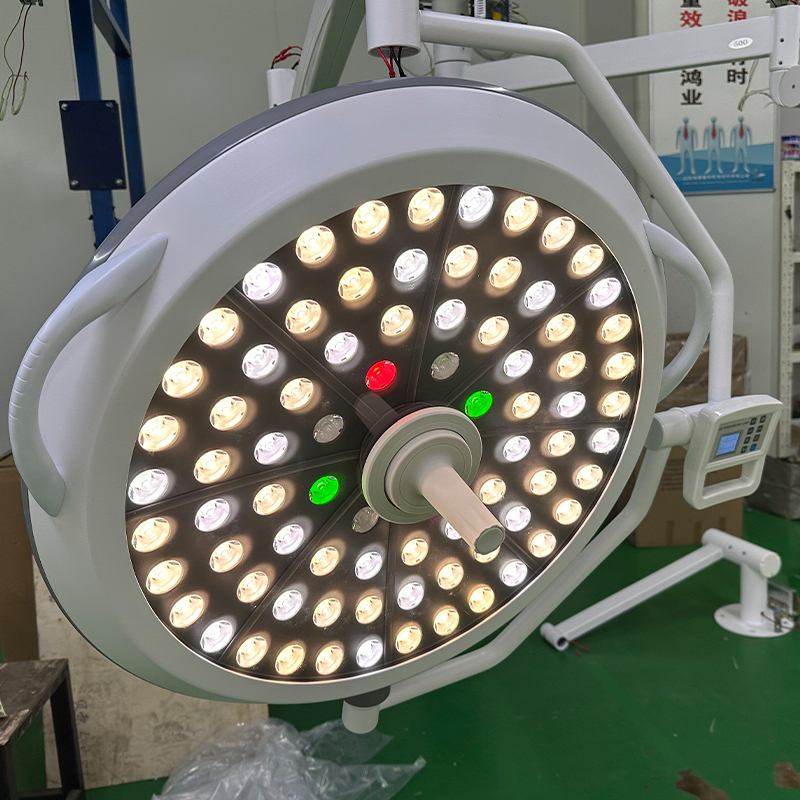
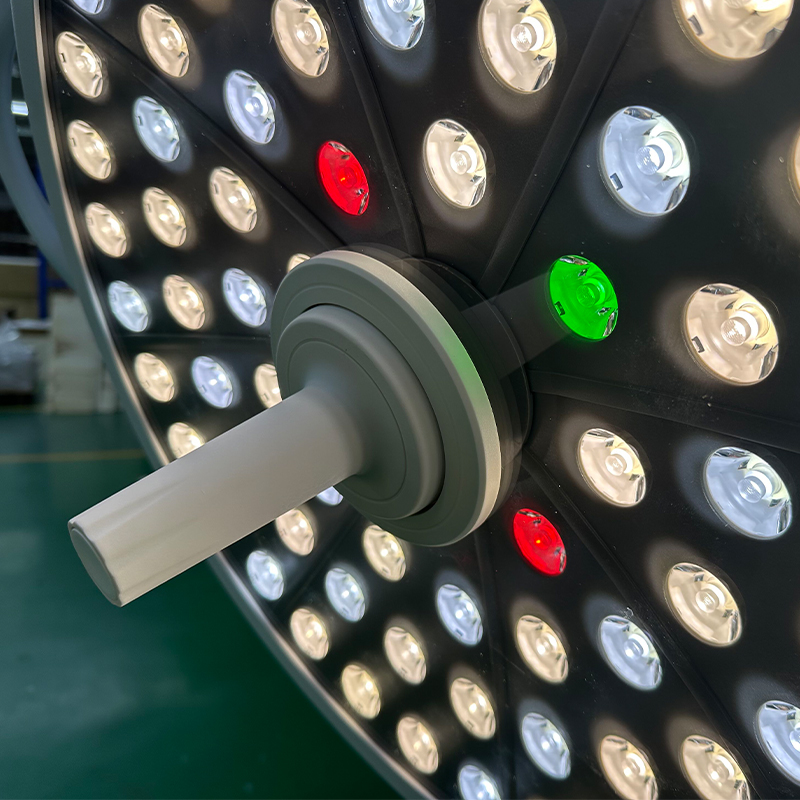
Lighting plays a fundamental role in surgical success. During procedures, surgeons depend on consistent illumination to accurately identify tissues, blood vessels, and anatomical structures.
Poor lighting conditions can lead to:
- Reduced visibility
- Increased eye fatigue
- Longer procedure times
- Greater risk of errors
- Lower surgical efficiency
High-quality surgical lighting improves workflow while supporting better clinical outcomes.
Benefits of Advanced Surgical Lighting
| Manfaat | Impact on Healthcare Facilities |
|---|---|
| Enhanced Visibility | Improved surgical precision |
| Shadow Reduction | Better view of surgical field |
| Penyajian Warna yang Akurat | Improved tissue differentiation |
| Energy Efficiency | Reduced operating costs |
| Longer Lifespan | Lower maintenance expenses |
| Better Ergonomics | Reduced surgeon fatigue |
As healthcare technology advances, hospitals increasingly recognize the value of investing in premium overhead surgical lights that deliver consistent performance over many years.
Understanding Overhead Surgical Lights
Overhead surgical lighting systems are mounted directly to the ceiling and positioned above the operating table. Their elevated placement allows light to be distributed evenly across the surgical site while maximizing floor space.
Unlike portable lighting systems, ceiling-mounted solutions offer greater flexibility, wider coverage, and improved stability.
Main Components
| Komponen | Function |
| Light Head | Produces surgical illumination |
| Suspension Arm | Allows positioning and movement |
| Ceiling Mount | Supports the lighting system |
| Control Panel | Adjusts brightness and settings |
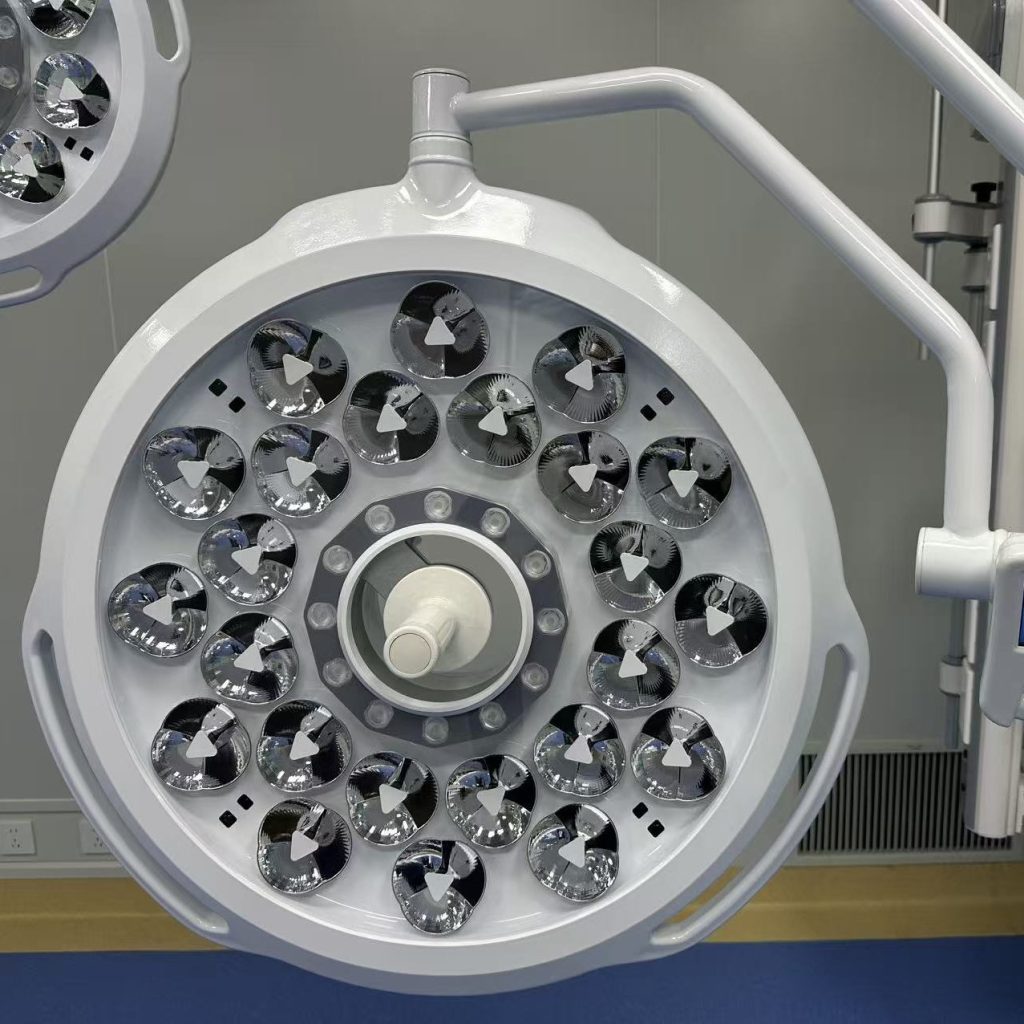
| LED Modules | Generate illumination |
| Camera System (Optional) | Recording and teaching purposes |
Modern overhead surgical lights are designed to accommodate a wide variety of surgical specialties while maintaining excellent visibility throughout procedures.
Types of Overhead Surgical Lights
Healthcare facilities can choose from several types of surgical lighting configurations depending on room size, procedure complexity, and budget.
Single Dome Systems
Single dome systems feature one primary light head.
Advantages
- Lower investment cost
- Simple installation
- Suitable for smaller operating rooms
Ideal Applications
- Minor surgery
- Examination rooms
- Outpatient clinics
Double Dome Systems
Double dome systems are among the most popular configurations in modern operating rooms.
Advantages
- Improved shadow control
- Greater illumination coverage
- Better flexibility during surgery
Ideal Applications
- General surgery
- Orthopedic procedures
- Cardiovascular surgery
Triple Dome Systems
Large surgical centers may utilize triple dome systems for maximum illumination and redundancy.
Advantages
- Extensive coverage
- Excellent depth illumination
- Suitable for highly complex procedures
Ideal Applications
- Bedah Saraf
- Organ transplantation
- Hybrid operating rooms
Comparison Table
| Fitur | Single Dome | Double Dome | Triple Dome |
| Coverage Area | Moderate | Large | Very Large |
| Shadow Control | Good | Luar biasa | Outstanding |
| Cost | Low | Medium | High |
| Flexibility | Moderate | High | Very High |
| Specialty Procedures | Limited | Broad | Advanced |
Key Features to Consider Before Buying
Choosing the right lighting system requires careful evaluation of several technical specifications.
Illumination Intensity
Brightness is measured in Lux and determines how effectively the surgical field is illuminated.
| Procedure Type | Recommended Lux Range |
| Prosedur Ringan | 40,000–80,000 Lux |
| Bedah Umum | 80,000–140,000 Lux |
| Operasi Kompleks | 140,000–180,000 Lux |
| Specialized Procedures | Up to 200,000 Lux |
The best overhead surgical lights provide adjustable illumination levels to accommodate different surgical requirements.
Indeks Reproduksi Warna (CRI)
CRI measures how accurately colors appear under artificial lighting.
Recommended CRI Values
| Specialty | Recommended CRI |
| Bedah Umum | 95+ |
| Bedah Plastik | 96+ |
| Bedah Saraf | 97+ |
| Bedah Kardiovaskular | 97+ |
A high CRI allows surgeons to distinguish tissues more accurately.
Suhu Warna
Color temperature influences visual comfort and tissue recognition.
| Temperature | Appearance |
| 3,500K | Warm White |
| 4,000K | Neutral White |
| 4,500K | Natural Daylight |
| 5,000K+ | Cool White |
Adjustable color temperature has become a standard feature in premium overhead surgical lights.
Shadow Management Technology
Shadow reduction is one of the most important characteristics of surgical lighting.
Modern systems achieve this through:
- Beberapa modul LED
- Overlapping light beams
- Advanced optical reflectors
- Adaptive focusing technology
Effective shadow control ensures uninterrupted visibility even when surgeons or instruments partially block the light source.
LED vs Traditional Halogen Surgical Lights
Many healthcare facilities are replacing older halogen systems with LED technology.
Comparison Table
| Fitur | Halogen | LED |
| Lifespan | 1,000–2,000 Hours | 50,000+ Hours |
| Heat Production | High | Low |
| Energy Consumption | High | Low |
| Maintenance Frequency | Frequent | Minimal |
| Color Stability | Moderate | Luar biasa |
| Environmental Impact | Higher | Lower |
LED-based overhead surgical lights offer significant long-term advantages in both performance and operational costs.
Installation Considerations
Before purchasing a lighting system, facilities should evaluate operating room infrastructure.
Ceiling Load Capacity
The ceiling must safely support the suspension system and lighting heads.
Room Dimensions
Larger rooms may require dual-dome or triple-dome configurations.
Electrical Requirements
Healthcare facilities should ensure compatibility with:
- Hospital power systems
- Emergency backup power
- Integrated operating room controls
Workflow Design
Lighting placement should complement:
- Surgical tables
- Liontin medis
- Imaging equipment
- Anesthesia workstations
Proper planning helps maximize the effectiveness of overhead surgical lights.
Maintenance and Long-Term Ownership Costs
The purchase price represents only part of the total investment.
Healthcare facilities should also consider:
Maintenance Costs
Regular maintenance may include:
- Cleaning optical components
- Inspecting suspension arms
- Updating software
- Replacing wear components
Energy Consumption
LED systems significantly reduce electricity costs.
Downtime Risks
Reliable lighting systems minimize disruptions and reduce maintenance-related downtime.
Estimated Ownership Comparison
| Cost Category | Halogen System | LED System |
| Initial Cost | Lower | Higher |
| Energy Cost | Higher | Lower |
| Maintenance Cost | Higher | Lower |
| Replacement Cost | Frequent | Rare |
| Total 10-Year Cost | High | Lower |
While LED systems may require a higher initial investment, they often provide lower lifetime ownership costs.
Smart Features in Modern Surgical Lighting
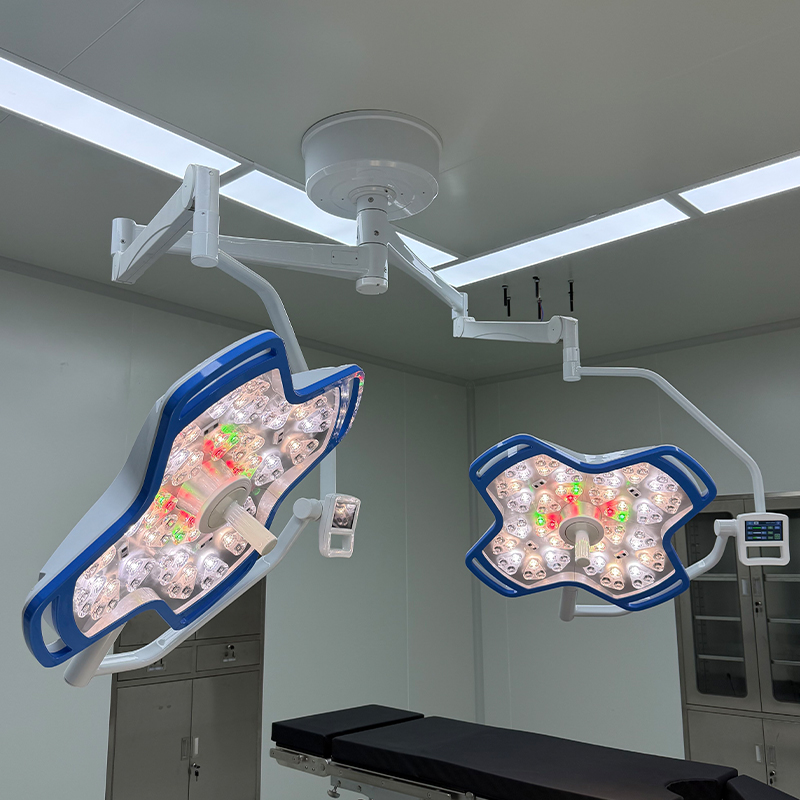
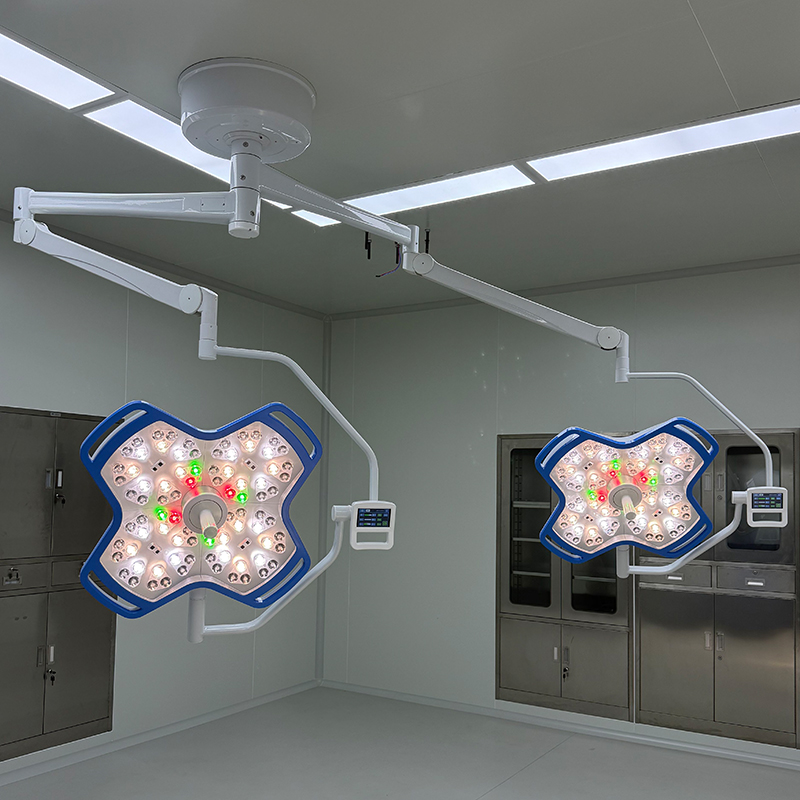
Technological innovation continues to transform operating rooms.
Integrated HD Cameras
Built-in cameras support:
- Surgical education
- Procedure recording
- Telemedicine
- Live consultation
Touchless Controls
Touchless interfaces help maintain sterility while allowing surgeons to adjust lighting settings.
Automatic Illumination Adjustment
Some advanced systems automatically optimize brightness based on:
- Surgical depth
- Ambient light
- Surgeon positioning
Digital Operating Room Integration
Modern overhead surgical lights can connect with:
- Hospital information systems
- Operating room management software
- Video recording platforms
Future Trends in Surgical Lighting
The next generation of surgical lighting is expected to offer even greater functionality.
Artificial Intelligence
AI may automatically optimize lighting patterns during procedures.
Enhanced Visualization
Integration with imaging systems will improve surgical accuracy.
Improved Energy Efficiency
Future LED modules will deliver higher output with lower power consumption.
Advanced Sterility Solutions
Voice control and gesture recognition technologies are expected to become more widespread.
Healthcare facilities investing in premium overhead surgical lights today will be better prepared for future operating room innovations.
Kesimpulan
Selecting the right surgical lighting system is essential for healthcare facilities seeking to improve clinical performance, patient safety, and operational efficiency. Modern overhead surgical lights provide superior illumination, excellent shadow management, high color accuracy, and long-term reliability compared to older lighting technologies.
When evaluating available options, healthcare decision-makers should consider illumination intensity, CRI, color temperature, installation requirements, energy efficiency, and maintenance costs. By carefully assessing these factors, hospitals and clinics can choose a lighting solution that supports surgical excellence for years to come.
As LED technology and intelligent control systems continue to evolve, overhead surgical lights will remain a cornerstone of modern operating room design and healthcare innovation.
Jika Anda membutuhkan peralatan medis atau layanan lainnya, silakan hubungi kami!
Email: demanmedical@gmail.com
Telepon: +86-13188819888
Facebook:https://www.facebook.com/demanmedical/
Instagram: https://www.instagram.com/deman.medical/
YouTube: https://www.youtube.com/@DEMANmedical
Pertanyaan yang Sering Diajukan
What are overhead surgical lights?
Overhead surgical lights are ceiling-mounted lighting systems designed to provide bright, focused, and shadow-reduced illumination for surgical procedures.
Why are LED surgical lights preferred?
LED systems offer longer lifespan, lower energy consumption, reduced heat generation, and better color rendering compared to halogen alternatives.
How bright should surgical lights be?
Most surgical procedures require illumination ranging from 80,000 to 180,000 Lux depending on the complexity of the operation.
What is CRI and why is it important?
CRI (Color Rendering Index) measures how accurately colors appear under a light source. A higher CRI improves tissue differentiation and surgical visibility.
How long do LED surgical lights last?
Most premium LED systems provide more than 50,000 hours of operational life.