Introduzione
Patient safety is the foundation of every successful surgical procedure. While the expertise of surgeons, advanced medical equipment, and strict infection control protocols are all essential, one factor is often underestimated—high-quality surgical lighting. An overhead surgical light is one of the most important pieces of equipment in any operating room because it provides the consistent, shadow-free illumination required for precise and safe surgical interventions.
Modern operating rooms rely on advanced LED lighting systems that deliver high-intensity illumination, accurate color rendering, adjustable brightness, and minimal heat generation. Unlike traditional halogen lamps, today’s overhead surgical light solutions are designed to enhance visibility while reducing eye strain and improving workflow efficiency. Whether performing open surgery, minimally invasive procedures, orthopedic operations, or cardiovascular interventions, surgeons depend on reliable lighting to identify anatomical structures clearly and work with confidence.
As hospitals continue to modernize their surgical suites, selecting the right overhead surgical light has become a strategic investment that directly impacts clinical outcomes, operating room efficiency, and long-term operational costs.
This comprehensive guide explains how an overhead surgical light supports safer procedures, explores its technical advantages, discusses clinical applications, compares lighting technologies, and outlines the key factors healthcare facilities should consider when selecting a surgical lighting system.
What Is an Overhead Surgical Light?
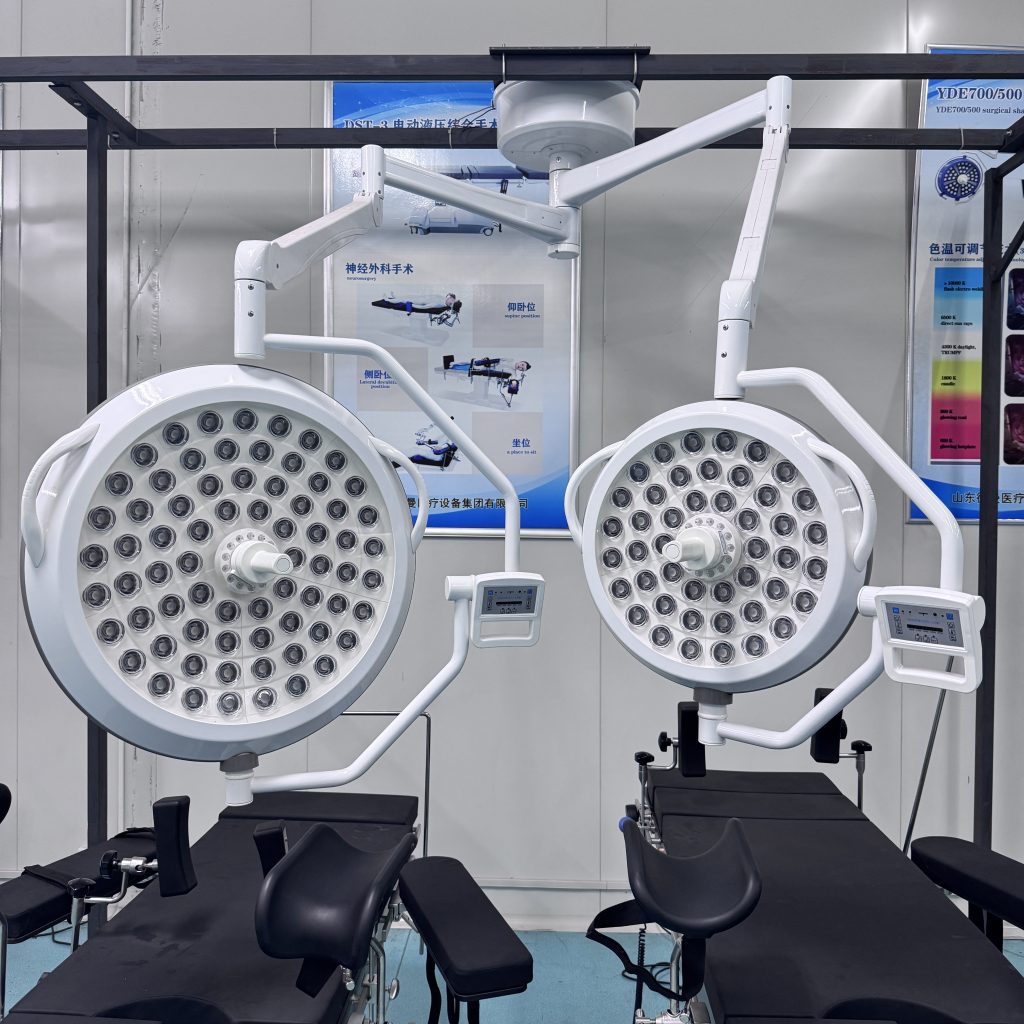
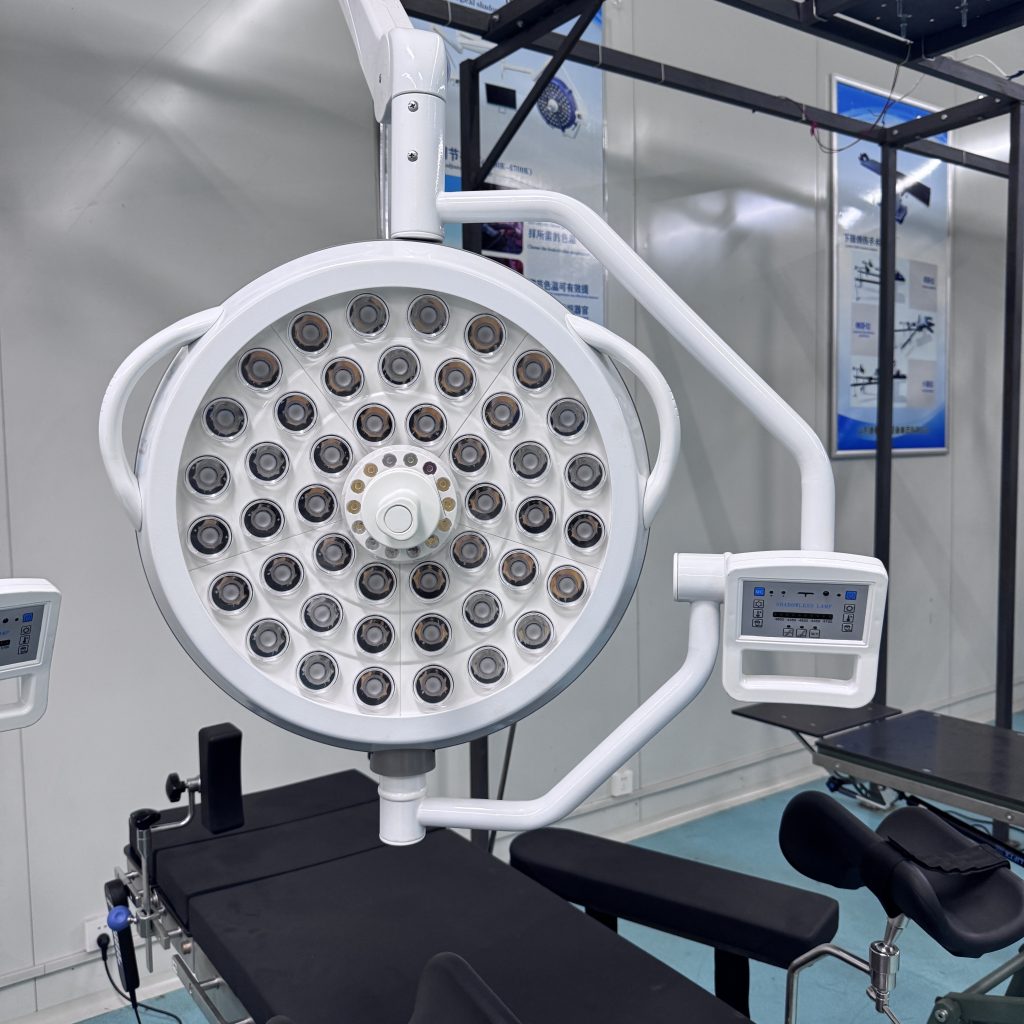
An overhead surgical light is a ceiling-mounted medical lighting system specifically designed for operating rooms and other sterile environments. It provides bright, uniform, and shadow-controlled illumination directly over the surgical field.
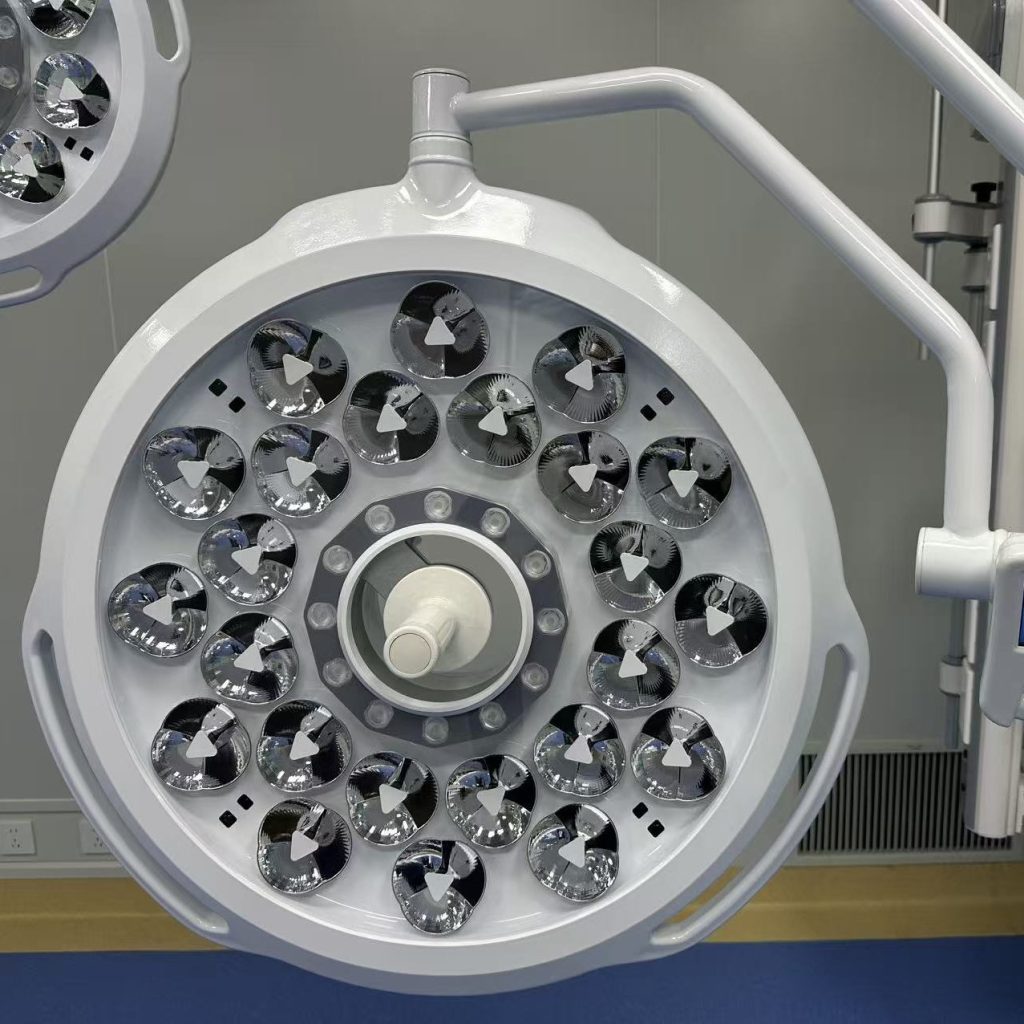
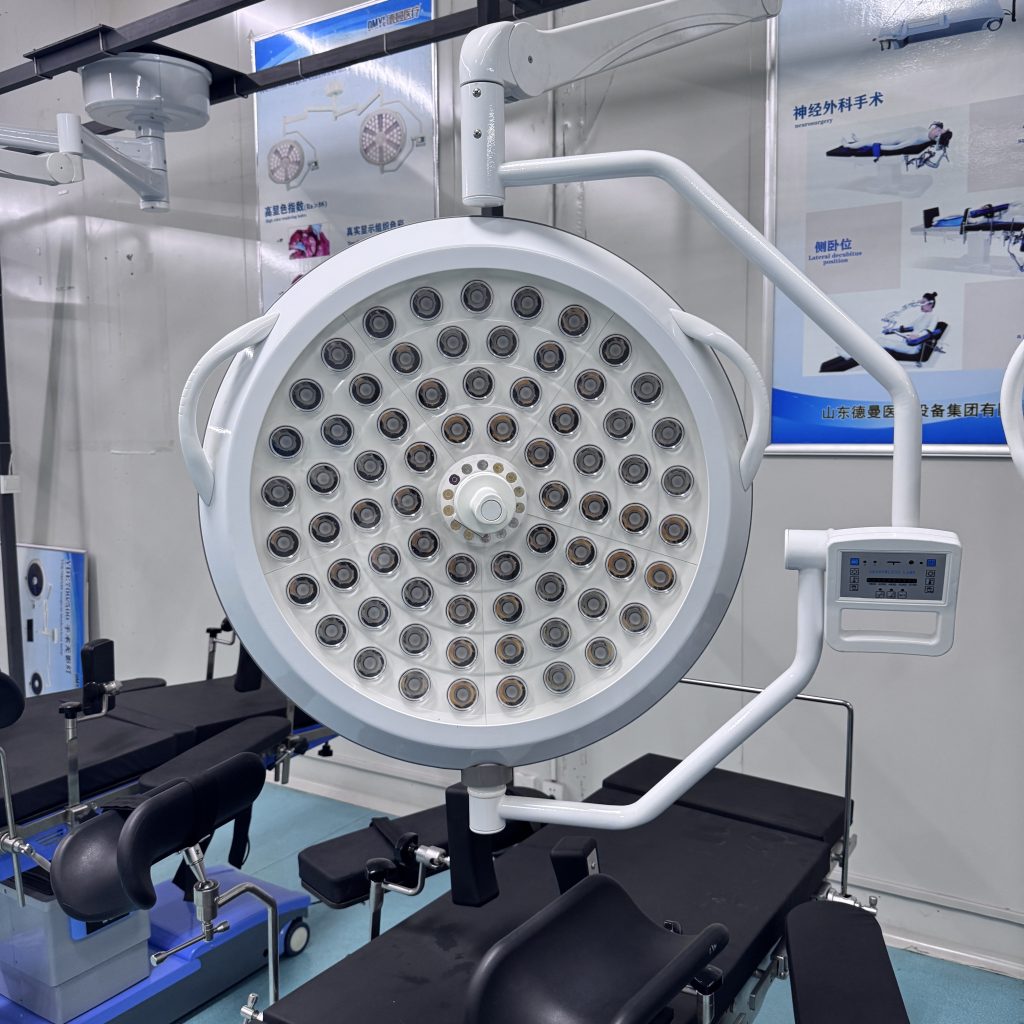
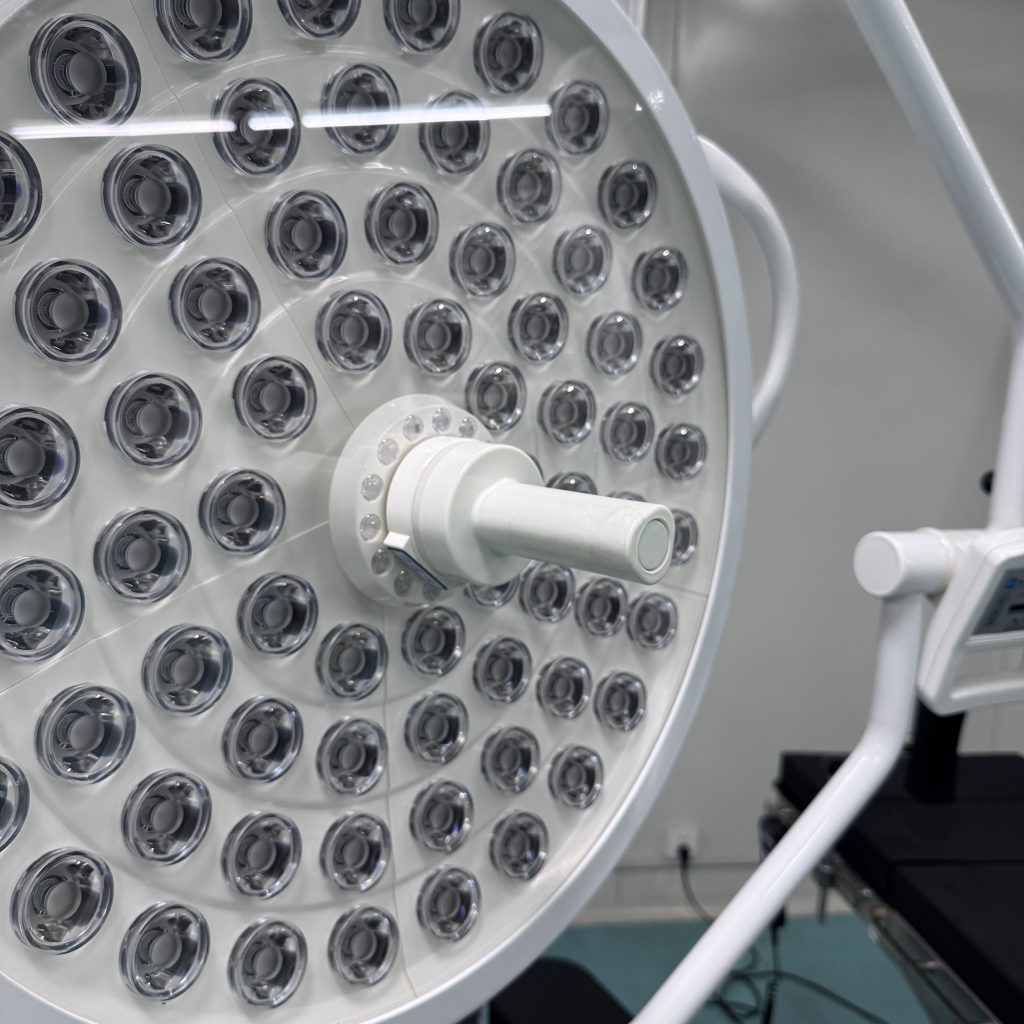
Unlike portable lighting systems, an overhead surgical light is suspended from the ceiling using an articulated arm that allows smooth movement and accurate positioning. Most modern systems use multiple high-performance LED modules arranged in circular arrays to create overlapping beams of light, ensuring consistent illumination even when surgeons or instruments partially block the light source.
Componenti principali
| Componente | Funzione |
|---|---|
| LED Light Head | Produces high-intensity illumination |
| Ceiling Suspension Arm | Allows flexible positioning |
| Sistema di lenti ottiche | Creates uniform light distribution |
| Reflector Assembly | Minimizes shadow formation |
| Manico sterile | Enables adjustment during surgery |
| Pannello di controllo | Adjusts brightness and color temperature |
| Sistema di dissipazione del calore | Maintains stable LED performance |
Together, these components ensure that an overhead surgical light provides reliable illumination throughout every stage of a surgical procedure.
Why Surgical Lighting Is Critical for Patient Safety
Every surgical decision depends on clear visibility. Poor illumination can make it difficult to distinguish tissue boundaries, identify blood vessels, or recognize anatomical landmarks.
An overhead surgical light helps improve patient safety by providing:
- Uniform illumination across the surgical field
- Excellent tissue color recognition
- Reduced shadow formation
- Improved visualization of deep cavities
- Lower surgeon fatigue during lengthy operations
- Greater precision during complex procedures
These advantages contribute to lower complication rates and improved surgical outcomes.
Benefici clinici
| Vantaggio | Impact on Surgery |
| Shadow-free illumination | Improves precision |
| High brightness | Enhances visibility |
| Riproduzione accurata dei colori | Better tissue differentiation |
| Low heat emission | Protects exposed tissue |
| Stable illumination | Supports long procedures |
How an Overhead Surgical Light Improves Surgical Safety
Modern LED technology enables surgical lighting systems to support virtually every aspect of a safe operation.
Enhanced Visualization
An overhead surgical light provides bright and evenly distributed illumination that enables surgeons to clearly observe tissues, organs, and blood vessels.
Improved visualization reduces uncertainty and allows more precise surgical movements.
Shadow Compensation
One of the defining characteristics of modern surgical lighting is shadow reduction.
Advanced LED arrays produce overlapping light beams from multiple angles. If one beam is blocked by a surgeon’s hand or surgical instrument, other beams continue illuminating the same area.
This ensures uninterrupted visibility throughout the procedure.
Accurate Tissue Identification
A high Color Rendering Index (CRI) enables surgeons to distinguish subtle differences between healthy tissue, damaged tissue, nerves, muscles, and blood vessels.
Most premium overhead surgical light systems provide CRI values greater than 90, ensuring realistic color reproduction.
Reduced Eye Fatigue
Lengthy procedures can place considerable strain on the surgeon’s vision.
Modern overhead surgical light systems feature:
- Adjustable brightness
- Illuminazione uniforme
- Low glare
- Stable color temperature
These characteristics reduce visual fatigue and help maintain concentration during long operations.
Improved Infection Control
Ceiling-mounted lighting eliminates the need for floor-standing equipment around the operating table.
This provides:
- More working space
- Easier cleaning
- Fewer contamination risks
- Better sterile workflow
Key Technical Features of Modern Overhead Surgical Light Systems
Healthcare facilities should carefully evaluate technical specifications before purchasing.
Intensità luminosa
Most operating rooms require adjustable illumination between 120,000 and 160,000 lux.
Higher brightness improves visibility during deep surgical procedures.
Temperatura di colore regolabile
Different procedures benefit from different lighting characteristics.
| Temperatura di colore | Beneficio clinico |
| 3500K | Warm illumination, reduced eye fatigue |
| 4000 K | Aspetto naturale dei tessuti |
| 4500K | Illuminazione chirurgica standard |
| 5000 K | Enhanced tissue contrast |
| 5500 K | Illuminazione di un bianco brillante |
Elevato indice di resa cromatica (CRI)
Premium systems provide:
- CRI ≥90 for excellent tissue visualization
- CRI ≥95 for advanced microsurgery
Deep Illumination
Modern optical systems maintain consistent brightness within deep surgical cavities, supporting complex procedures such as neurosurgery and cardiac surgery.
Low Heat Generation
LED technology minimizes infrared radiation.
I vantaggi includono:
- Reduced tissue dehydration
- Improved surgeon comfort
- Ridurre la temperatura della sala operatoria
- Increased energy efficiency
Clinical Applications of Overhead Surgical Light
An overhead surgical light is used across a wide range of medical specialties.
Chirurgia generale
Supports abdominal and gastrointestinal procedures.
Chirurgia ortopedica
Provides deep illumination for joint replacement and fracture fixation.
Neurochirurgia
Enables highly precise visualization of brain and spinal tissues.
Chirurgia cardiovascolare
Improves visibility during heart and vascular procedures.
Ginecologia
Supports cesarean sections and minimally invasive surgery.
Chirurgia plastica
Provides accurate illumination for cosmetic and reconstructive procedures.
Emergency Surgery
Offers immediate, high-quality lighting during trauma interventions.
Clinical Application Table
| Department | Requisiti di illuminazione | Importance |
| Chirurgia generale | Luminosità uniforme | Alto |
| Neurochirurgia | Maximum precision | Critical |
| Cardiologia | Illuminazione profonda | Critical |
| Ortopedia | High intensity | Alto |
| Chirurgia plastica | Riproduzione accurata dei colori | Alto |
| Emergency Medicine | Rapid positioning | Critical |
Overhead Surgical Light vs Mobile Surgical Light
Healthcare facilities often compare ceiling-mounted and portable lighting systems.
| Caratteristica | Overhead Surgical Light | Mobile Surgical Light |
| Installation | Ceiling mounted | Floor standing |
| Mobility | Fixed | Portable |
| Stability | Eccellente | Bene |
| Coverage | Large | Moderato |
| Operating Room Integration | Eccellente | Limitato |
| Space Efficiency | Alto | Moderato |
| Initial Investment | Più alto | Inferiore |
Large hospitals generally prefer ceiling-mounted systems for major operating rooms, while mobile units are ideal for outpatient clinics and emergency use.
Considerazioni relative all'installazione
Proper installation ensures long-term performance.
Healthcare facilities should evaluate:
- Ceiling load capacity
- Suspension height
- Arm movement clearance
- Operating table positioning
- Infrastruttura elettrica
- Backup power compatibility
- Integration with surgical cameras
Professional installation ensures optimal performance of every overhead surgical light.
Migliori pratiche di manutenzione
Routine maintenance protects equipment performance.
| Attività di manutenzione | Frequenza |
| Pulire l'alloggiamento della lampada | Giornaliero |
| Sterilize handles | Dopo ogni intervento |
| Inspect suspension arms | Mensile |
| Verify brightness output | Trimestrale |
| Electrical safety inspection | Ogni anno |
Regular preventive maintenance extends service life and reduces downtime.
Future Trends in Overhead Surgical Light Technology
Operating room lighting continues to evolve rapidly.
Tra le innovazioni emergenti figurano:
- Artificial intelligence brightness adjustment
- Compensazione automatica delle ombre
- Voice-controlled operation
- Telecamere chirurgiche integrate 4K
- Wireless touchscreen controls
- IoT-based predictive maintenance
- Integrazione intelligente delle sale operatorie
- Adaptive lighting based on tissue recognition
These technologies will further improve patient safety and surgical precision.
Scegliere il produttore giusto
Hospitals should evaluate suppliers based on:
- Certificazione ISO 13485
- Certificazione CE
- Esperienza nel settore manifatturiero
- Capacità di ricerca e sviluppo
- Servizi OEM e ODM
- Esperienza nell'esportazione a livello globale
- Assistenza tecnica
- Disponibilità dei ricambi
- Copertura della garanzia
- After-sales service
Selecting a reliable manufacturer ensures consistent quality and dependable long-term support.
Se avete bisogno di attrezzature mediche o di altri servizi, non esitate a contattarci!
E-mail: demanmedical@gmail.com
Telefono: +86-13188819888
Facebook:https://www.facebook.com/demanmedical/
Instagram: https://www.instagram.com/deman.medical/
YouTube: https://www.youtube.com/@DEMANmedical
Conclusione
An overhead surgical light is one of the most important investments for any modern healthcare facility. By providing bright, uniform, and shadow-controlled illumination, it enables surgeons to perform procedures with greater accuracy, confidence, and safety. Compared with traditional lighting technologies, LED-based overhead systems offer superior color rendering, lower heat generation, longer service life, and reduced maintenance costs.
When selecting an overhead surgical light, hospitals should carefully evaluate illumination intensity, shadow management, color rendering, color temperature, optical performance, installation requirements, and manufacturer reliability. A well-designed lighting system not only enhances surgical precision but also improves workflow efficiency, reduces operating costs, and contributes to better patient outcomes.
As operating rooms become increasingly digital and integrated, advanced overhead surgical light technology will continue to play a vital role in supporting safer, more efficient, and higher-quality surgical care.
Domande frequenti
What is an overhead surgical light?
An overhead surgical light is a ceiling-mounted medical lighting system designed to provide bright, uniform, and shadow-controlled illumination during surgical procedures.
Why is an overhead surgical light important?
It improves surgical visibility, enhances tissue recognition, reduces shadows, minimizes surgeon fatigue, and supports safer surgical outcomes.
What illumination level is recommended for an overhead surgical light?
Most premium systems provide adjustable illumination ranging from approximately 120,000 to 160,000 lux, depending on the procedure.
Why are LED overhead surgical lights better than halogen lights?
LED systems offer longer lifespan, lower energy consumption, reduced heat generation, superior brightness stability, and significantly lower maintenance requirements.
Which medical specialties use an overhead surgical light?
They are widely used in general surgery, orthopedics, neurosurgery, cardiovascular surgery, gynecology, plastic surgery, and emergency medicine.