Einführung
The operating room is one of the most demanding environments in any healthcare facility. Every detail—from sterile procedures and advanced surgical equipment to environmental controls and medical lighting—plays a vital role in ensuring successful patient outcomes. Among these critical elements, surgical suite lighting is one of the most important investments hospitals can make.
High-quality lighting directly influences surgical precision, visibility, efficiency, and patient safety. During complex procedures, surgeons rely on consistent illumination to distinguish delicate anatomical structures, identify blood vessels, and perform intricate operations without visual distractions. Poor lighting can increase eye fatigue, reduce efficiency, and even contribute to surgical errors.
Modern surgical suite lighting has evolved far beyond traditional operating room lamps. Today’s systems utilize advanced LED technology, intelligent optical designs, adjustable color temperature, high color rendering indexes (CRI), and shadow compensation technologies to create an optimal surgical environment. Many healthcare facilities are also integrating lighting systems into digital operating rooms, allowing seamless coordination with surgical cameras, imaging devices, and hospital information systems.
Whether planning a new hospital, renovating an operating suite, or upgrading aging equipment, selecting the right surgical suite lighting solution requires careful consideration of technical specifications, clinical applications, installation requirements, and long-term operating costs.
This comprehensive guide explains the essential features, applications, technologies, and purchasing considerations for surgical suite lighting, helping healthcare facilities make informed investment decisions.
Why Surgical Suite Lighting Matters
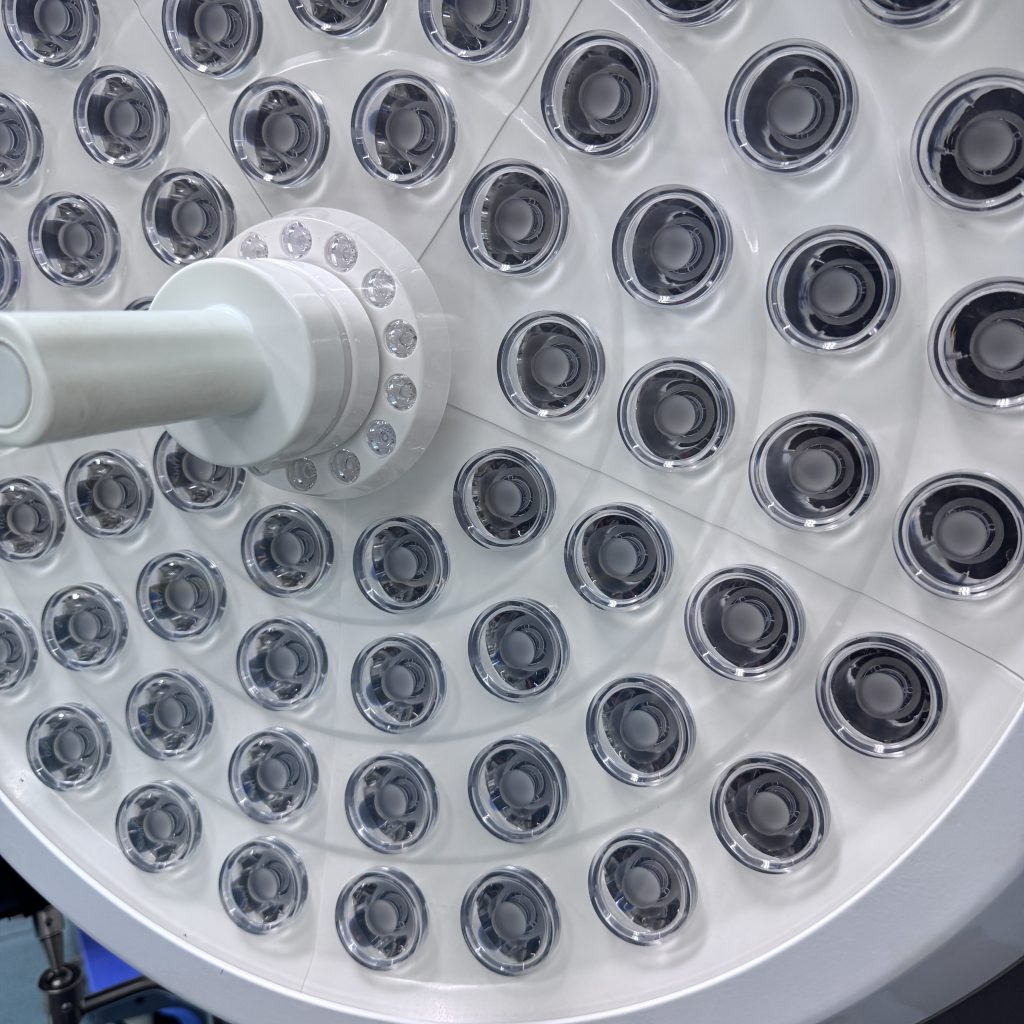
Lighting is much more than illumination inside an operating room. It directly affects the performance of the entire surgical team.
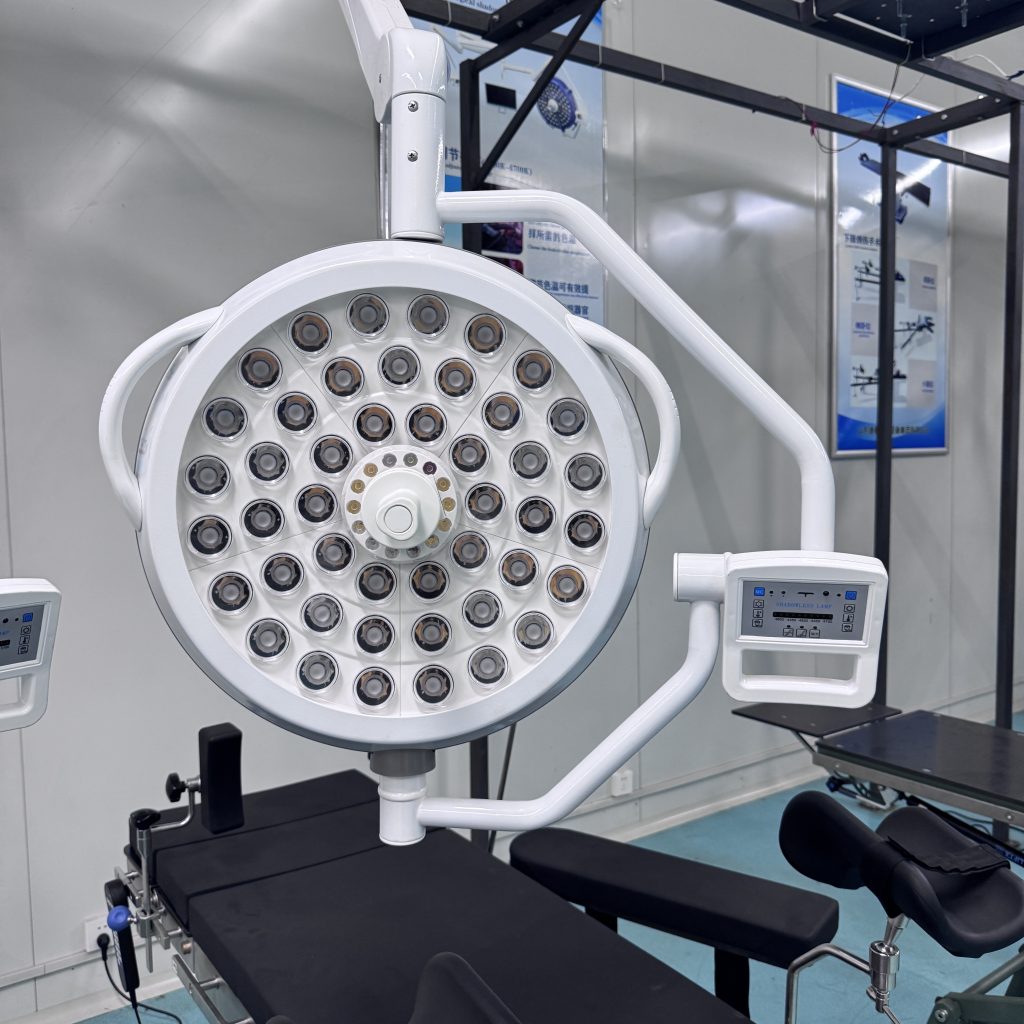
Modern surgical suite lighting provides consistent brightness across the operative field, minimizes shadows caused by surgeons and instruments, and allows accurate visualization of tissues and anatomical structures.
Benefits of High-Quality Surgical Suite Lighting
- Improves surgical precision
- Reduces visual fatigue for surgeons
- Enhances patient safety
- Improves operating room efficiency
- Supports minimally invasive procedures
- Reduces operating costs through energy-efficient LEDs
- Provides reliable illumination during lengthy surgeries
Hospitals investing in advanced surgical suite lighting often experience improved workflow, greater equipment reliability, and lower maintenance expenses.
Understanding Surgical Suite Lighting Systems
A modern surgical suite lighting system consists of several integrated components working together to provide optimal illumination.
Hauptkomponenten
| Komponente | Funktion |
|---|---|
| LED-Lichtmodule | Generate high-intensity surgical illumination |
| Optisches Linsensystem | Produces uniform light distribution |
| Reflector Assembly | Minimizes shadow formation |
| Spring Arm Suspension | Allows smooth positioning |
| Control Interface | Passt Helligkeit und Farbtemperatur an |
| Steriler Griff | Enables intraoperative adjustment |
| Wärmeableitungssystem | Maintains stable LED performance |
Unlike older halogen systems, LED-based surgical suite lighting delivers uniform illumination while producing significantly less heat.
Key Features of Modern Surgical Suite Lighting
Healthcare facilities should evaluate several important characteristics before selecting a lighting system.
High Illumination Intensity
Brightness is measured in lux.
Most operating rooms require adjustable illumination ranging from 80,000 to 160,000 lux, depending on the procedure.
Higher illumination improves visualization during deep cavity surgeries and microsurgical procedures.
Shadow Management
One of the defining features of premium surgical suite lighting is shadow reduction.
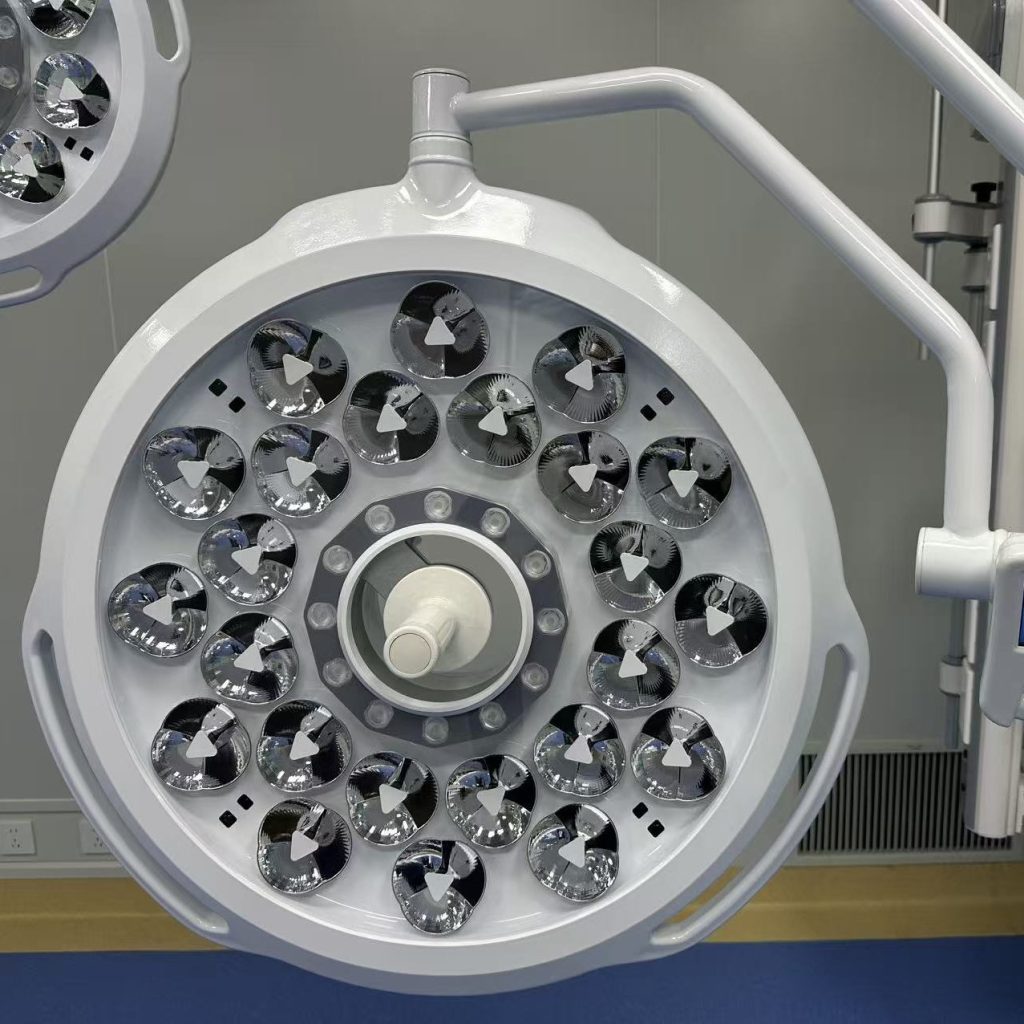
Modern systems use dozens or even hundreds of LED light sources arranged in overlapping patterns. When one light beam is blocked by a surgeon’s hand or instrument, others continue illuminating the same area.
This creates consistent visibility throughout the operation.
Einstellbare Farbtemperatur
Different surgical specialties benefit from different lighting conditions.
| Farbtemperatur | Klinische Vorteile |
| 3500 K | Warm light that reduces eye strain |
| 4000 K | Natural tissue appearance |
| 4500 K | Standard operating room setting |
| 5000 K | Verbesserter anatomischer Kontrast |
| 5500 K | Bright white surgical illumination |
Adjustable color temperature allows surgeons to customize surgical suite lighting according to the procedure.
High Color Rendering Index (CRI)
Color rendering affects how accurately tissues appear under surgical lighting.
Most premium surgical suite lighting systems provide a CRI greater than 90, allowing surgeons to distinguish blood vessels, muscles, nerves, and organs more accurately.
Tiefeneffekte
Many procedures involve deep surgical cavities.
Advanced optical systems ensure surgical suite lighting maintains consistent brightness even deep within the operative field.
This feature is especially important during:
- Cardiac surgery
- Neurochirurgie
- Orthopedic procedures
- General abdominal surgery
Low Heat Emission
LED technology produces very little infrared radiation.
Zu den Vorteilen gehören:
- Verbesserter Komfort für den Chirurgen
- Geringere Gewebeauslaugung
- Lower operating room temperature
- Better long-duration performance
Applications of Surgical Suite Lighting Across Healthcare Facilities
Modern surgical suite lighting supports numerous clinical departments.
Allgemeine Chirurgie
Provides uniform illumination for abdominal, gastrointestinal, and soft tissue procedures.
Orthopädische Chirurgie
Supports joint replacement, fracture fixation, and spinal surgery with deep illumination.
Neurochirurgie
Provides stable lighting for highly delicate brain and spinal procedures.
Herz- und Gefäßchirurgie
Enables precise visualization of blood vessels and cardiac structures.
Gynäkologie und Geburtshilfe
Supports cesarean sections, hysterectomies, and minimally invasive gynecological procedures.
Plastische Chirurgie
Enhances visibility during reconstructive and cosmetic surgeries.
Emergency and Trauma Centers
Provides reliable illumination during emergency interventions.
Types of Surgical Suite Lighting
Healthcare facilities can choose from several configurations.
| Lighting Type | Vorteile | Typische Anwendungen |
| Ceiling-Mounted | Stable, flexible positioning | Major operating rooms |
| Dual Dome | Larger illumination area | Complex surgeries |
| Triple Dome | Maximum coverage | Hybrid operating suites |
| Mobile Surgical Light | Portable and flexible | Notaufnahmen |
| Wall-Mounted Light | Space-saving | Procedure rooms |
Each type of surgical suite lighting offers unique advantages depending on clinical requirements.
Comparing LED and Traditional Lighting
| Funktion | LED Surgical Suite Lighting | Halogen Lighting |
| Energieeffizienz | Hervorragend | Poor |
| Wärmeerzeugung | Sehr niedrig | Hoch |
| LED Lifespan | 50.000–100.000 Stunden | 1.000–2.000 Stunden |
| Wartung | Minimal | Frequent |
| Helligkeitsstabilität | Hervorragend | Mäßig |
| Shadow Control | Fortgeschrittene | Begrenzt |
| Operating Cost | Unter | Höher |
The comparison clearly demonstrates why hospitals worldwide are upgrading to LED surgical suite lighting.
Vor dem Kauf zu berücksichtigende Faktoren
Healthcare facilities should evaluate several factors before investing.
Klinische Anforderungen
Different specialties require different illumination levels.
Größe des Operationssaals
Large operating rooms may require dual- or triple-dome systems.
Deckenkonstruktion
Proper ceiling support is necessary for suspended lighting systems.
Electrical Infrastructure
Reliable power supply and backup systems ensure uninterrupted operation.
Future Expansion
Choose systems compatible with future digital operating room upgrades.
Hinweise zur Installation
Proper installation significantly affects system performance.
Hospitals should evaluate:
- Ceiling load capacity
- Installation height
- Arm movement clearance
- Operating table positioning
- Integration with imaging equipment
- Access for maintenance
Professional installation ensures optimal performance of surgical suite lighting.
Bewährte Verfahren für die Wartung
Routine maintenance extends equipment life.
| Wartungsaufgabe | Häufigkeit |
| Clean lamp surfaces | Täglich |
| Griffe sterilisieren | Nach jedem Eingriff |
| Inspect arm movement | Wöchentlich |
| Verify brightness output | Monatlich |
| Elektrische Überprüfung | Vierteljährlich |
| Umfassender Wartungsservice | Jährlich |
Preventive maintenance reduces unexpected downtime.
Future Trends in Surgical Suite Lighting
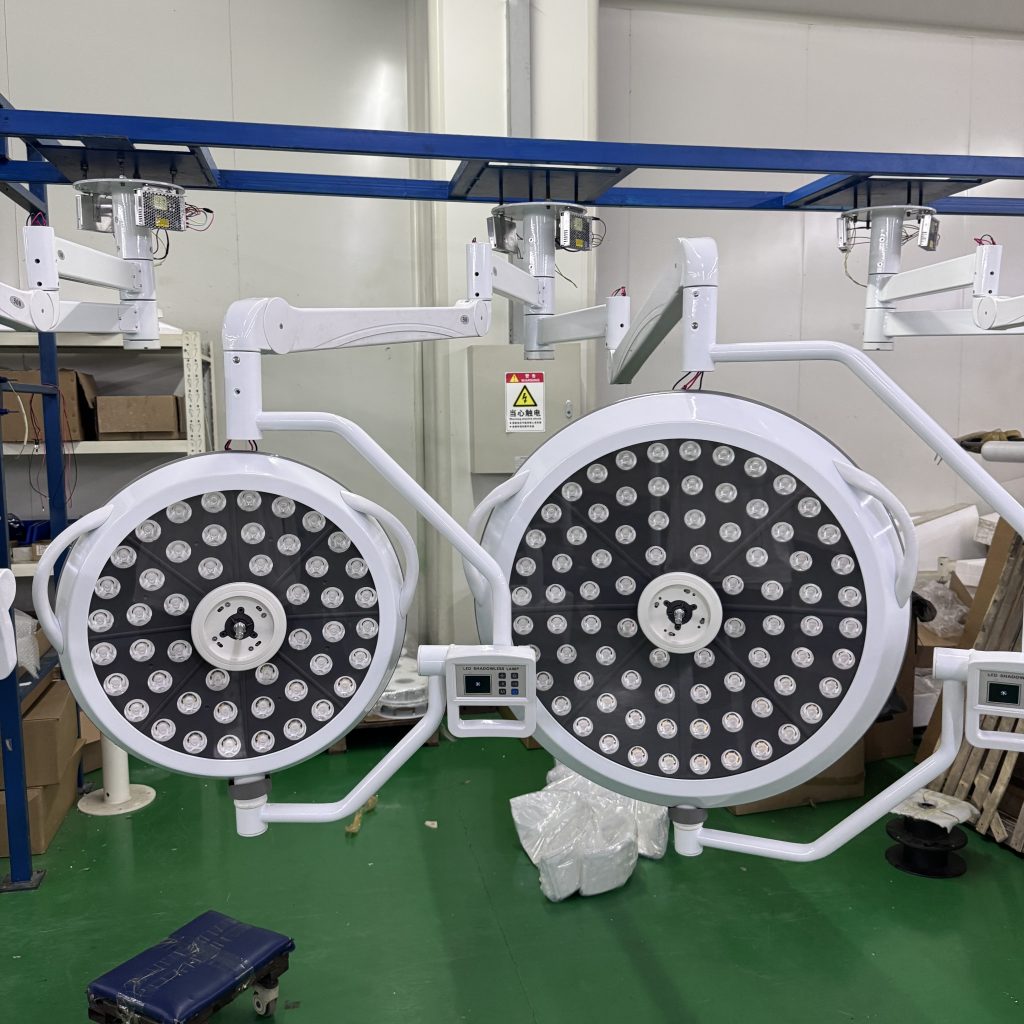
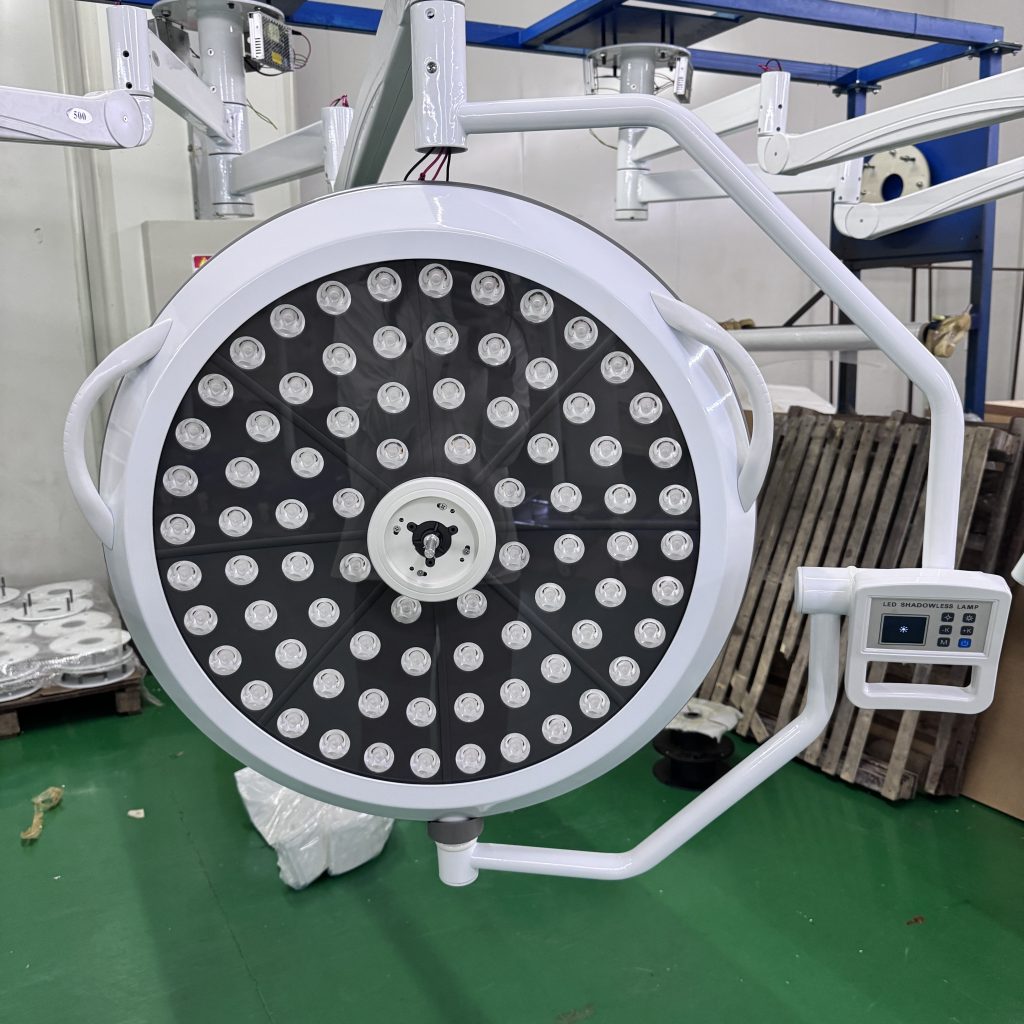
Technology continues to transform operating room lighting.
Zu den neuen Innovationen zählen:
- Helligkeitsanpassung mittels künstlicher Intelligenz
- Automatische Schattenkorrektur
- Voice-controlled operation
- Drahtlose Steuerungssysteme
- Integrierte 4K-Operationskameras
- Vernetzung im digitalen Operationssaal
- IoT-based equipment monitoring
- Predictive maintenance systems
- Adaptive illumination based on tissue recognition
These technologies will continue improving surgical precision and operating room efficiency.
How to Choose the Right Manufacturer
Selecting a reliable supplier is equally important.
Healthcare facilities should evaluate manufacturers based on:
- ISO 13485-Zertifizierung
- CE-Zertifizierung
- International export experience
- Manufacturing capacity
- Forschungs- und Entwicklungskapazitäten
- Garantieservice
- Verfügbarkeit von Ersatzteilen
- Technische Schulung
- Installation services
- Kundendienst
A reputable manufacturer provides both high-quality products and dependable long-term service.
Wenn Sie medizinische Geräte oder andere Dienstleistungen benötigen, wenden Sie sich bitte an uns!
E-Mail: demanmedical@gmail.com
Telefon: +86-13188819888
Facebook:https://www.facebook.com/demanmedical/
Instagram: https://www.instagram.com/deman.medical/
YouTube: https://www.youtube.com/@DEMANmedical
Schlussfolgerung
Modern surgical suite lighting has become an indispensable component of every healthcare facility. It provides the high-quality illumination necessary for accurate diagnosis, precise surgical intervention, and enhanced patient safety. Compared with traditional lighting systems, LED-based solutions offer superior brightness, excellent color rendering, minimal heat generation, lower maintenance costs, and significantly longer service life.
When selecting surgical suite lighting, hospitals should evaluate illumination intensity, shadow management, color rendering, color temperature, installation requirements, and manufacturer support. Investing in a reliable lighting system not only improves surgical outcomes but also increases operating room efficiency and reduces long-term operating expenses.
As healthcare continues to embrace intelligent operating rooms and digital surgical technologies, advanced surgical suite lighting will play an increasingly important role in supporting safer, more efficient, and more precise surgical care.
FAQ
What is surgical suite lighting?
Surgical suite lighting refers to specialized medical lighting systems designed to provide bright, uniform, and shadow-free illumination for operating rooms and surgical environments.
Why is surgical suite lighting important?
It improves surgical visibility, enhances precision, reduces surgeon fatigue, and contributes to better patient safety during medical procedures.
What illumination level is recommended for operating rooms?
Most modern surgical suite lighting systems provide adjustable illumination between approximately 80,000 and 160,000 lux, depending on the surgical specialty.
Why do hospitals prefer LED surgical suite lighting?
LED systems offer longer service life, lower energy consumption, minimal heat emission, excellent color rendering, and reduced maintenance compared with traditional halogen lighting.
Can surgical suite lighting integrate with modern operating rooms?
Yes. Many advanced systems integrate with surgical cameras, medical displays, imaging equipment, and digital operating room management systems.